
Spiritual Meaning of Phoenix Bird: Rebirth and Power
You’ll find that the phoenix bird holds deep spiritual significance, embodying themes of rebirth, immortality, and transformation across cultures. In Egyptian mythology, it symbolizes creation and renewal, linked to the sun god Ra.
Greek legends accentuate its fiery death and resurrection, portraying resilience and the eternal life cycle. The Chinese Fenghuang emphasizes balance and harmony, representing renewal.
This majestic bird’s tale of rising from ashes illustrates human strength and the ability to overcome adversity, emerging anew. Keep exploring to uncover how these themes resonate with personal growth and modern spirituality.
Spiritual Meaning of Phoenix Bird: Rebirth, Transformation, and Eternal Strength
| Phoenix Symbolism Scenario | Spiritual Interpretation | Symbolism |
|---|---|---|
| Rising from ashes | Overcoming hardship and beginning anew | Rebirth, resurrection, new beginnings |
| Appears during personal crisis | Sign you are undergoing a deep spiritual transformation | Growth, change, soul evolution |
| Associated with fire and light | Purification of old energy to make way for higher purpose | Cleansing, ascension, inner power |
| Seen in visions, dreams, or art | Message from higher self or spiritual guide to trust your journey | Destiny, resilience, divine guidance |
| Embracing the phoenix as a totem | You embody fierce independence and the ability to renew yourself | Courage, self-mastery, eternal spirit |
| Phoenix energy during transitions | Support during endings that lead to powerful new beginnings | Surrender, transformation, spiritual rise |
Phoenix in Ancient Mythology

In ancient mythology, the phoenix is a symbol of rebirth and immortality, appearing in stories from cultures as diverse as ancient Egypt, Greece, and China.
You’ll find the phoenix depicted as a majestic, colorful bird, often associated with the sun.
In Egyptian mythology, the Bennu bird symbolizes creation and renewal.
Greek legends describe the phoenix as living for centuries before burning itself to ashes, only to rise anew.
Meanwhile, Chinese mythology portrays it as the Feng Huang, a symbol of virtue and grace. Each culture’s interpretation reflects shared human themes of death, transformation, and continuity.
These stories show how different societies have used the phoenix to articulate their understanding of life’s cyclical nature and the hope for renewal.
Symbol of Rebirth
Across various cultures, the phoenix serves as a potent symbol of rebirth, embodying the profound human aspiration for renewal and transformation.
In ancient Egypt, the Bennu bird, akin to the phoenix, represented the sun’s cycle and creation.
In Greek mythology, the phoenix’s fiery death and subsequent resurrection from its ashes illustrate life’s cyclical nature.
Similarly, in Chinese culture, the Feng Huang signifies harmony and the renewal of the cosmos. Each tradition underscores the phoenix’s role in conveying hope and a fresh start.
This bird’s mythic narrative resonates deeply with humanity’s desire to transcend adversity and emerge renewed.
Resilience and Strength
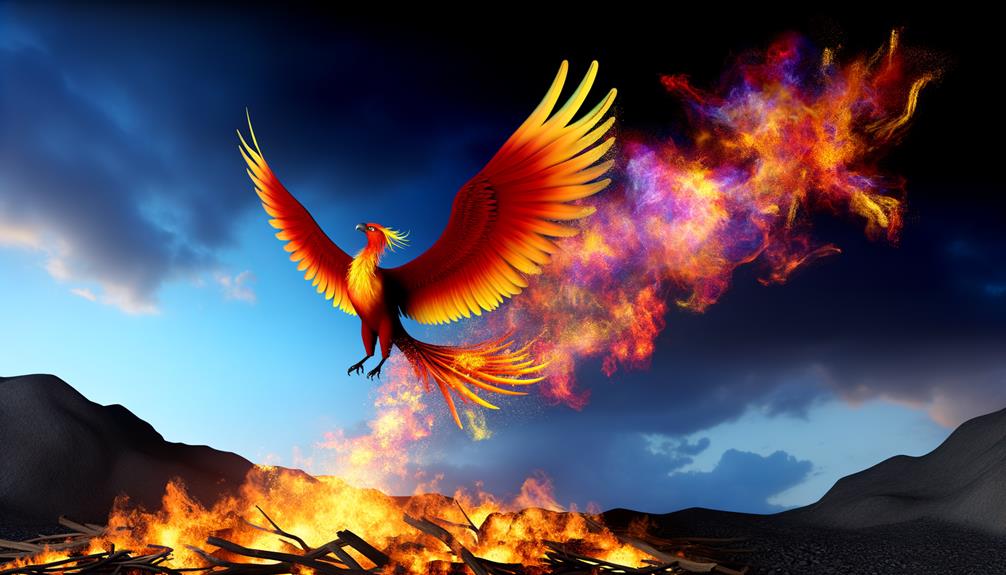
The phoenix’s narrative of rising from its own ashes exemplifies resilience and strength, showcasing humanity’s enduring capacity to overcome adversity. Historically, this mythical bird has symbolized renewal in ancient cultures like Egypt and Greece. Its ability to regenerate after destruction speaks to the human spirit’s unyielding perseverance.
In Chinese mythology, the phoenix (Fenghuang) represents grace and resilience, often depicted alongside the dragon to signify balance and harmony. Across cultures, the phoenix embodies the universal struggle and triumph against life’s challenges.
Transformation and Change
Embodying transformation and change, the phoenix’s cycle of death and rebirth highlights its role as a powerful symbol of spiritual metamorphosis throughout history. By rising from its ashes, the phoenix teaches you that endings are merely new beginnings.
This mythical bird has been revered across various cultures, each interpreting its symbolism in unique ways:
- Ancient Egypt: Linked to the sun god Ra, symbolizing renewal and immortality.
- Greek Mythology: Represented cyclical regeneration and the eternal nature of time.
- Chinese Culture: Associated with grace, virtue, and the union of yin and yang.
These interpretations collectively emphasize the phoenix as a guiding beacon for personal and spiritual evolution.
Cycle of Life and Death

You’ll find that the Phoenix symbolizes the cycle of life and death across many ancient cultures, illustrating renewal through its legendary rebirth from ashes.
This mythical bird teaches you to embrace transformation, reflecting the inevitability and beauty of change.
Its eternal rebirth cycle serves as a powerful metaphor for overcoming adversity and beginning anew, resonating deeply in spiritual traditions worldwide.
Symbol of Renewal
Throughout history, the Phoenix’s cyclical tale of death and rebirth has symbolized humanity’s enduring hope for renewal and transformation. This mythological bird, consumed by flames only to rise anew, captures the essence of life’s perpetual cycles.
In various cultures, the Phoenix represents:
- Resilience: The ability to overcome adversity and start again.
- Purification: Burning away the old to make way for the new.
- Immortality: A symbol of eternal life through continuous renewal.
Ancient Egyptians linked the Phoenix to the sun’s daily cycle, while in Chinese mythology, it signifies virtue and grace.
Embracing Transformation
As the Phoenix’s story of renewal unfolds, it invites you to embrace the profound transformation inherent in the cycle of life and death, a theme deeply rooted in many cultural mythologies.
Across ancient Egypt, China, and Greece, the Phoenix symbolizes not just physical death but the shedding of old selves. In these stories, you find a bird that combusts into flames only to rise anew, embodying resilience and change.
By understanding this symbolism, you can see life’s challenges as opportunities for growth. The Phoenix teaches you that endings aren’t final but are precursors to new beginnings.
Embracing this perspective helps you navigate life’s inevitable transformations with grace and wisdom, appreciating the cycles that foster renewal.
Eternal Rebirth Cycle
In the rich tapestry of mythological traditions, the Phoenix’s eternal rebirth cycle symbolizes the indomitable spirit of renewal and the perpetual dance of life and death. Across cultures, this majestic bird embodies the cyclical nature of existence.
You’ll find the Phoenix’s symbolism in:
- Ancient Egypt, where it represented the sun god Ra’s daily rebirth.
- Greek mythology, emphasizing transformation through fire and resurrection.
- Chinese culture, symbolizing high virtue and grace, often paired with the dragon.
Each tradition underscores a universal truth: life and death are intertwined, and from ashes, new beginnings arise.
Spiritual Renewal
The phoenix, a symbol found in various cultures, represents profound spiritual renewal through its cyclical process of death and rebirth.
When you think of the phoenix, imagine the transformation it undergoes—bursting into flames and rising anew from its ashes. This process signifies the soul’s journey through trials and shifts, emerging stronger and wiser.
Here’s a breakdown of its significance:
| Historical Context | Symbolic Interpretation |
|---|---|
| Ancient Egypt | Immortality |
| Greek Mythology | Resilience |
| Chinese Culture | Harmony and Balance |
| Christian Symbolism | Resurrection |
| Hindu Mythology | Purification |
In each culture, the phoenix teaches that true renewal involves embracing change and finding strength in new beginnings. Understanding this symbolism helps you appreciate the deeper meaning of spiritual rejuvenation.
Cultural Interpretations
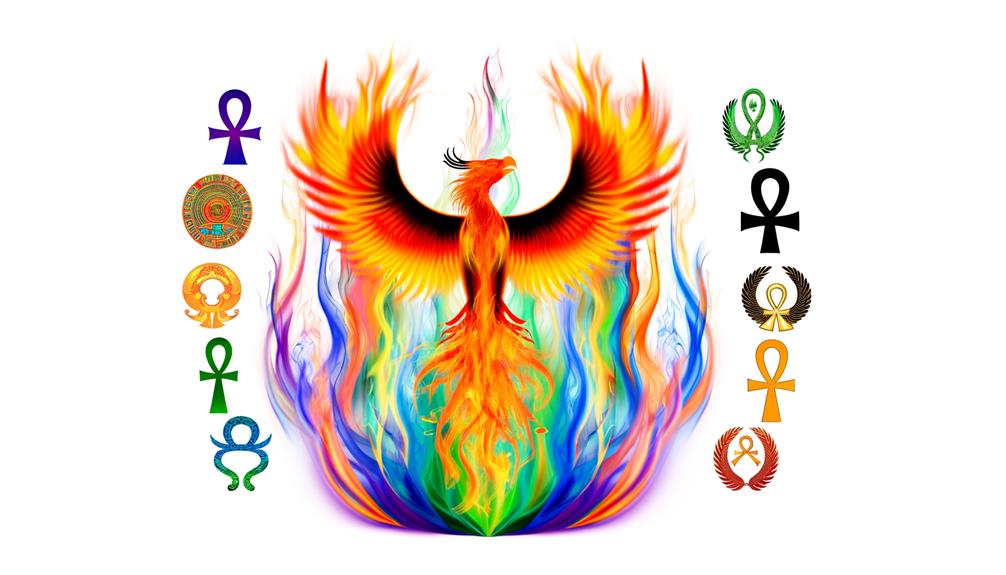
You’ll find the phoenix’s cultural significance spans various ancient civilizations.
In Egyptian mythology, it symbolizes rebirth and immortality, while Greek mythology presents it as a symbol of renewal and resilience.
Similarly, the Chinese Fenghuang legend portrays it as a harbinger of harmony and prosperity, highlighting its universal appeal across different cultures.
Ancient Egyptian Symbolism
Ancient Egyptians saw the phoenix, often represented as the Bennu bird, as a powerful symbol of rebirth and immortality. In their mythology, the Bennu bird was linked to the sun god Ra and the concept of creation.
You can understand its significance better by noting its connections:
- Rebirth: The Bennu bird’s cycle of renewal mirrored the sun rising each day.
- Creation: It was believed to have played a role in the creation of the world.
- Eternity: The bird’s eternal life symbolized the enduring nature of the soul.
Greek Mythology Influence
Greek mythology presents the phoenix as a majestic creature that embodies themes of resurrection and eternal life, much like its Egyptian counterpart, the Bennu bird.
You’ll find that the Greeks portrayed the phoenix as a radiant bird, often enveloped in flames, symbolizing its cyclical nature of death and rebirth. This creature was said to live for centuries before burning itself to ashes, only to rise again anew.
The phoenix’s story reflects deep spiritual beliefs about transformation and immortality. The Greek interpretation not only highlights the universal appeal of rebirth but also shows how cultures can influence each other.
Chinese Fenghuang Legend
While the Greek phoenix captivates with its fiery rebirth, the Chinese Fenghuang, often referred to as the ‘Chinese phoenix,’ offers a rich tapestry of symbolism and cultural significance that contrasts and complements its Western counterpart.
In Chinese culture, the Fenghuang symbolizes:
- Virtue and grace: Often linked to the empress, embodying the qualities expected in a ruler.
- Yin and yang balance: Representing harmony between male and female energies.
- Prosperity and peace: Heralding an era of prosperity and well-being.
Understanding the Fenghuang’s role in Chinese legends deepens your appreciation for how different cultures interpret the mystical bird, blending historical context with symbolic richness.
Phoenix in Modern Spirituality
In modern spirituality, the phoenix symbolizes personal rebirth and transformation, transcending cultural boundaries to inspire individuals worldwide.
Historically, the phoenix has represented renewal in various cultures, from ancient Egypt to Chinese mythology. Now, it’s a powerful metaphor for overcoming adversity and rising anew from life’s challenges.
The symbolic interpretation of the phoenix focuses on its cycle of death and resurrection, mirroring your own potential for growth and change. This bird’s legendary ability to emerge from its ashes resonates deeply across different spiritual practices, emphasizing resilience and the perpetual pursuit of self-improvement.
Personal Growth and Inspiration
Embracing the phoenix’s spirit not only symbolizes rebirth but also serves as a powerful catalyst for personal growth and inspiration.
Historically, the phoenix has been a symbol of renewal across various cultures. In ancient Egyptian mythology, it represented the sun’s cycle. In Chinese lore, it symbolized virtue and grace.
For you, invoking the phoenix can mean:
- Renewing your spirit: Rising from life’s challenges stronger.
- Inspiring transformation: Embracing change and growth.
- Cultivating resilience: Learning from setbacks to bounce back.
Conclusion
In embracing the phoenix, you’re not just acknowledging an ancient myth, but resonating with a timeless symbol of rebirth and resilience.
Across cultures, the phoenix’s journey from ashes to splendor mirrors your own cycles of transformation and renewal.
Imagine yourself rising, stronger and wiser, from life’s trials.
This mythical bird isn’t just a tale; it’s a powerful emblem urging you to find strength in change, embodying the eternal dance of life, death, and spiritual rejuvenation.