
Spiritual Meaning of a Dead Skunk: Warning and Release
Encountering a dead skunk carries profound spiritual implications. It symbolizes the importance of setting personal boundaries, fostering self-respect, and steering through life’s transformations.
The skunk’s distinctive markings remind us to embrace our uniqueness and assert our worth without aggression. Its presence urges us to release negative energies and safeguard our emotional and physical spaces.
Reflecting upon such encounters can lead to personal growth, resilience, and the renewal of one’s inner peace. This experience also calls for introspection, adaptability, and the cleansing of stagnant influences, allowing transformation and rebirth.
Understanding its deeper nuances reveals valuable lessons for personal empowerment.
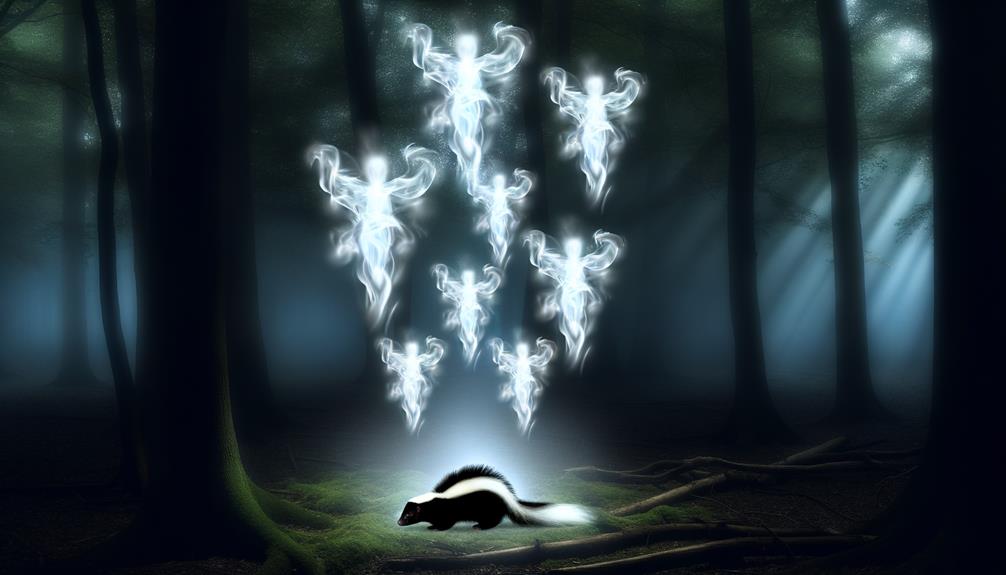
Spiritual Meaning of a Dead Skunk: Boundaries, Identity, and Energy Release
| Symbolic Aspect | Spiritual Meaning |
|---|---|
| Boundary Transition | Indicates a shift or breakdown in personal boundaries or self-protection |
| Ego and Identity | Symbolizes shedding old identities or false personas |
| Energetic Release | Represents the clearing of toxic energy or emotional baggage |
| Warning Ignored | May reflect past signals or intuitions that were overlooked |
| Spiritual Cleansing | Suggests a necessary purge for growth and inner renewal |
Symbolism of Skunks
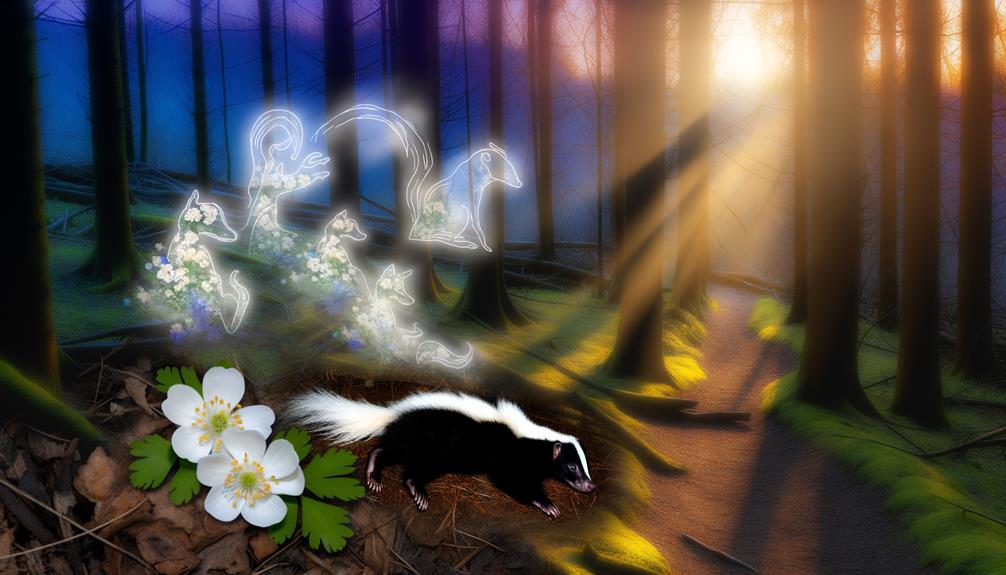
Skunks, often misunderstood due to their defensive spray, symbolize protection, self-respect, and the need for boundaries in the spiritual domain.
These creatures, with their distinct black and white markings, teach us to embrace our uniqueness and to stand firm in our personal values.
The skunk’s presence in our lives serves as a reminder of the power of self-assurance and the importance of non-aggressive defense mechanisms.
Their ability to ward off threats without physical confrontation encourages us to find peaceful solutions to conflicts.
By observing the skunk, we can learn to navigate life with a balance of assertiveness and grace, honoring both our strengths and vulnerabilities. They remind us to be mindful of the energies we emit and attract.
Boundaries and Self-Respect
Reflecting on the presence of a dead skunk, one is reminded of the importance of setting boundaries and maintaining self-respect.
Just as the skunk uses its distinct scent to protect its space, humans too must assert their personal worth and safeguard their emotional territories.
This symbolic encounter encourages us to honor our own needs and establish clear limits in our interactions with others.
Protecting Personal Space
Understanding the symbolic presence of a dead skunk can serve as a powerful reminder to establish and maintain personal boundaries, honoring one’s self-respect and personal space.
The skunk, known for its potent defense mechanism, symbolizes the necessity of setting clear limits to protect oneself from external intrusions.
Reflecting on this symbolism, one is encouraged to recognize the importance of safeguarding their emotional and physical space, ensuring a harmonious balance in relationships and interactions.
By doing so, individuals not only preserve their well-being but also communicate their worthiness of respect and consideration.
This introspective practice fosters a deeper connection with one’s inner self, promoting a resilient and empowered approach to life’s challenges and interpersonal dynamics.
Asserting Self-Worth
Establishing and asserting one’s self-worth is intrinsically linked to setting firm boundaries and practicing self-respect. A dead skunk symbolizes the need to protect one’s value by creating clear limits and honoring oneself. This imagery encourages introspection and cultivation of personal empowerment.
To assert self-worth effectively, consider these steps:
- Identify Personal Values: Understand what is most important to you and let these values guide your boundaries.
- Communicate Clearly: Articulate your limits and expectations to others respectfully and confidently.
- Practice Self-Care: Prioritize activities and relationships that nurture your well-being.
- Reflect Regularly: Continually assess and adjust your boundaries to guarantee they align with your evolving sense of self-worth.
This reflection cultivates a grounded and respectful approach to personal boundaries.
Releasing Negative Energies
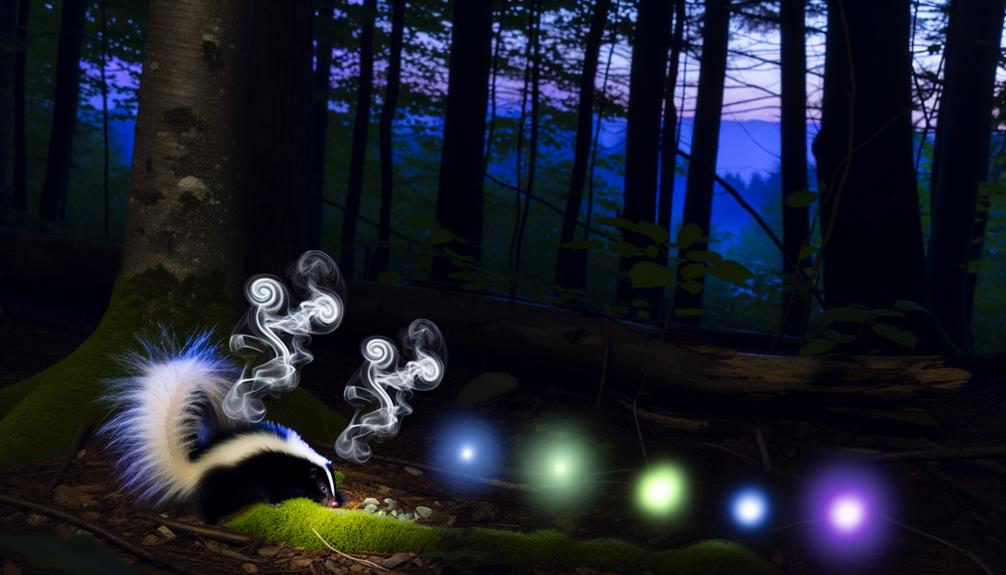
Encountering a dead skunk can serve as a poignant reminder to release negative energies that may be lingering in our lives.
Reflecting on this encounter can help us identify and let go of emotional burdens, toxic relationships, and past traumas. Embracing this process of release can lead to renewed inner peace and emotional balance.
| Negative Energies | Symptoms | Steps to Release |
|---|---|---|
| Emotional Burdens | Anxiety, sadness | Mindfulness, therapy |
| Toxic Relationships | Stress, low self-esteem | Boundaries, communication |
| Past Traumas | Fear, unresolved emotions | Healing, forgiveness |
Understanding the significance of a dead skunk can be transformative, urging us to cleanse our spirits and live more authentically. This gentle release fosters growth and spiritual renewal.
Personal Space and Protection
Creating and maintaining personal space is essential for safeguarding our emotional and spiritual well-being.
The dead skunk, with its distinct defense mechanism, symbolizes the importance of setting boundaries to protect ourselves from negative influences.
Reflecting on this, consider these four key aspects of personal space and protection:
- Self-Awareness: Recognize your emotional limits and honor them.
- Boundaries: Clearly communicate your needs and limits to others.
- Self-Care: Engage in activities that restore your inner peace and energy.
- Environment: Cultivate a physical space that promotes tranquility and positivity.
Transformation and Renewal

In the wake of encountering a dead skunk, one may find a powerful symbol of transformation and renewal, prompting introspection and growth.
The presence of death signifies the end of one phase and the beginning of another, urging an evaluation of life’s current path. This moment can serve as a catalyst for shedding old habits and embracing new perspectives.
Reflecting on the skunk’s demise, individuals might recognize the necessity of letting go of the past to make room for personal evolution.
The skunk, often misunderstood, teaches us that even in death, there is an opportunity for profound change.
This symbolic encounter encourages a deeper understanding of life’s cyclical nature, emphasizing the potential for renewal and rebirth in our own lives.
Lessons in Resilience
The sight of a dead skunk can serve as a poignant reminder of resilience, illustrating how life’s challenges, though intimidating, can ultimately lead to strength and perseverance. Observing such an event invites reflection on our own capacity to endure and grow.
Here are four key lessons in resilience inspired by the skunk’s symbolic journey:
- Adaptability: Skunks adapt to various environments, teaching us the importance of flexibility.
- Courage: Despite their small size, skunks face threats head-on, embodying bravery.
- Endurance: Skunks’ survival mechanisms highlight the value of persistence.
- Self-Protection: Their defensive spray symbolizes the need to protect oneself while maneuvering through life’s trials.
These lessons underscore how resilience is cultivated through adversity, enhancing our inner strength.
Spiritual Cleansing
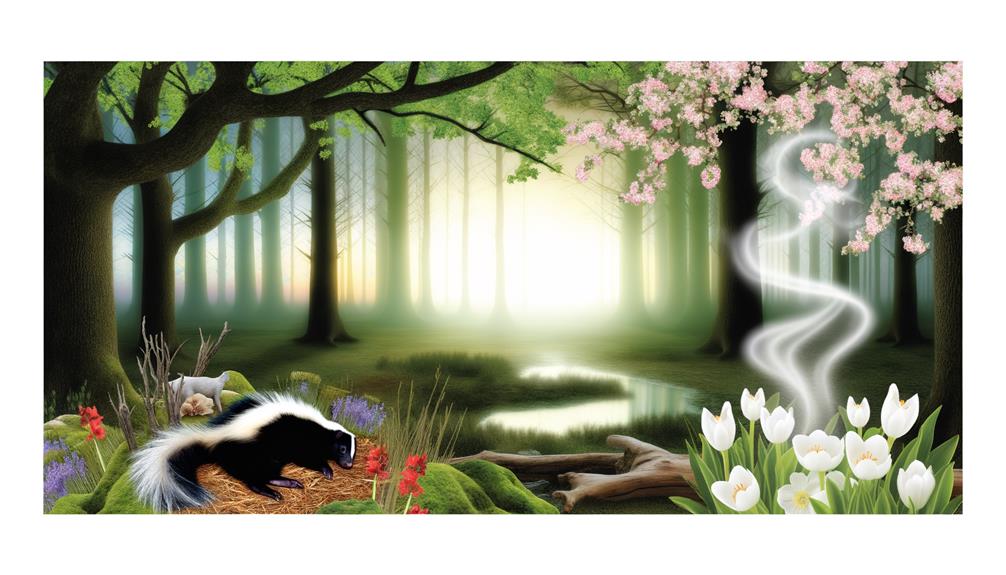
Encountering a dead skunk can serve as a powerful symbol of spiritual cleansing, urging us to release negative energies and purify our inner selves. This unexpected sight may prompt deep reflection on the elements within our lives that no longer serve our highest good.
Just as the skunk’s potent odor dissipates with time, so too can our burdens be alleviated through mindful introspection and conscious effort. Embracing this symbol, we are invited to cleanse our emotional and spiritual landscapes, fostering a renewed sense of clarity and peace.
It is a call to shed toxic influences and embrace growth, understanding that true purification often involves confronting and releasing what is decayed or stagnant within our souls.
Conclusion
The encounter with a dead skunk invites contemplation of profound symbolic messages.
Its presence, steeped in lessons of boundaries, self-respect, and the release of negative energies, compels a deeper understanding of personal space and protection. Yet, the ultimate disclosure lies in its embodiment of transformation and renewal.
This silent messenger, resilient in death, beckons to a journey of spiritual cleansing. What truths, one wonders, are waiting to be disclosed through such an unexpected harbinger?