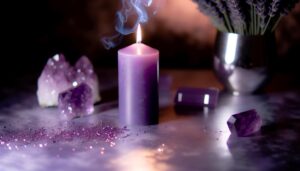
Spiritual Meaning of Praying with Candles: Light
Praying with candles holds profound spiritual significance, deeply rooted in ancient traditions and various faiths. The act symbolizes divine illumination, representing purity, guidance, and the light overcoming darkness.
Religious traditions—from Christianity to Buddhism—each imbue candle prayers with their unique symbolisms, such as Christ’s light or the wisdom dispelling ignorance. Candles also enhance psychological well-being, providing focus, reducing stress, and fostering inner peace.
Different colors of candles further carry specific meanings, enriching spiritual practices. Incorporating candles in modern rituals bridges ancient wisdom with contemporary mindfulness, inviting a sacred presence into the practice.
Explore further to reveal the layers of meaning behind this enduring ritual.
Spiritual Meaning of Praying With Candles: Divine Connection and Intention
| Symbolic Element | Spiritual Meaning |
|---|---|
| Candle Flame | Represents soul, divine presence, and spiritual awakening |
| Lighting a Candle | Act of setting intention and inviting spiritual energy |
| Color of Candle | Each color aligns with specific prayers (e.g., white for purity) |
| Flickering Flame | Sign of spiritual activity, presence, or response |
| Burning the Candle | Transformation, offering, and releasing prayer into the universe |
Historical Origins
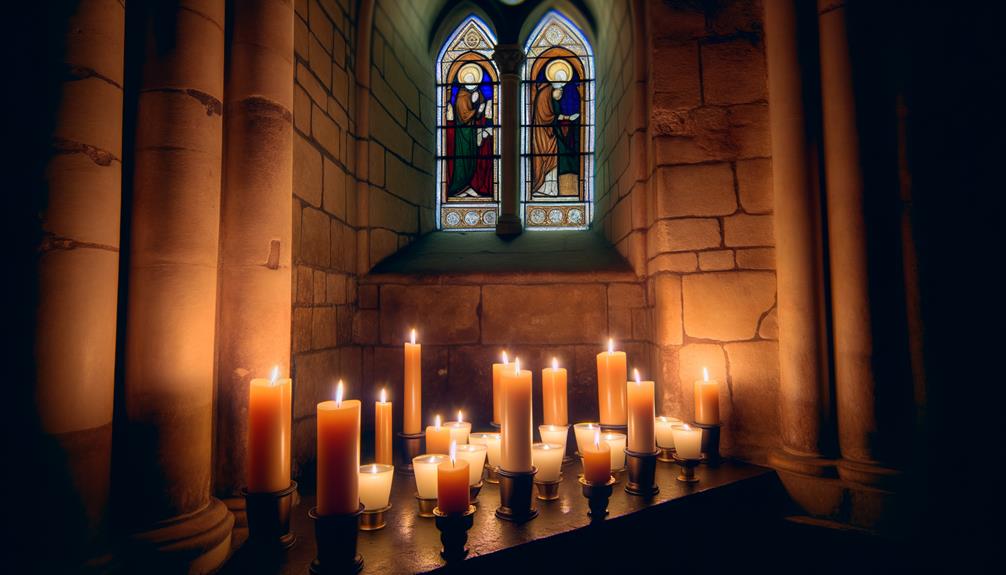
How did the practice of praying with candles become a significant spiritual ritual across various cultures and religions throughout history?
The historical origins of this practice can be traced back to ancient civilizations where fire was revered as a divine element. In ancient Egypt, candles were used in temples to invoke the presence of deities.
Similarly, in ancient Greece and Rome, candles played a vital role in both public and private religious ceremonies.
The Judeo-Christian tradition adopted candle-lighting as a symbol of divine illumination and presence, a practice that evolved through the Middle Ages into widespread use in churches and homes.
Across Asia, candles and oil lamps have long been integral to Buddhist and Hindu rituals, signifying purity and enlightenment.
Symbolism in Different Faiths
In various faith traditions, candles serve as profound symbols of spiritual concepts such as enlightenment, purity, and the divine presence.
In Christianity, lighting a candle often signifies the presence of Christ, representing His light overcoming darkness.
In Judaism, the Shabbat candles mark the beginning of the Sabbath, symbolizing peace and sanctity.
In Buddhism, candles are used during meditation and prayer to embody the light of wisdom dispelling ignorance.
Hindu rituals incorporate oil lamps or candles to honor deities and signify the victory of light over darkness.
Each tradition uses candles not merely as objects, but as sacred instruments that deepen spiritual engagement and connect worshippers to transcendent truths, fostering a sense of reverence and divine connection.
Psychological Benefits
Engaging in the practice of praying with candles can offer numerous psychological benefits, including enhanced focus, reduced stress, and a heightened sense of inner peace.
The gentle flicker of a candle provides a visual anchor, aiding concentration and mindfulness. This can help individuals to stay present, fostering a deeper connection to their prayers or meditations.
Additionally, the serene ambiance created by candlelight has been shown to lower cortisol levels, thereby alleviating stress and promoting relaxation.
The ritualistic aspect of lighting a candle can also create a sense of ritual and purpose, instilling a comforting routine.
Types of Prayer Candles
The various types of prayer candles, each imbued with unique symbolism and purpose, can enhance the spiritual experience by aligning with specific intentions and traditions.
Different candles serve distinct roles, whether invoking peace, protection, or spiritual growth. Their colors, scents, and symbols can profoundly influence the ambiance and focus of prayer.
| Candle Type | Symbolism/Purpose |
|---|---|
| White | Purity, peace, and healing |
| Red | Passion, strength, and love |
| Green | Prosperity and growth |
| Blue | Serenity and wisdom |
| Purple | Spirituality and intuition |
Choosing the appropriate candle can deepen the prayerful connection, allowing individuals to more fully engage with their spiritual practices. Each type offers a unique pathway to enhance the sacred atmosphere and intention of prayer.
Incorporating Candles in Modern Practices

Modern spiritual practices often integrate prayer candles to create a focused and serene environment, enhancing the depth and intention of personal rituals.
The gentle flicker of a candle flame serves as a visual and sensory anchor, helping individuals concentrate their thoughts and prayers.
In today’s diverse spiritual landscape, candles are used in a variety of settings, from meditative spaces to religious ceremonies, offering a tangible connection to the divine.
They symbolize hope, purification, and the presence of a higher power.
By incorporating candles, practitioners can elevate their spiritual experiences, fostering a sense of peace and introspection.
This modern adaptation acknowledges the timeless significance of light in spiritual traditions, bridging ancient wisdom with contemporary mindfulness practices.
Conclusion
To sum up, the act of praying with candles, while steeped in historical significance and rich symbolism across various faiths, also offers psychological benefits that modern practitioners find compelling.
One might jest that without candles, spiritual enlightenment would be left in the dark—quite literally.
However, the enduring presence of candles in religious and spiritual rituals underscores their profound impact on human consciousness, transcending mere tradition to illuminate the path to inner peace and reflection.