
Western Conifer Seed Bug Spiritual Meaning: Hidden Messages
The Western Conifer Seed Bug epitomizes spiritual themes of transformation, resilience, and adaptability. Known for thriving in diverse habitats, this insect symbolizes the ability to persevere and adapt to changing environments.
Its specialized traits, such as dietary flexibility and altered metabolic rates in response to temperature, underscore significant survival mechanisms. Ecologically, it affects seed dispersion and balances natural ecosystems, embodying profound interconnectedness with nature.
The Western Conifer Seed Bug’s life cycle and behaviors provide valuable lessons on overcoming obstacles and embracing change, serving as a metaphor for personal growth and inner strength. Discover more about this fascinating symbol’s deeper spiritual insights.

Western Conifer Seed Bug Spiritual Meaning: Adaptation, Resilience, and Subtle Messages
| Symbolism | Spiritual Meaning |
|---|---|
| Adaptability | Encourages adjusting to life’s changes with grace |
| Resilience | Sign of inner strength and the ability to thrive in tough conditions |
| Subtle Transformation | Represents quiet, unseen growth and personal evolution |
| Nature Connection | Reminder to stay grounded and connected with the earth |
| Hidden Messages | Symbol of small but meaningful spiritual signs in daily life |
Symbolism and Significance
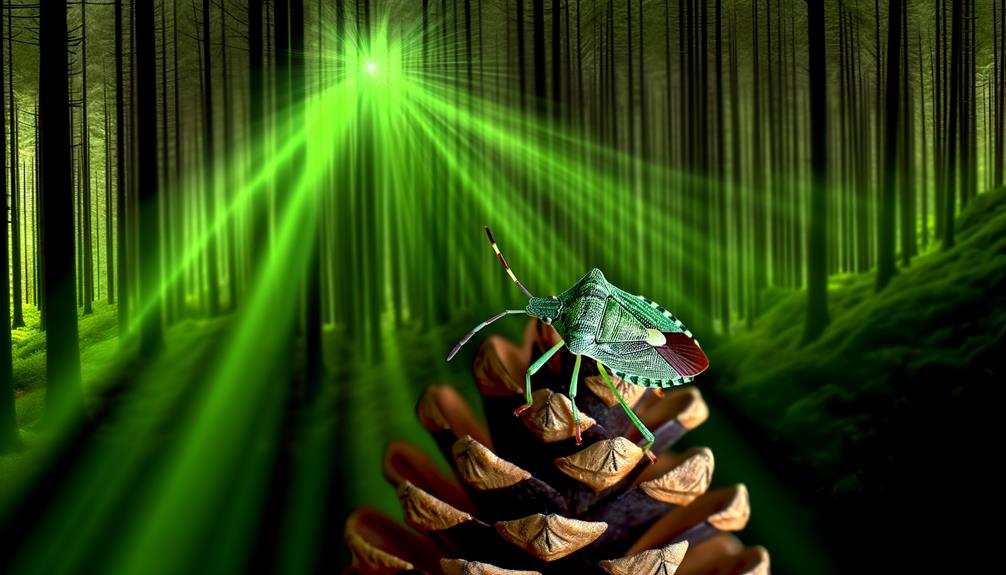
Recognized for its distinctive appearance and behavior, the Western Conifer Seed Bug (Leptoglossus occidentalis) holds various symbolic meanings and significance across different cultures and contexts.
In entomological studies, this insect is often associated with themes of transformation and adaptation due to its life cycle and migratory patterns. Symbolically, it is perceived as a harbinger of change; its presence often signals a shift in environmental conditions.
In some cultural interpretations, the Western Conifer Seed Bug is viewed as a symbol of perseverance and resilience, reflecting its ability to thrive in diverse habitats.
Its unique physical characteristics, such as the leaf-like expansions on its hind legs, also contribute to its symbolic representation of camouflage and protection.
Resilience and Adaptability
The Western Conifer Seed Bug exemplifies remarkable resilience and adaptability, traits that are essential for overcoming environmental challenges.
This species demonstrates an ability to thrive in diverse habitats, from native coniferous forests to urban areas, highlighting their capacity for ecological plasticity.
Such adaptability not only guarantees their survival but also serves as a metaphor for overcoming obstacles and embracing change in the context of spiritual symbolism.
Overcoming Environmental Challenges
In the face of diverse environmental challenges, the Western Conifer Seed Bug exemplifies remarkable resilience and adaptability through its physiological and behavioral modifications.
This insect’s ability to withstand various climatic conditions, predation pressures, and habitat disruptions is evident in its overwintering strategies and dietary flexibility. By lowering metabolic rates during colder months, it conserves energy, ensuring survival in harsh climates.
Additionally, its diet, primarily composed of seeds from coniferous trees, can be adjusted to include other plant materials when necessary. Behavioral adaptations, such as seeking shelter in man-made structures, further illustrate its capacity to overcome environmental stressors.
These adaptive traits underscore the bug’s resilience, serving as a model for understanding ecological survival mechanisms.
Adapting to New Surroundings
Adapting to new surroundings, Western Conifer Seed Bugs demonstrate remarkable resilience and adaptability through a range of physiological and behavioral strategies. These insects exhibit phenotypic plasticity, allowing them to thrive in diverse environments.
Their ability to alter metabolic rates in response to temperature fluctuations exemplifies their physiological adaptability.
Behaviorally, they employ varied dispersal mechanisms to colonize new habitats, including hitchhiking on human transportation. This adaptability is further evidenced by their capacity to switch host plants when preferred conifer species are unavailable. Such versatility guarantees their survival and proliferation across different ecological niches.
The Western Conifer Seed Bug’s resilience underscores a broader spiritual metaphor for embracing change and overcoming adversity, resonating deeply within human paradigms of adaptability.
Connection to Nature
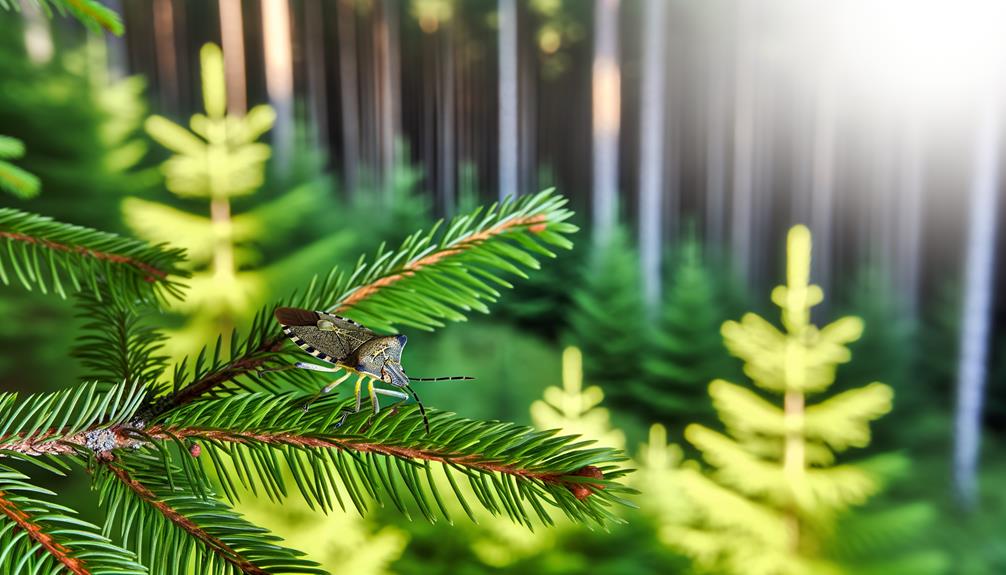
How does the Western Conifer Seed Bug embody a profound connection to nature through its ecological roles and adaptations?
This insect, Leptoglossus occidentalis, is integral to coniferous forest ecosystems. Its primary role involves feeding on the seeds and cones of various conifer species, impacting seed dispersion and forest regeneration.
The bug’s elongated mouthparts are specifically adapted for piercing and extracting nutrients from seeds, illustrating a specialized evolutionary trait.
In addition, the Western Conifer Seed Bug’s ability to overwinter in human structures demonstrates its resilience and adaptability to environmental changes.
This species, thus, exemplifies a dynamic interaction with its habitat, contributing to ecological balance and demonstrating the intricate connections between organisms and their natural surroundings.
Influence on Personal Growth
The spiritual symbolism of the Western Conifer Seed Bug is often associated with the capacity to adapt to life changes and the fortification of inner resilience.
Observing this insect’s behavior and lifecycle can provide insights into embracing changes and overcoming obstacles.
Embracing Life Changes
When examining the spiritual symbolism of the Western Conifer Seed Bug, it becomes evident that this insect’s life cycle embodies the principles of transformation and adaptation, offering profound insights into personal growth during periods of change.
The bug’s ability to thrive in diverse environments underscores the importance of flexibility in maneuvering life’s shifts. This adaptability can be distilled into several key lessons for personal development:
- Metamorphosis: Just as the seed bug undergoes various stages of growth, individuals must embrace change as a natural part of life.
- Resilience: The bug’s survival in fluctuating climates highlights the necessity of developing resilience.
These lessons underscore fundamental strategies for embracing life changes.
Building Inner Strength
Cultivating inner strength is essential for personal growth, as it enables individuals to navigate challenges with resilience and adaptability.
The Western Conifer Seed Bug, symbolizing persistence and survival, offers profound insights into this process. Its ability to thrive in diverse environments reflects the importance of developing psychological robustness.
By observing this insect’s behavior, one can draw parallels to human experiences, emphasizing the necessity of mental fortitude and emotional regulation. Inner strength facilitates effective stress management, enhances problem-solving capabilities, and promotes sustained personal development.
Consequently, integrating the symbolic meaning of the Western Conifer Seed Bug into one’s life can serve as a catalyst for fostering a resilient mindset, ultimately leading to enriched personal growth and stability.
Spiritual Lessons

Delving into the spiritual lessons associated with the Western Conifer Seed Bug reveals insights into resilience, adaptability, and transformation.
These insects, primarily known for their ability to thrive in various environments, embody key spiritual principles that can guide human behavior and thought processes.
Detailed analysis suggests three primary lessons:
- Resilience: The bug’s ability to endure harsh conditions symbolizes the necessity of inner strength and perseverance.
- Adaptability: Their capacity to adjust to different habitats underscores the importance of flexibility in facing life’s challenges.
Understanding these lessons offers a framework for integrating these qualities into daily life, enabling personal and spiritual development.
Embracing Change
Embracing change, as exemplified by the Western Conifer Seed Bug, necessitates a systematic approach to understanding the mechanisms of adaptation and resilience within varied ecosystems.
This insect’s ability to thrive in changing environments offers valuable insights into ecological dynamics. By examining their behavioral and physiological adaptations, we can better comprehend their role in forest ecosystems and their responses to environmental pressures.
| Mechanism | Description | Example |
|---|---|---|
| Behavioral | Changes in activity or habitat use | Seasonal migration |
| Physiological | Internal adjustments to maintain functionality | Temperature regulation |
| Ecological | Interactions with other species and environment | Predation dynamics |
This table elucidates the multifaceted strategies employed by the Western Conifer Seed Bug, highlighting its capability to navigate and flourish amidst change.
Conclusion
In summary, the Western Conifer Seed Bug epitomizes unparalleled resilience and adaptability, serving as an extraordinary emblem of nature’s inherent capacity for survival and transformation.
This insect’s profound connection to the natural world and its influence on personal growth underscores its significance within spiritual paradigms.
Through the lessons imparted by this remarkable creature, an unparalleled opportunity to embrace change and foster spiritual evolution is presented, highlighting its paramount importance in the broader tapestry of ecological and spiritual interconnectedness.