
Ezekiel Saw the Wheel Spiritual Meaning: Divine Vision
When you explore Ezekiel’s vision of wheels within wheels, you encounter a rich tapestry of divine omnipresence, omniscience, and cosmic order. The intricate wheels covered with eyes signal God’s ever-watchful presence and involvement in worldly affairs.
This dynamic, interconnected imagery underlines the belief that all life is intertwined with divine intent. Meanwhile, the four-faced creatures represent various divine attributes such as wisdom, strength, and swiftness.
Together, they convey a profound message about the balance between God’s transcendence and immanence. By understanding this vision, you’ll grasp deeper insights into the relationship between the earthly and divine.
Ezekiel Saw the Wheel Spiritual Meaning: Divine Vision, Spiritual Awakening, and Cosmic Order
| Symbolism | Spiritual Meaning |
|---|---|
| Divine Vision | Represents a direct encounter with the presence and mystery of God |
| Spiritual Awakening | Signifies a deeper opening of spiritual perception and intuitive understanding |
| Cosmic Order | Reflects the interconnectedness and structure of the universe under divine will |
| Movement of Spirit | Symbolizes the living, dynamic nature of God’s spirit throughout creation |
| Mystical Insight | Encourages contemplation of higher realities beyond the physical realm |
Ezekiel’s Vision Explained
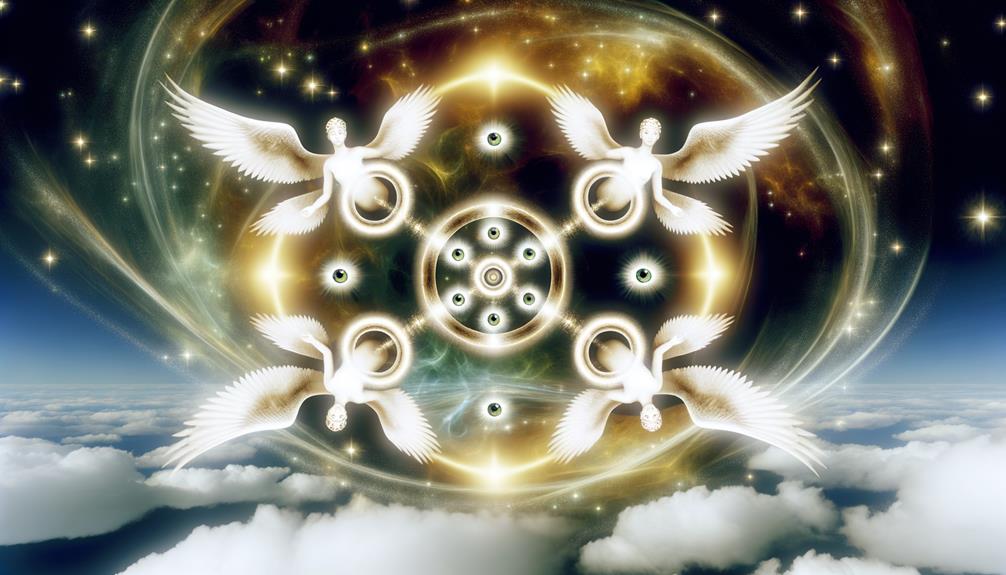
Ezekiel’s vision, often regarded as one of the most enigmatic passages in the Hebrew Bible, depicts a complex and symbolically rich encounter with divine entities and celestial mechanisms.
You’ll notice the vivid imagery involving wheels within wheels and four-faced creatures. These elements aren’t mere flights of fancy; they represent profound theological truths.
The wheels, intersecting and full of eyes, symbolize God’s omnipresence and omniscience.
The four creatures, each with different faces, signify the multifaceted nature of divine beings or possibly the four directions, indicating God’s sovereignty over all creation.
Biblical Context
To understand Ezekiel’s vision within its biblical context, you must consider both its symbolic imagery and its prophetic significance.
The wheel’s intricate design and the accompanying creatures aren’t mere fanciful elements but are laden with theological meaning.
Vision’s Symbolic Imagery
When interpreting the symbolic imagery of Ezekiel’s vision, one must consider the rich tapestry of metaphors and archetypes rooted in Judeo-Christian tradition.
The wheels within wheels, eyes covering them, and the four living creatures aren’t random elements but deliberate symbols. The wheels suggest divine omnipresence and omniscience, moving in any direction without turning.
The eyes represent God’s all-seeing nature. The four creatures—each with faces of a man, lion, ox, and eagle—symbolize different facets of creation and divine attributes: humanity, sovereignty, servitude, and swiftness, respectively.
Prophetic Significance Explained
Understanding the symbolic imagery of Ezekiel’s vision lays the groundwork for grasping its prophetic significance within the Biblical context.
You must recognize that Ezekiel’s wheels signify divine omnipresence and mobility, reflecting God’s ability to operate beyond human limitations. This vision underscores God’s sovereignty and His involvement in the affairs of nations and individuals alike.
Additionally, the interconnected wheels and their motion suggest the intricate and harmonious execution of God’s divine plan. By interpreting these symbols, you’re better equipped to understand God’s message to Israel—both a warning and a promise.
Ezekiel’s vision serves as a reminder of God’s ultimate control and His enduring covenant, offering profound theological insights for those seeking deeper Biblical comprehension.
Symbolism of the Wheels
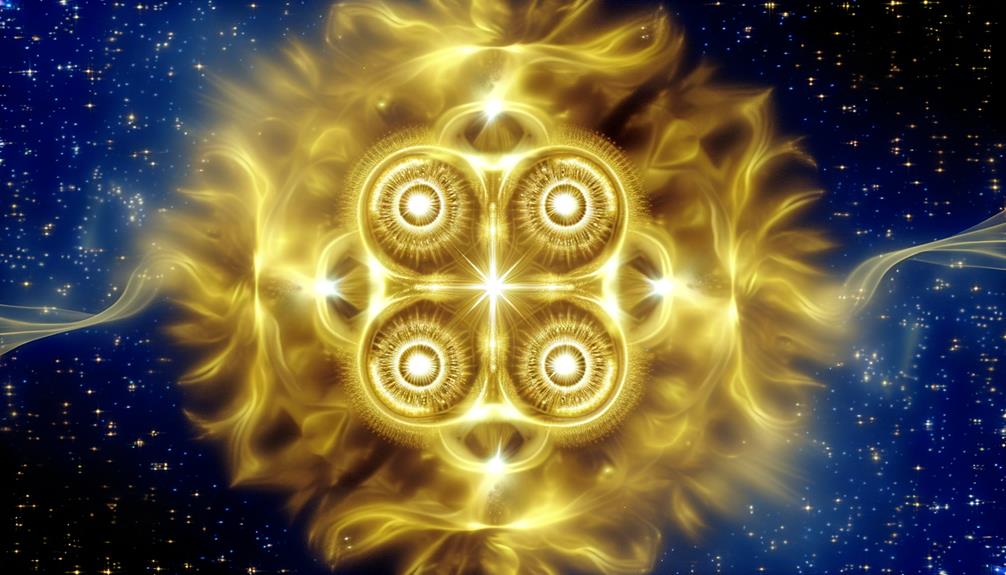
The wheels in Ezekiel’s vision serve as potent symbols of divine omnipresence and mobility, reflecting God’s ability to be everywhere and guide everything.
When you examine their intricate design—each wheel intersecting another, covered with eyes—it becomes evident that they represent God’s all-seeing nature and omnipotent reach.
Their constant motion in every direction without turning signifies divine fluidity and adaptability, qualities essential for maneuvering the complex tapestry of human existence.
As you explore deeper, you’ll see the wheels’ role in showcasing God’s direct involvement in worldly affairs.
They aren’t merely vehicles but profound symbols of a deity who’s both transcendent and immanent, always present, always in control.
This intricate imagery invites you to reflect on God’s boundless presence and guidance.
The Four Living Creatures
Exploring the four living creatures in Ezekiel’s vision reveals a rich tapestry of symbolic meaning, encapsulating divine attributes and cosmic order.
Each creature has four faces: a man, a lion, an ox, and an eagle, representing various aspects of creation and divine characteristics. The human face symbolizes intelligence and wisdom; the lion, authority and royalty; the ox, strength and service; and the eagle, swiftness and spirituality.
These creatures move in perfect harmony, embodying the unity and omnipresence of God. Their wings and wheels suggest an unbounded movement, indicating divine omnipotence and omniscience.
Interpretations Over Time
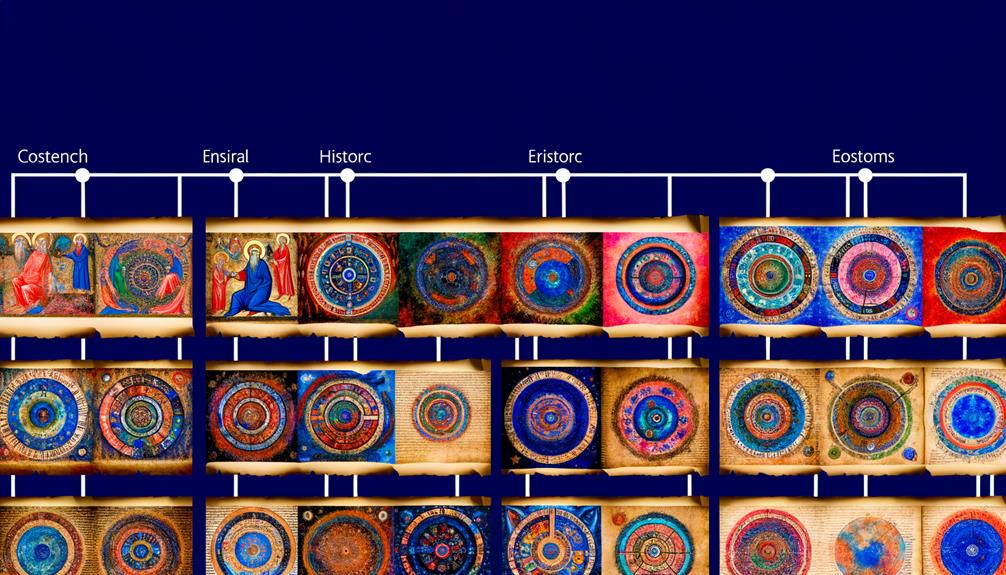
When examining ‘Ezekiel Saw the Wheel,’ you should consider its interpretations across different eras.
Initially rooted in ancient religious contexts, the vision has influenced a wide array of artistic symbolism.
In contemporary times, it’s gained new significance within various modern spiritual perspectives.
Ancient Religious Context
Scholars have long debated the enigmatic vision in Ezekiel’s writings, offering diverse interpretations that reflect ancient religious contexts and evolving theological perspectives.
The vision of the wheel within a wheel has been seen through the lenses of Jewish mysticism, early Christian thought, and other ancient belief systems. Each interpretation enriches our understanding of Ezekiel’s visionary experience.
| Ancient Context | Interpretation | Significance |
|---|---|---|
| Jewish Mysticism | Merkavah (Divine Chariot) | Mystical union with the divine |
| Early Christianity | Symbol of God’s omnipresence | Affirmation of divine power |
| Mesopotamian Beliefs | Representation of celestial order and cosmic order | Connection to the divine domain |
This multifaceted approach allows you to see how the spiritual meaning of Ezekiel’s vision has evolved over time.
Symbolism in Art
The rich tapestry of interpretations surrounding Ezekiel’s vision also finds expression in various artistic depictions, each reflecting the evolving symbolic importance attributed to the wheel within a wheel motif across different eras.
You’ll notice that medieval Christian art often emphasizes the divine and mystical aspects, portraying the wheels with intricate designs to signify heavenly order and omnipresence.
Renaissance artists, however, might incorporate humanistic elements, suggesting a more earthly connection to the divine.
Modern interpretations can diverge considerably, using abstract forms to explore themes of infinity and cosmic unity.
These artistic transformations underscore how the wheel’s symbolism adapts to cultural and temporal contexts, offering you a multi-faceted lens through which to understand its enduring spiritual resonance.
Modern Spiritual Views
In modern spirituality, interpretations of Ezekiel’s vision often emphasize themes of personal transformation, interconnectedness, and the search for deeper meaning in a rapidly changing world.
You may find that contemporary thinkers focus on how the vision’s symbols—wheels, eyes, and living creatures—speak to the soul’s journey and the unity of all life. These elements are seen not just as relics of ancient prophecy but as timeless spiritual motifs.
| Modern Interpretation | Key Themes |
|---|---|
| Personal Transformation | Inner change, self-discovery |
| Interconnectedness | Unity, collective consciousness |
| Deeper Meaning | Spiritual quest, purpose |
| Symbolism | Wheels, eyes, living creatures |
| Relevance Today | Adapting ancient wisdom |
Examining these perspectives, you can better appreciate the enduring relevance of Ezekiel’s vision in guiding spiritual practices and beliefs today.
Spiritual Significance Today
Drawing connections between ancient visions and contemporary spirituality, Ezekiel’s wheel continues to inspire profound reflections on divine presence and human experience.
In today’s context, this vision invites you to contemplate the omnipresence of the divine in daily life. The wheel, with its intricate design and movement, symbolizes the complex interplay between the sacred and the mundane.
You might find meaning in how the wheels embody the idea of interconnectedness, suggesting that every aspect of existence is intertwined with divine intention. Additionally, the vision’s dynamic nature encourages you to embrace change and seek spiritual growth.
Themes of Divine Revelation

How does Ezekiel’s wheel vision encapsulate the profound themes of divine revelation, challenging you to explore the depths of spiritual insight and cosmic order?
The vision presents a multifaceted depiction of God’s omnipresence and sovereignty. The interconnected wheels, full of eyes, symbolize divine omniscience, urging you to recognize the all-seeing nature of God.
The wheels’ motion in any direction without turning highlights divine omnipotence, suggesting that God’s actions are unbound by physical limitations.
This vision encourages you to contemplate the intricate relationship between the earthly and the divine. By examining Ezekiel’s experience, you gain a deeper appreciation of the complexities of God’s interactions with humanity, urging a reevaluation of your spiritual perceptions and the mysteries of divine governance.
Conclusion
In contemplating Ezekiel’s vision, you’re drawn into a vivid tableau of celestial wheels and living creatures, each symbol brimming with divine revelation.
This imagery, rich and enigmatic, invites you to explore the depths of spiritual meaning and prophetic insight.
Over time, interpretations have evolved, yet the core themes of divine majesty and mystery remain.
Today, these symbols continue to resonate, urging you to perceive the divine in the rhythmic dance of the cosmos and the intricate weave of existence.