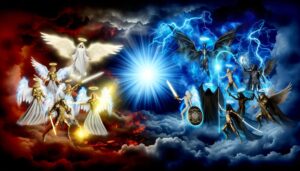
Spiritual Being Meaning in the Bible: Divine Presence
In the Bible, spiritual beings encompass a wide array of entities integral to the divine narrative and theological framework. Angels act as messengers and agents of God’s will, offering protection and guidance.
In stark contrast, demons are malevolent spirits that oppose God’s intentions, often causing afflictions and embodying spiritual warfare. Other significant beings include cherubim and seraphim, symbolizing divine holiness and worship, and heavenly hosts, who serve as messengers and warriors of celestial armies.
The Holy Spirit, a core element of the Trinity, comforts, guides, and empowers believers. Exploring these beings reveals deeper spiritual and theological insights.

Spiritual Being Meaning in the Bible: Creation, Eternal Nature, and Divine Purpose
| Aspect | Biblical Meaning |
|---|---|
| Created by God | Spiritual beings, including angels and humans, are created by God and serve a role in His divine plan. Humans, made in God’s image, possess both physical and spiritual aspects (Genesis 1:27). |
| Angelic Beings | Angels are spiritual beings created by God to serve as messengers, protectors, and agents of His will. They exist in the spiritual realm and interact with humanity according to God’s purpose (Hebrews 1:14). |
| Eternal Nature | Spiritual beings have an eternal nature, meaning that while the physical body may perish, the soul or spirit lives on in either eternal life with God or separation from Him (Ecclesiastes 12:7, Matthew 25:46). |
| Moral Responsibility | Spiritual beings, particularly humans, have moral and spiritual responsibility, as they are accountable to God for their actions and choices, impacting their relationship with Him (Romans 14:12). |
| Connection with God | Spiritual beings, especially humans, are created to have a close connection with God through worship, prayer, and obedience to His commands, cultivating a deep spiritual relationship (John 4:24). |
Angels in the Bible

In the Bible, angels are depicted as celestial beings serving as messengers and agents of God’s will. These spiritual entities are often described as intermediaries between God and humanity, conveying divine messages and executing God’s commands.
Instances such as Gabriel’s annunciation to Mary (Luke 1:26-38) and the protective role of Michael (Daniel 10:13, 12:1) illustrate their significant functions. The Hebrew term ‘mal’akh’ and the Greek ‘angelos’ both translate to ‘messenger,’ underscoring their primary role.
Furthermore, angels are depicted as worshippers of God, as seen in Isaiah 6:1-3, where seraphim proclaim His holiness. Through these narratives, the Bible presents angels as integral participants in the divine plan, embodying obedience and reverence.
Demons and Evil Spirits
The Bible presents demons and evil spirits as malevolent entities that oppose God’s will and seek to harm humanity.
Scriptural accounts provide vivid descriptions of these beings and recount numerous encounters between humans and evil spirits, shedding light on their nature and influence.
Biblical Demon Descriptions
Exploring the descriptions of demons and evil spirits in the Bible reveals a complex understanding of malevolent entities that contrasts sharply with the benevolent nature of divine beings.
The Scriptures portray demons as fallen angels who rebelled against God, with Satan as their leader (Revelation 12:7-9). These entities are often depicted as unclean spirits that torment, deceive, and lead individuals away from righteousness (Mark 5:1-13; 1 Timothy 4:1).
Biblical texts describe them as having the power to possess humans, causing physical and spiritual afflictions (Matthew 12:22; Luke 8:2).
The Bible emphasizes their ultimate subjugation under God’s authority, underscoring the supremacy of divine power over these malevolent forces (James 2:19; Revelation 20:10).
Evil Spirit Encounters
Examining biblical narratives of evil spirit encounters reveals profound insights into the nature and influence of demons and malevolent entities on human life. Throughout scripture, these encounters highlight the spiritual warfare believers face and the necessity of divine intervention. Instances such as Jesus casting out demons (Mark 5:1-20) and King Saul’s torment by an evil spirit (1 Samuel 16:14) underscore the persistent threat posed by these beings.
| Encounter | Scripture Reference | Key Insight |
|---|---|---|
| Jesus and Legion | Mark 5:1-20 | Authority of Christ over demons |
| Saul’s Torment | 1 Samuel 16:14 | Consequences of disobedience to God |
| Demoniac at Capernaum | Mark 1:23-26 | Immediate recognition of Jesus’ divinity |
| Seven Sons of Sceva | Acts 19:13-16 | The danger of invoking Jesus’ name without faith |
These accounts elucidate the reality of spiritual conflict and the supremacy of God’s power.
Heavenly Hosts and Armies

In biblical literature, heavenly hosts and armies are frequently depicted as divine entities that serve and execute the will of God, often appearing in contexts of spiritual warfare and divine intervention.
These celestial beings, referenced in scriptures such as the Psalms and the Book of Revelation, are portrayed as messengers and warriors, embodying God’s omnipotence and sovereignty.
The concept of heavenly armies underscores the magnitude of spiritual battles and the divine support available to the faithful.
Furthermore, the appearances of these hosts, such as the angelic armies in 2 Kings 6:17, provide reassurance of God’s protection and authority over cosmic and earthly domains.
Their presence signifies the interconnectedness of the divine and human spheres in God’s redemptive plan.
Cherubim and Seraphim
Cherubim and seraphim, as depicted in biblical texts, serve distinct yet profound roles in divine worship and the manifestation of God’s holiness.
Cherubim are often portrayed as guardians of sacred spaces, such as in Genesis 3:24 where they guard the way to the Tree of Life. Their multifaceted appearances, described in Ezekiel 1, signify divine mystery and power.
Seraphim, on the other hand, are primarily associated with the worship of God, as seen in Isaiah 6:2-3, where they continually cry, ‘Holy, holy, holy is the Lord Almighty.’ Their six wings symbolize their readiness and capacity to serve God’s will.
Both cherubim and seraphim exemplify the reverence and majesty inherent in the celestial hierarchy.
The Holy Spirit

The Holy Spirit, integral to the doctrine of the Trinity, functions as both a source of divine comfort and a guide to truth.
As the third person of the Godhead, the Holy Spirit’s presence is essential for spiritual enlightenment and sanctification.
This exploration will illuminate the multifaceted roles that the Holy Spirit plays within the biblical narrative and Christian theology.
Role in Trinity
Central to Christian doctrine, the Holy Spirit‘s role within the Trinity encompasses being both the divine presence that dwells within believers and the active force in their sanctification process.
The Holy Spirit is considered the third person of the Trinity, co-equal and co-eternal with the Father and the Son.
Functioning as the Paraclete, the Holy Spirit proceeds from the Father and the Son, uniting them in an eternal relationship of love and mission.
Theologically, the Holy Spirit is attributed with the work of regeneration, empowering believers for holy living, and guiding the Church in truth.
This dynamic participation underscores the Holy Spirit’s essential function in the continuous unfolding of divine revelation and the actualization of God’s redemptive plan.
Source of Comfort
As a source of comfort, the Holy Spirit provides believers with a profound sense of peace and assurance, intimately manifesting God’s presence in their lives. This divine comforter engages with individuals on multiple levels, fostering a dynamic and transformative relationship.
- Inner Peace: The Holy Spirit calms anxieties and fears, replacing them with tranquility.
- Assurance of Salvation: It reassures believers of their secure position in Christ, reinforcing faith.
- Strength in Trials: The Holy Spirit offers resilience and fortitude during life’s adversities.
Guide to Truth
Building upon the comfort provided by the Holy Spirit, believers are also guided into all truth, illuminating their understanding and deepening their spiritual insight. This guidance is rooted in the Holy Spirit’s role as the revealer of divine wisdom and scriptural truths. The Bible describes the Holy Spirit as the Spirit of Truth, whose purpose is to lead believers into a deeper relationship with God and a fuller comprehension of His word.
| Scriptural Reference | Description |
|---|---|
| John 16:13 | The Spirit guides into all truth. |
| 1 Corinthians 2:10 | Reveals what God has prepared. |
| John 14:26 | Teaches all things and reminds of Jesus’ words. |
| Romans 8:14 | Leads believers as children of God. |
| Ephesians 1:17 | Grants wisdom and revelation. |
This divine guidance guarantees that believers remain anchored in God’s truth amidst life’s complexities.
Symbolism of Spiritual Beings
The symbolism of spiritual beings in the Bible often serves to convey complex theological truths and moral lessons, reflecting the profound nature of divine interactions with humanity. These entities, ranging from angels to demons, embody various attributes and roles that illuminate God’s plan and the spiritual dimension’s dynamics.
- Angels as Messengers: Often depicted with wings and radiant light, angels symbolize divine communication, guidance, and protection, as seen in Gabriel’s announcement to Mary (Luke 1:26-38).
- Demons as Adversaries: Representing evil and temptation, demons test human faith and resilience, evident in Jesus’ encounters with demonic forces (Mark 5:1-20).
- Cherubim as Guardians: Positioned at sacred spaces, such as the Garden of Eden (Genesis 3:24), cherubim symbolize God’s holiness and the separation between the divine and the profane.
Conclusion
In biblical literature, spiritual beings serve as significant symbols and agents of divine will, encompassing angels, demons, heavenly hosts, cherubim, seraphim, and the Holy Spirit.
These entities are essential in conveying theological truths and spiritual symbolism. Their appearances and actions affirm the profound presence and power of the divine in the Scripture.
The multifaceted roles of these spiritual beings illustrate the intricate interplay between the celestial and terrestrial, underscoring the omnipotence and omnipresence of the divine.