
Spiritual Meaning of Camel in the Bible: Endurance
In biblical scripture, the camel encapsulates rich spiritual symbolism, reflecting wealth, endurance, humility, and divine reliance. Patriarchs such as Abraham and Job, possessing large herds, highlight the camel as a symbol of prosperity.
Additionally, the camel’s renowned resilience in arid landscapes signifies spiritual endurance and adaptability. The quiet strength of camels, their capacity to bear burdens, underscores lessons of humility and unwavering faith.
Their portrayal in biblical narratives accentuates dependence on divine provision during arduous journeys. The camel consequently becomes a multifaceted emblem, offering insights into spiritual fortitude and divine guidance—affirming more layers of meaning await exploration.

Spiritual Meaning of Camel in the Bible: Endurance, Wealth, and Divine Provision
| Aspect | Description | Spiritual Significance |
|---|---|---|
| Symbol of Wealth | Genesis 24:10 | Camels often carried riches, representing prosperity and blessing |
| Endurance & Strength | Long desert travel | Reflects spiritual resilience and perseverance through trials |
| Divine Provision | Genesis 24:14–20 (Rebekah) | God’s guidance and favor shown through acts involving camels |
| Humility & Service | Beast of burden | Symbolizes serving others and bearing spiritual responsibility |
| Journey & Destiny | Used in divine encounters | Represents progress toward spiritual purpose and divine alignment |
Camel as a Symbol of Wealth
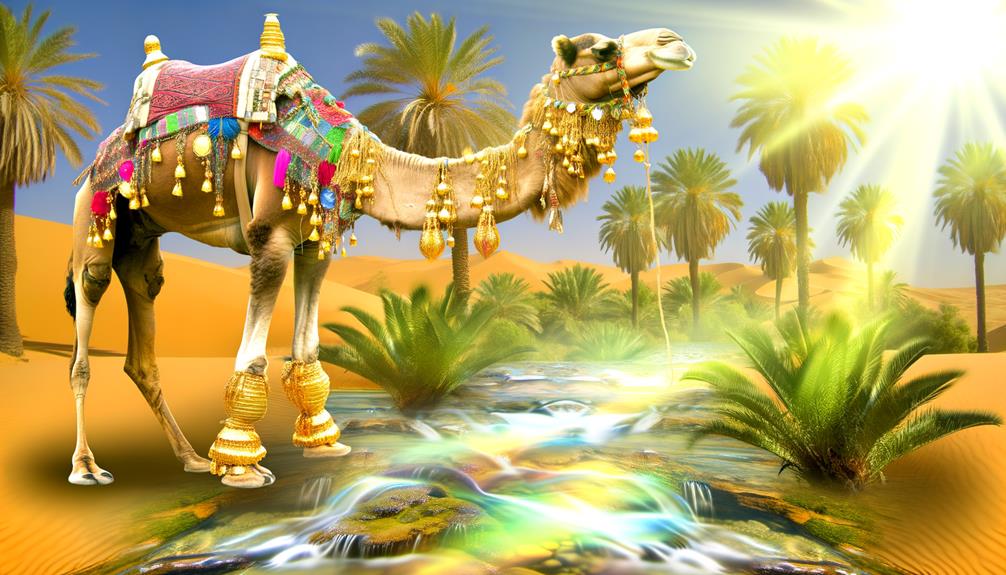
In biblical times, the camel was a potent symbol of wealth and prosperity, often signifying one’s social status and economic power. This association is evident in the narratives of wealthy patriarchs such as Abraham and Job, who possessed substantial herds of camels.
In Genesis 24:10, Abraham’s servant sets out on a journey with ten camels, underscoring the patriarch’s significant resources. Similarly, Job 1:3 enumerates Job’s vast possessions, including thousands of camels, reflecting his immense wealth.
The camel’s ability to traverse arid landscapes with heavy loads made it an invaluable asset, enhancing trade and economic activities. Consequently, the camel not only represented material wealth but also facilitated the expansion of one’s influence and reach in ancient societies.
Humility in the Desert
The camel’s enduring presence in biblical narratives often underscores themes of humility and resilience, particularly in the harsh and unforgiving environment of the desert.
In the ancient Near Eastern context, the camel’s ability to traverse barren landscapes without complaint reflects a profound humility. Unlike more ostentatious animals, the camel’s unassuming nature and pivotal role in survival illustrate a biblical ideal: finding strength in modesty.
Scriptural references to camels often highlight their service to humans, carrying burdens and providing sustenance without expectation of reward.
This symbiotic relationship between humans and camels in desolate regions serves as a metaphor for spiritual humility—embracing simplicity and gratitude, even in adversity, aligns one closer to divine principles espoused in biblical teachings.
Endurance and Resilience

Reflecting the virtue of endurance, camels symbolize resilience in biblical scripture, adeptly maneuvering the arduous conditions of the desert. This emblem of fortitude is frequently invoked in texts to highlight the capacity for sustained perseverance amidst adversity.
Camels, with their ability to endure long journeys without water, serve as a metaphor for spiritual stamina and the tenacity required to navigate life’s trials. In contexts where survival against harsh elements is paramount, the camel’s role underscores a broader theological narrative of enduring faith and unwavering commitment.
Consequently, the biblical portrayal of camels transcends mere zoological reference, embodying a profound spiritual allegory that encourages believers to cultivate resilience in their spiritual walk.
Dependence on God
A key aspect of the camel’s symbolism in biblical texts is its representation of dependence on God, illustrating how creatures and believers alike must rely on divine provision to sustain them through life’s desert-like challenges.
In the harsh and arid environments often depicted in biblical narratives, the camel’s ability to travel long distances without water and its capacity to carry substantial burdens are emblematic of spiritual reliance.
This symbolism underscores a theological premise: human limitations necessitate divine intervention.
Just as camels are equipped to endure and thrive in desolate landscapes through their unique physical adaptations, believers are called to trust in God’s providence, recognizing that their spiritual sustenance and survival hinge not on their own strength but on unwavering faith in divine care.
Journey of Faith

The camel, often seen as a symbol of endurance in biblical narratives, epitomizes the arduous yet transformative journey of faith.
Its ability to traverse harsh deserts underscores lessons in spiritual pilgrimage, illustrating the resilience required to navigate spiritual and earthly challenges.
Symbol of Endurance
In biblical narratives, the camel frequently symbolizes the endurance required for a sustained journey of faith. This association arises from the camel’s unique physiological adaptations, enabling it to traverse vast, arid deserts with limited resources.
Similarly, the path of faith often demands enduring spiritual trials and remaining steadfast amidst adversities. Scriptural references, such as the story of the Magi’s journey to Bethlehem, underscore the camel’s role as an unwavering companion in arduous travels.
This symbolism reflects the believer’s necessity to cultivate resilience and patience, mirroring the camel’s persistence in harsh conditions. Consequently, the camel becomes an emblematic figure, illustrating how faith must be continually nurtured and upheld through life’s metaphorical deserts.
Spiritual Pilgrimage Lessons
Within the context of a spiritual pilgrimage, the camel serves as a profound metaphor for the journey of faith, emphasizing the lessons of perseverance, trust, and divine guidance. The biblical narrative often employs the camel to illustrate key spiritual principles.
- Perseverance: Just as camels endure harsh desert conditions, believers are encouraged to remain steadfast in their spiritual journey, enduring trials with faith.
- Trust: Camels rely on their master’s guidance through treacherous terrains. Similarly, faith requires trust in divine wisdom and timing.
- Divine Guidance: The camel’s ability to navigate vast, arid landscapes symbolizes the importance of seeking and adhering to God’s direction in one’s spiritual walk.
Overcoming Life’s Obstacles
Steering through the myriad challenges of life, the camel in biblical symbolism offers profound insights into the resilience and faith required to overcome obstacles on the spiritual journey.
This enduring creature, often traversing harsh deserts, embodies the steadfastness and perseverance necessary for spiritual progression.
Biblically, camels were not only means of transportation but also symbols of wealth and sustenance, illustrating the divine provision amidst life’s adversities.
The camel’s ability to endure long journeys without water mirrors the believer’s reliance on faith to navigate spiritual dryness and trials.
Consequently, the camel serves as a metaphor for enduring faith, encouraging believers to trust in divine guidance and provision as they encounter and surmount life’s multifaceted challenges.
Lessons From Biblical Narratives
How do the narratives involving camels in the Bible offer profound lessons on faith, resourcefulness, and divine provision? These stories are rich with symbolic meaning and practical wisdom.
For example:
- Abraham’s Servant and Rebekah: In Genesis 24, camels symbolize divine guidance and providence as Abraham’s servant finds Rebekah.
- Joseph’s Brothers: In Genesis 37, the Midianite traders’ camels represent the unforeseen means through which Joseph’s path to providence unfolds.
- The Wise Men: In Matthew 2, camels signify the journey of faith and the fulfillment of prophecy as the Magi travel to honor the newborn Christ.
These narratives underscore the interplay between human agency and divine orchestration, highlighting the multifaceted nature of spiritual growth and reliance on God’s provision.
Virtues of Patience

The camel, often depicted in biblical texts, epitomizes the virtues of patience through its remarkable endurance in harsh conditions, symbolizing the ability to withstand life’s trials.
This endurance is further intertwined with the concept of waiting with faith, as camels traverse vast deserts, embodying resilience and quiet strength.
Analyzing these attributes within a biblical context highlights the spiritual calling for believers to cultivate patience amidst adversity.
Endurance Through Hardship
In biblical symbolism, the camel epitomizes the virtues of patience and endurance, reflecting the ability to withstand prolonged periods of hardship without faltering. This symbolism is particularly potent in the arid environments of the Near East, where camels serve as essential lifelines.
Their capacity for endurance conveys several key lessons:
- Adaptability: Camels thrive in harsh desert conditions, illustrating the spiritual need to adapt and persevere through life’s trials.
- Resourcefulness: Their ability to store water and nutrients signifies the importance of spiritual preparedness and resilience.
- Persistence: The camel’s unwavering journey through the desert mirrors the believer’s steadfastness in faith, even when faced with adversity.
Thus, the camel’s endurance is a profound metaphor for spiritual fortitude.
Waiting With Faith
Embodying the virtues of patience, the camel’s ability to wait and endure long stretches without sustenance serves as a potent symbol of unwavering faith in biblical teachings.
In a scriptural context, this attribute reflects the importance of trusting in divine timing. Just as the camel conserves its resources, believers are encouraged to exercise patience and trust in God’s provision, even when immediate answers are not evident.
This spiritual principle is exemplified in various biblical narratives where patience is rewarded through the eventual fulfillment of God’s promises.
The camel’s resilience in waiting underscores the theological virtue of hope, reinforcing the belief that faith, coupled with patience, will ultimately lead to spiritual nourishment and divine reward.
Resilience in Silence
Resilience, often manifesting through the quiet endurance exemplified by camels, serves as a profound demonstration to the virtues of patience within biblical narratives.
This symbolism is rooted in several key aspects:
- Adaptability in Harsh Conditions: Camels thrive in desert environments, reflecting the biblical virtue of remaining steadfast amid adversity.
- Silent Strength: Their ability to carry heavy burdens without complaint parallels the silent suffering and fortitude encouraged in scripture.
- Endurance Over Time: Camels’ capacity to travel long distances without water signifies the enduring patience required in spiritual journeys.
These attributes underscore the camel as an emblem of resilience in silence, encouraging believers to cultivate patience, strength, and adaptability in their own lives, as modeled by these remarkable creatures.
Spiritual Prosperity
The camel’s symbolic representation in biblical texts often underscores themes of spiritual prosperity, highlighting the virtue of endurance and the rewards of faith.
In the context of ancient Near Eastern cultures, camels were essential for trade and sustenance, embodying wealth and stability.
Biblically, they signify divine provision and the spiritual wealth that comes from unwavering faith.
For instance, the story of Abraham’s servant finding a wife for Isaac (Genesis 24) features camels as a confirmation of God’s blessings and guidance.
Therefore, the camel illustrates a deeper spiritual truth: prosperity is not merely material but deeply rooted in the endurance of faith and the divine assurance of provision, reflecting God’s abundant blessings upon those who trust in Him.
Conclusion
In the biblical tapestry, the camel emerges as a multifaceted symbol, weaving together threads of wealth, humility, endurance, and spiritual reliance.
Its presence in the scriptures invites contemplation on the virtues of patience and the arduous journey of faith.
Through the camel’s enduring spirit and resilience against the desert’s barrenness, it becomes a metaphor for spiritual prosperity, illustrating a life that thrives through divine dependence and unwavering faithfulness.
This emblematic creature encapsulates profound theological lessons within its storied humps.