Spiritual Meaning of Mulberry Tree: Wisdom and Patience
The mulberry tree, steeped in spiritual significance, symbolizes resilience, transformation, and life’s cyclical nature. Across various cultures, it embodies endurance, adaptability, and wisdom.
In sacred texts, its leaves signify nourishment and growth, while its fruit represents spiritual abundance. Folklore and mythology link it to magic, tragedy, and creativity, showcasing its profound impact on human imagination.
As a beacon of spiritual healing, the mulberry tree fosters tranquility, balance, and inner clarity. By embracing its lessons of resilience and generosity, one can gain deeper insights into living a fulfilling, harmonious life.
Exploring further reveals more about this enchanting tree’s influence.

Spiritual Meaning of Mulberry Tree: Wisdom, Patience, and Divine Timing
| Aspect | Spiritual Meaning |
|---|---|
| Wisdom and Intuition | Represents deep spiritual insight and inner knowing |
| Patience and Timing | Symbolizes waiting for the right moment, aligning with divine timing |
| Ancestral Connection | Reflects spiritual heritage, generational knowledge, and legacy |
| Growth and Transformation | Encourages steady, purposeful spiritual evolution |
| Nourishment and Abundance | Associated with spiritual sustenance and blessings in due season |
Historical Significance

Throughout history, the mulberry tree has held a profound place in various cultures and traditions, symbolizing both resilience and transformation. Ancient civilizations revered the tree for its ability to thrive in diverse climates and conditions, making it a symbol of endurance.
The tree’s cyclical nature—shedding leaves in winter and bursting forth anew in spring—mirrors the human journey of renewal and change. Mulberry trees were often planted near homes, believed to bring protection and fortune.
Their fruits were valued not just for nourishment but also for their medicinal properties. Each part of the mulberry tree, from its roots to its leaves, embodies a story of persistence and adaptability, inspiring those who encounter it to embrace life’s continuous cycles.
Symbolism in Sacred Texts
In sacred texts across various religions, the mulberry tree often symbolizes spiritual growth, transformation, and the interconnectedness of life.
This humble tree stands as a representation of resilience and renewal, echoing themes found in scriptures. The leaves signify nourishment and wisdom, while the fruit represents the fruition of faith and spiritual abundance.
| Religion | Symbolism | Sacred Text Reference |
|---|---|---|
| Christianity | Faith and Growth | Parable of the Mulberry Tree |
| Buddhism | Enlightenment | Jataka Tales |
| Hinduism | Divine Connection | Vedic Texts |
Reflecting on these symbols, one can find a deeper connection to the divine and a reminder that, like the mulberry, they too can thrive through life’s seasons.
Folklore and Mythology
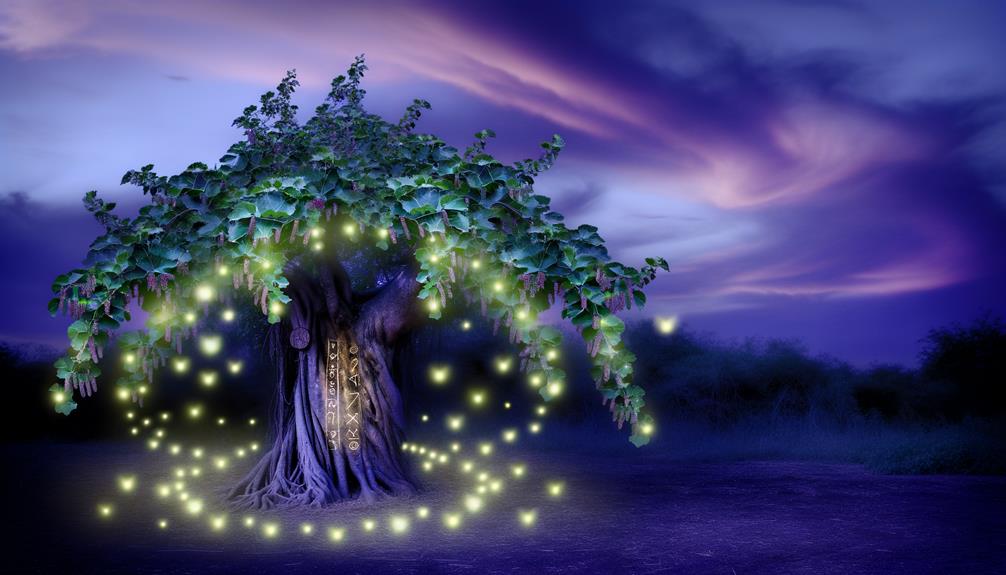
Weaving through the threads of folklore and mythology, the mulberry tree emerges as a symbol of mystery, magic, and transformation. Ancient stories often depict the tree as a bridge between domains, connecting the earthly with the divine.
In Greek mythology, it’s tied to the tragic love story of Pyramus and Thisbe, where the tree’s berries turned red from their spilled blood, symbolizing eternal love and sacrifice.
In Chinese legend, the mulberry is linked to the goddess of silk, embodying creativity and rebirth. Native American traditions see it as a protector against evil spirits.
These rich tales and legends reflect the mulberry tree’s profound influence on human imagination and its enduring spiritual significance across different cultures.
Spiritual Healing Properties
Beyond its mythological roots, the mulberry tree offers profound spiritual healing properties that nurture the soul and foster inner transformation. Its serene presence encourages deep reflection, helping individuals connect with their inner selves.
The mulberry’s resilience symbolizes strength and perseverance, inspiring those who seek emotional and spiritual growth. By meditating under its branches or incorporating its essence into daily rituals, one can access a wellspring of tranquility and wisdom.
The tree’s vibrant energy promotes balance and harmony, making it a powerful ally in overcoming life’s challenges. Embracing the mulberry tree’s spiritual essence can lead to renewed clarity, emotional healing, and a deeper understanding of one’s life path.
Lessons From the Mulberry Tree
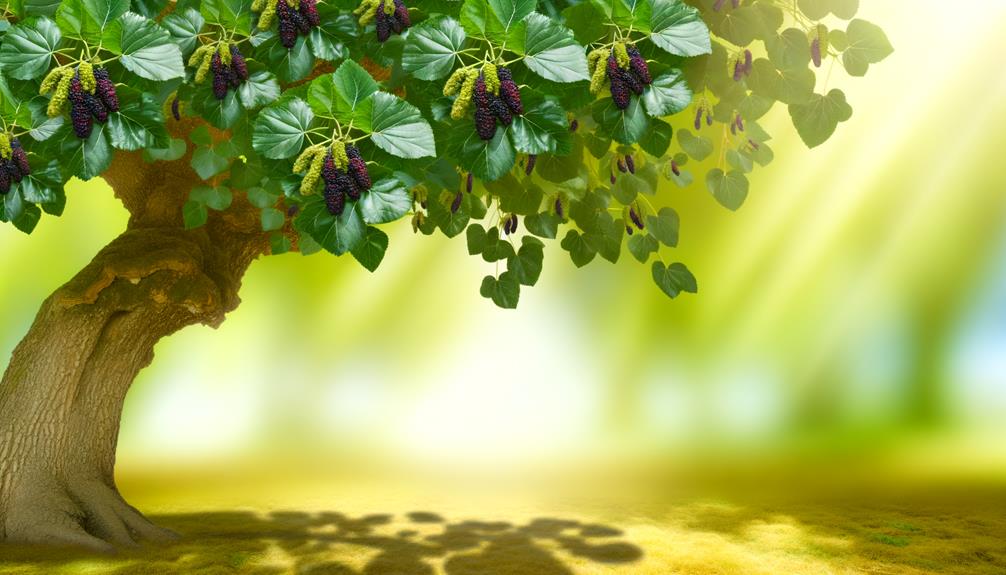
Drawing from its spiritual healing properties, the mulberry tree imparts timeless lessons on resilience, adaptability, and the enduring power of nature’s wisdom. It stands firm through harsh seasons, symbolizing how one can weather life’s storms with grace.
The tree’s deep roots remind individuals to stay grounded, finding strength in their foundation. Its ability to adapt to various climates teaches the importance of flexibility in the face of change.
The mulberry’s fruit, which nourishes many, serves as a reminder to share one’s gifts and kindness generously. By observing this tree, one learns the value of patience and the beauty of growth over time.
The mulberry tree, in its quiet strength, offers profound insights into living a balanced and fulfilling life.
Conclusion
In understanding the spiritual meaning of the mulberry tree, one gleans wisdom about resilience and transformation.
For instance, consider a woman who found solace under a mulberry tree after a difficult year, drawing strength from its enduring roots.
This tree, woven into sacred texts and folklore, teaches us to heal and grow.
Embracing the lessons of the mulberry, we’re reminded that even in adversity, there’s potential for profound personal and spiritual growth.