
Spiritual Meaning of Almond Tree: Renewal and Promise
The almond tree, with its early blossoms and deep historical roots, symbolizes renewal, resilience, and divine favor across various cultures. Its early blooming signifies hope and the end of winter’s dormancy, representing life’s perseverance and the promise of new beginnings.
In the Bible, it’s a symbol of vigilance and God’s watchful care. This tree inspires individuals to embrace change, showing that beauty and strength often emerge from adversity.
As one contemplates the almond tree’s lessons, richer insights into its spiritual significance unfold.

Spiritual Meaning of Almond Tree: Symbol of Awakening, Promise, and Divine Favor
| Symbolism | Spiritual Insight | Interpretation |
|---|---|---|
| Awakening | One of the first trees to bloom in spring | Represents early spiritual awakening and readiness for new growth |
| Divine Promise | Biblically linked to visions and prophetic signs | Symbolizes fulfillment of divine purpose and sacred commitments |
| Renewal & New Beginnings | Blooms while others still sleep | Encourages stepping into a new season of life, love, or spiritual expansion |
| Clarity & Insight | Associated with light and quick growth | Reflects mental clarity, discernment, and sudden inspiration |
| Spiritual Favor | Seen as a tree of blessing and beauty | A sign of divine approval, grace, and alignment with higher will |
Historical Significance

Throughout history, the almond tree has held a profound significance in various cultures and traditions. Its roots stretch deep into ancient times, where it symbolized hope, endurance, and resilience.
Ancient Egyptians placed almonds in Pharaohs’ tombs, believing they’d nourish them in the afterlife. In Greek mythology, the almond tree was associated with the tragic love story of Phyllis and Demophon, representing eternal love and rebirth.
The tree’s early blossoming in late winter made it a beacon of life’s perseverance against the harshest conditions. In many cultures, almonds were considered sacred, used in rituals and ceremonies to invoke protection and blessings.
The almond tree’s historical significance reminds us of humanity’s enduring spirit and the timeless quest for meaning.
Symbol of Renewal
The almond tree, with its early blossoms breaking through the winter frost, epitomizes nature’s promise of renewal and rebirth. It signals the end of winter’s dormancy and the onset of spring’s vibrancy, making it a powerful symbol of new beginnings.
The tree’s resilience and ability to flourish despite harsh conditions inspire those who witness its transformation. In many cultures, the almond tree’s bloom is seen as a hopeful reminder that life persists and thrives, even after periods of adversity.
This profound sense of renewal resonates deeply, encouraging individuals to embrace change and growth. The almond tree’s annual cycle serves as a gentle, yet compelling, reminder that renewal is an inherent part of life’s journey.
Biblical References
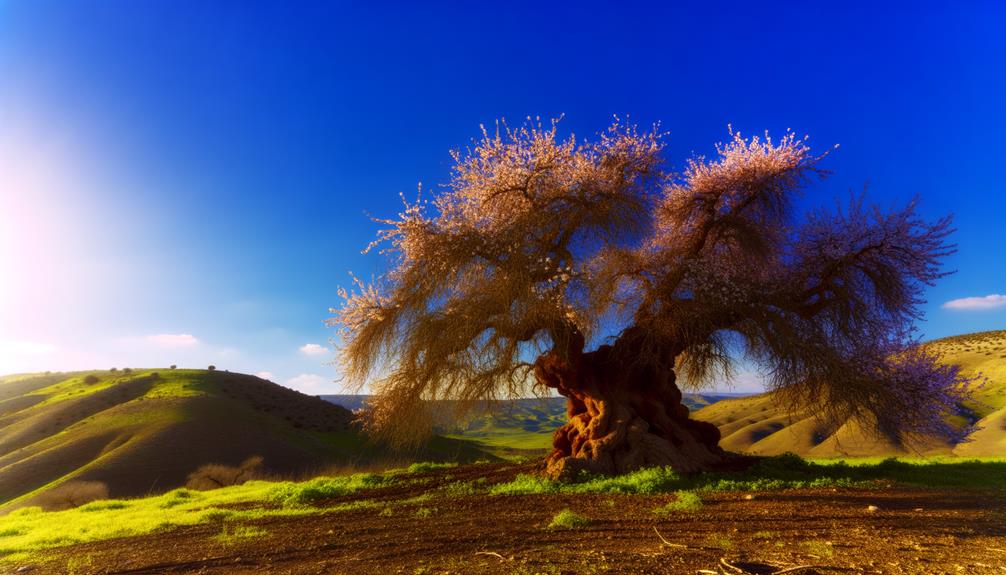
In the Bible, the almond tree appears as a powerful symbol of vigilance and divine favor. Its early blossoming, even before other trees, reflects God’s watchfulness and readiness to act.
In the book of Jeremiah, God uses the almond tree to illustrate His alertness to fulfill His word. The Hebrew word for almond, ‘shaqed,’ sounds like ‘shoqed,’ meaning ‘watchful’ or ‘awake,’ further emphasizing this symbolism.
Furthermore, Aaron’s rod, which budded and produced almonds, signified God’s chosen leadership and blessing. This vivid imagery invites believers to see the almond tree as a reminder of God’s constant vigilance and the promise of His timely interventions.
Through the almond tree, the Bible offers a profound message of hope and divine attentiveness.
Cultural Interpretations
Many cultures cherish the almond tree for its rich symbolism, often associating it with themes of renewal, hope, and endurance.
In ancient Greece, the almond tree symbolized the promise of new beginnings, as its early blossoms heralded spring.
Persian culture views the tree as a representation of resilience and beauty, flourishing even in harsh conditions.
The almond tree also holds a special place in Jewish traditions, symbolizing vigilance and awakening, thanks to its early blooming cycle.
In each of these cultural interpretations, the almond tree stands as a reflection of life’s enduring spirit.
Its ability to thrive and bloom against the odds inspires people to find strength and hope in their own journeys.
Spiritual Lessons

Drawing from its rich cultural symbolism, the almond tree also offers profound spiritual lessons that resonate deeply with the human experience.
Its early blooming teaches resilience and hope, reminding individuals to bloom even in adversity. The tree’s deep roots symbolize grounding, urging people to stay connected to their core values. In addition, the delicate yet sturdy blossoms convey the beauty of vulnerability and strength in unity.
| Spiritual Lesson | Emotional Impact |
|---|---|
| Early Blooming | Resilience and Hope |
| Deep Roots | Grounding and Stability |
| Delicate Blossoms | Beauty in Vulnerability |
| Sturdy Branches | Strength in Unity |
| Fruitfulness | Abundance and Gratitude |
These lessons from the almond tree inspire a life lived with purpose, gratitude, and unwavering strength.
Modern Day Relevance
The almond tree’s symbolism continues to hold significant relevance in modern times, offering profound insights into personal growth and spiritual well-being.
It stands as a reminder of resilience and the beauty of new beginnings, encouraging individuals to embrace change and pursue inner transformation.
In today’s fast-paced world, the almond tree’s ability to withstand harsh conditions inspires people to cultivate strength and adaptability. Its early blooming serves as a metaphor for seizing opportunities and nurturing one’s potential.
The almond’s nourishing properties also symbolize the importance of self-care and mindfulness. By reflecting on the almond tree’s qualities, individuals can find renewed purpose and a deeper connection to their spiritual journey, fostering a sense of balance and harmony in their lives.
Conclusion
The almond tree, much like a wise old sage, stands as a symbol of life’s cycles of renewal and resilience.
Its branches, which once weathered the harshest winters, burst forth with blossoms, symbolizing hope and spiritual awakening.
Across history and cultures, the almond tree whispers ancient wisdom, urging humanity to embrace change and growth.
In today’s world, its enduring presence reminds us all that new beginnings await those who nurture their inner gardens with patience and faith.