
Bleeding Heart Flower Spiritual Meaning: Love and Compassion
The Bleeding Heart flower, or Lamprocapnos spectabilis, embodies profound spiritual meanings, rooted in its unique morphology resembling a heart with a droplet symbolizing deep, enduring love. In traditional Chinese culture, it signifies undying passion, while Victorian floriography links it to unwavering commitment.
Its delicate, drooping blossoms foster compassion and emotional sensitivity, often used in therapeutic settings to enhance empathetic behaviors and reduce stress. Additionally, the flower functions as an agent for emotional healing, promoting tranquility and mood stability.
Cultural references span from East Asian symbolism to Native American folklore, suggesting a rich tapestry of associations waiting to be uncovered.
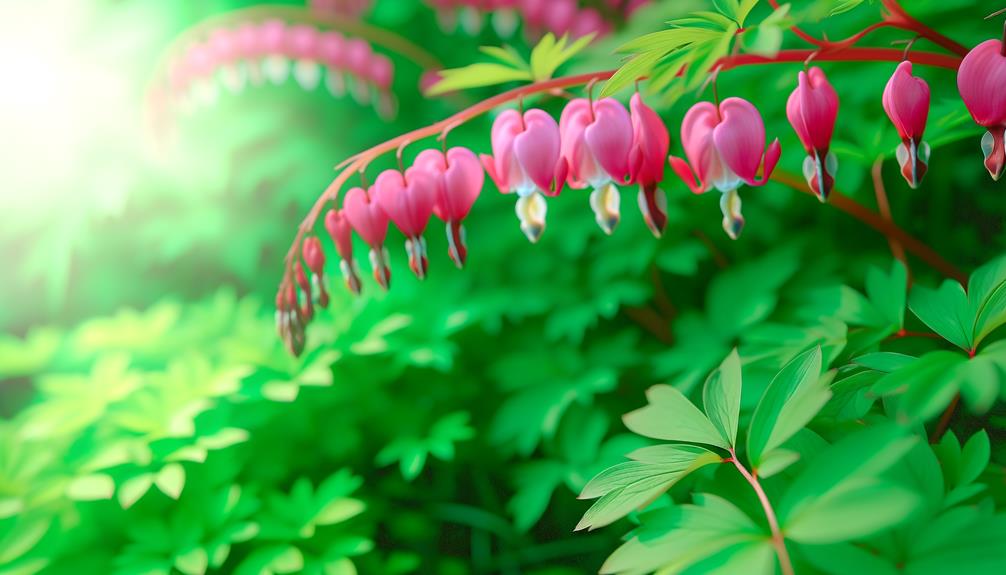
Bleeding Heart Flower Spiritual Meaning: Symbolism of Love, Healing, and Compassion
| Aspect | Spiritual Meaning |
|---|---|
| Love & Compassion | The Bleeding Heart flower symbolizes deep love and compassion, representing the emotional and spiritual connection between individuals, especially in romantic relationships. |
| Heartbreak & Healing | This flower can also signify the pain of heartbreak, loss, or emotional suffering, but it offers hope for healing and recovery through emotional growth and spiritual resilience. |
| Sacrifice & Devotion | The flower’s shape often represents selflessness and devotion, symbolizing sacrifice for the well-being of others, whether in love or spiritual service. |
| Emotional Release | The Bleeding Heart encourages emotional release, urging individuals to let go of past hurts and embrace the healing process, leading to personal transformation. |
| Spiritual Sensitivity | It symbolizes spiritual sensitivity, opening the heart to greater empathy, understanding, and emotional depth in relationships with others and the divine. |
Symbolism of Love
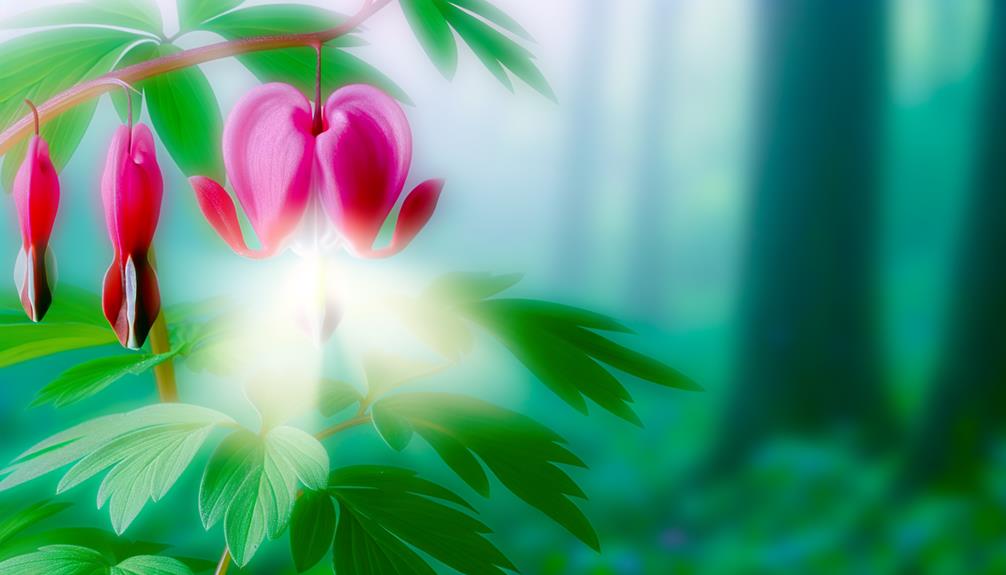
The bleeding heart flower, with its distinctive heart-shaped blossoms, symbolizes deep and enduring love in various cultural and historical contexts. Its botanical name, Lamprocapnos spectabilis, reflects its striking appearance.
Historically, this flower’s morphology—resembling a heart with a drop of blood—has led to its association with romantic love and fidelity. In traditional Chinese culture, the bleeding heart signifies undying love and passion.
Scientific studies indicate that the flower’s vibrant hues, primarily pink and white, are due to anthocyanin pigments, which attract pollinators and enhance its allure.
Evidence suggests that in Victorian floriography, gifting a bleeding heart conveyed a message of deep affection and unwavering commitment.
Consequently, its symbolism aligns with its visual and biological characteristics, highlighting its role in expressing love.
Compassion and Empathy
Bleeding heart flowers embody compassion and empathy, as their delicate, drooping blossoms evoke a sense of gentle care and emotional sensitivity in both cultural symbolism and psychological studies. These flowers are often used in therapeutic settings due to their calming appearance and the emotional response they elicit. Research indicates that exposure to natural beauty, such as the bleeding heart, can enhance empathetic behaviors and reduce stress levels. The following table elucidates the relationship between these flowers and psychological well-being:
| Aspect | Impact |
|---|---|
| Visual Aesthetics | Promotes emotional calm and relaxation |
| Symbolic Representation | Enhances feelings of empathy |
| Cultural Significance | Encourages compassionate actions |
| Psychological Research | Linked to reduced stress and anxiety |
This evidence underscores the profound influence of bleeding heart flowers on fostering empathy and compassion.
Emotional Healing
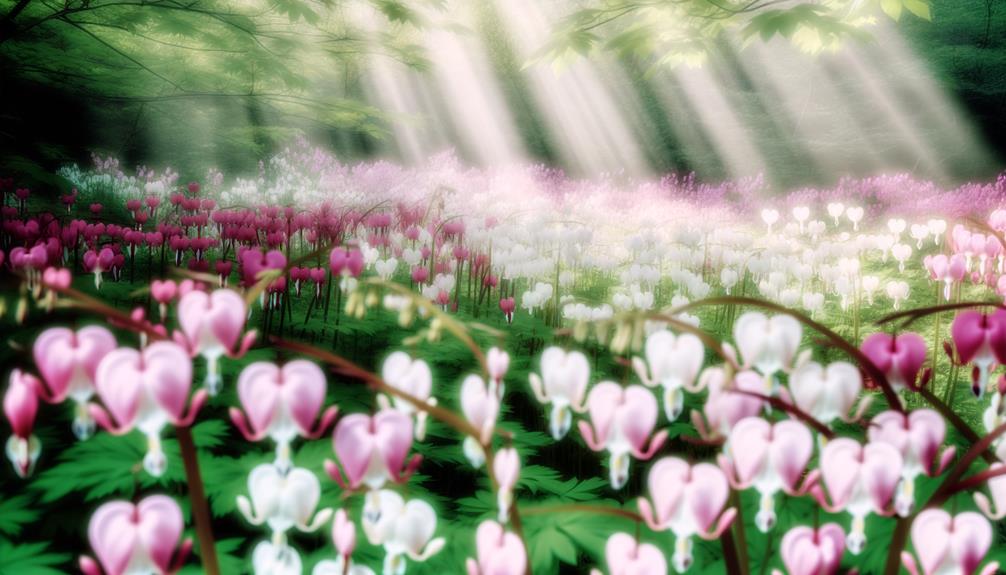
In addition to cultivating compassion and empathy, bleeding heart flowers serve as potent agents for emotional healing due to their soothing visual appeal and symbolic resonance.
The flower’s pendulous, heart-shaped blooms can evoke feelings of tranquility and solace, acting as visual stimuli that promote psychological well-being.
Studies in environmental psychology indicate that exposure to aesthetically pleasing natural elements can reduce stress and anxiety levels.
The bleeding heart’s delicate structure and gentle hues may trigger the brain’s release of neurotransmitters like serotonin, enhancing mood stability.
Furthermore, the flower’s symbolic association with love and understanding may provide individuals with a sense of emotional support, facilitating the processing of grief or emotional turmoil.
Consequently, these flowers contribute notably to holistic emotional recovery.
Cultural Significance
Across various cultures, bleeding heart flowers carry deep symbolic meanings that reflect themes of love, compassion, and emotional resilience.
In East Asian traditions, they symbolize undying love and are often used in art and poetry to convey romantic devotion.
Native American folklore views the flower as a representation of compassion and empathy, resonating with their deep connection to nature’s emotional vibrations.
European cultures, particularly during the Victorian era, saw the bleeding heart as a symbol of unrequited love and longing.
Scientific studies on cultural symbolism have shown that the unique heart-shaped blossoms with their trailing ‘tear’ drops evoke strong emotional responses, reinforcing the flower’s association with deep, heartfelt emotions across diverse societies.
Using Bleeding Hearts in Rituals

Ritualistic applications of bleeding heart flowers often harness their symbolic resonance to enhance themes of love, healing, and emotional purification. Practitioners incorporate these flowers into ceremonies aimed at mending relationships and fostering emotional resilience.
The flowers’ distinct heart-like shape and vibrant color serve as focal points in rituals, believed to amplify emotional clarity and spiritual connection. Evidence suggests that their inclusion in healing rituals can aid in releasing negative emotions and promoting inner peace.
In addition, bleeding hearts are often used in love rituals, symbolizing the deep, unconditional nature of true affection. Scientific studies on floral symbolism underscore their efficacy in ritualistic settings, highlighting their profound impact on psychological and spiritual well-being.
Conclusion
To sum up, the bleeding heart flower—an emotional powerhouse—symbolizes love, compassion, and empathy, while aiding emotional healing.
Clearly, this botanical wonder isn’t just a pretty face. Cultural significance? Check. Ritualistic use? Absolutely.
Who knew a plant could do so much, right? One wonders if it also does laundry.
But don’t worry, scientists assure us: it’s just a flower, not a miracle worker. Keep your expectations grounded, and maybe, just maybe, you’ll find some emotional solace in its petals.