
Dead Squirrel in Yard Spiritual Meaning: Missed Preparation
The appearance of a dead squirrel in your yard holds profound spiritual meaning, often prompting a period of introspection and reassessment. It symbolizes resourcefulness and the importance of preparedness, urging you to evaluate your readiness for future challenges.
This event may also reflect on life’s cyclical nature, encouraging you to embrace change and transformation. Additionally, it serves as a reminder to balance work with joy and to appreciate the transient nature of life.
This occurrence invites you to introspect on emotional resilience and the balance between life and death, guiding you towards deeper insights about your life journey. Learn more about how this symbol can influence your personal growth and outlook.
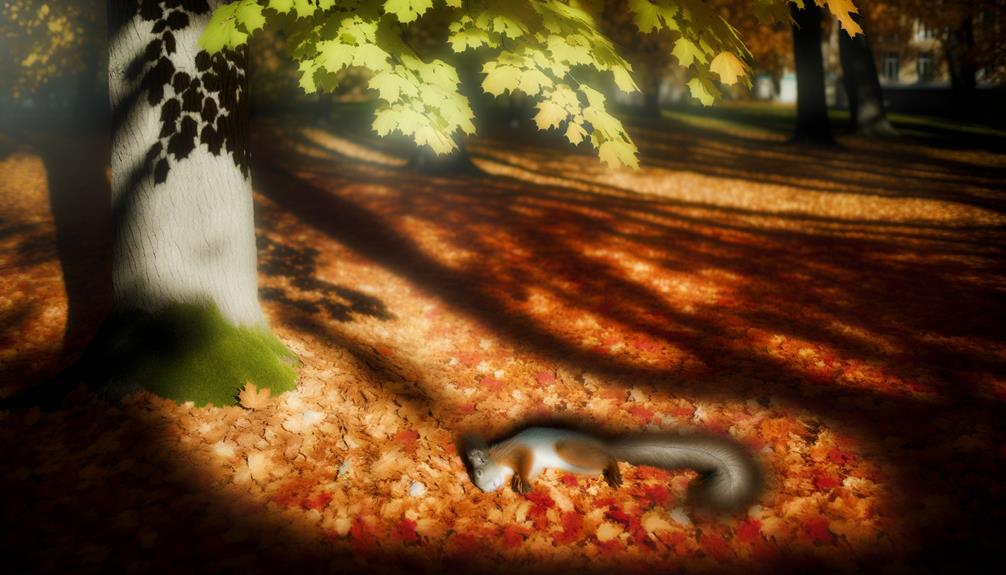
Dead Squirrel in Yard Spiritual Meaning: Lost Preparedness, Change, and Spiritual Reflection
| Symbolism Aspect | Spiritual Meaning |
|---|---|
| End of Preparation Phase | Indicates a period of planning or storing energy has come to a close |
| Missed Opportunities | A sign to be more mindful of chances and not to delay action |
| Sudden Change | Symbolizes unexpected shifts or disruptions in your path |
| Emotional Overload | Reflects burnout or the need to rest and reset spiritually and mentally |
| Call for Reflection | Encourages looking inward to assess priorities and emotional alignment |
Symbolism of Squirrels
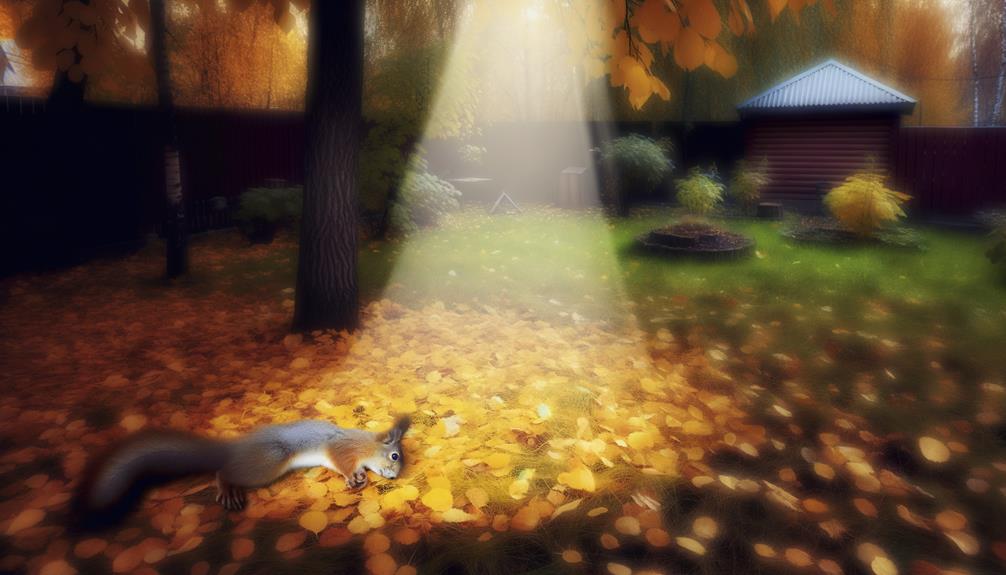
Exploring the symbolism of squirrels reveals their association with resourcefulness, preparedness, and the importance of balancing work and play.
Squirrels are often seen gathering and storing food, showcasing their inherent ability to prepare for the future. This behavior symbolizes foresight and the wisdom in planning ahead.
Additionally, their playful nature serves as a reminder to find joy in the present moment, striking a balance between diligence and leisure.
The squirrel’s industrious habits also highlight the value of hard work and persistence.
By understanding these characteristics, one can draw parallels to human behavior, encouraging a harmonious blend of productivity and relaxation.
This symbolism provides a meaningful lens through which to view everyday actions and decisions, fostering a more mindful existence.
Spiritual Animal Messages
In the domain of spiritual animal messages, encountering a dead squirrel can serve as a profound symbol, urging individuals to reflect on their own life’s preparedness and adaptability.
Squirrels are often seen as symbols of resourcefulness and foresight. Consequently, the sight of a deceased squirrel may suggest a need to reassess how well-prepared one is for future challenges.
It invites contemplation on whether we have adequately stored our emotional and spiritual resources for unforeseen circumstances. This experience can act as a gentle reminder to nurture resilience and adaptability in our lives.
Embracing this message with compassion can lead to deeper self-awareness and a renewed commitment to personal growth and preparedness.
Signs From the Universe
Signs from the universe often manifest through symbolic animal messages, guiding us to pay attention to the deeper layers of our experiences.
Observing a dead squirrel may initially evoke sadness, but by interpreting nature’s omens, we can uncover profound insights into our own lives.
Understanding these signs can offer a sense of direction and reassurance during times of uncertainty.
Symbolic Animal Messages
The appearance of a dead squirrel can often be perceived as a profound symbolic message from the universe, urging reflection and introspection.
Animal symbolism has long been a conduit for spiritual and emotional insights, offering guidance during pivotal moments in our lives.
The death of a creature as vibrant and industrious as a squirrel may signify the end of a chapter or the need to reassess one’s current path.
It serves as a gentle reminder to pause and consider what aspects of life might be out of balance or neglected.
Interpreting Nature’s Omens
Drawing wisdom from nature’s omens requires an open heart and a willingness to see beyond the ordinary. When interpreting signs from the universe, such as encountering a dead squirrel, it is essential to approach the experience with mindfulness and reflection.
These occurrences can serve as profound messages, inviting us to:
- Pause and Reflect: Consider what areas of your life need attention or closure.
- Embrace Change: Understand that endings often precede new beginnings, signaling transformation.
- Seek Inner Guidance: Trust your intuition to decipher the deeper meaning behind the omen.
Energy of Preparation
The appearance of a dead squirrel can serve as a poignant reminder of the energy of preparation.
It encourages us to ready ourselves for impending changes, build emotional resilience, and recognize the symbolic cycles of life.
This moment calls for introspection and the fortitude to embrace transformation with grace and wisdom.
Readying for Change
As we encounter the symbolism of a dead squirrel, it often signifies a pivotal moment to prepare and ready ourselves for upcoming changes. This spiritual sign encourages us to harness the energy of preparation with insight and compassion.
To navigate this transformative period, consider the following:
- Reflect on Current Life Patterns: Acknowledge what is no longer serving you and be open to letting go.
- Set Intentional Goals: Clearly define what you wish to achieve, ensuring alignment with your core values.
- Cultivate Inner Strength: Foster resilience by embracing mindfulness practices and self-care routines.
This guidance aims to help you understand and embrace the necessity of change, ensuring you are well-prepared for whatever the future holds.
Emotional Resilience Building
Building emotional resilience is essential for maneuvering the transformative energies that arise during periods of change. It equips individuals to navigate the uncertainties and emotional turbulence that often accompany life’s unexpected events.
Cultivating emotional resilience involves recognizing and acknowledging one’s feelings, while also developing strategies to manage stress and adapt to new circumstances. Practices such as mindfulness, reflective journaling, and seeking supportive relationships can fortify one’s inner strength.
Additionally, embracing a growth mindset helps in viewing challenges as opportunities for personal development rather than insurmountable obstacles. By fostering emotional resilience, one can maintain equilibrium and clarity, even amidst the most profound shifts, enabling a more harmonious journey through life’s inevitable transformations.
Symbolic Life Cycles
Understanding symbolic life cycles can illuminate the profound energy of preparation inherent in the natural world. The presence of a dead squirrel in your yard may symbolize an important phase of change and preparation. Reflecting on this can evoke a sense of readiness and acceptance in facing life’s inevitable changes.
Consider the following emotional touchpoints:
- Reflection: The end of one life can prompt deep introspection and spiritual growth.
- Renewal: Death is often a precursor to new beginnings, signaling a time to prepare for fresh opportunities.
- Legacy: Observing nature’s cycles can remind us to cherish and preserve the legacies left behind.
Transformation and Change

The appearance of a dead squirrel can symbolize a significant period of transformation and change in one’s life, urging a closer examination of personal growth and adaptation.
This poignant sign may suggest that old habits, ways of thinking, or relationships are no longer serving your highest good. It encourages letting go of the past to make room for new opportunities and growth.
Embracing this shift, though challenging, is essential for evolving into a more authentic version of oneself.
The dead squirrel serves as a gentle reminder that life’s changes, though sometimes difficult, are necessary for spiritual development and renewal.
Reflection on Habits
As we contemplate the transformative symbolism of the dead squirrel, it becomes important to reflect on the habits that shape our daily lives and influence our personal growth. Habits, whether constructive or detrimental, are powerful forces in our journey.
Consider these three aspects to evoke deeper understanding:
- Awareness: Recognize the routines that dominate your day. Are they nurturing your well-being or hindering your progress?
- Intention: Cultivate habits with purpose. Align daily actions with your long-term goals and values.
- Adaptability: Embrace change and be willing to let go of patterns that no longer serve you.
Life and Death Balance
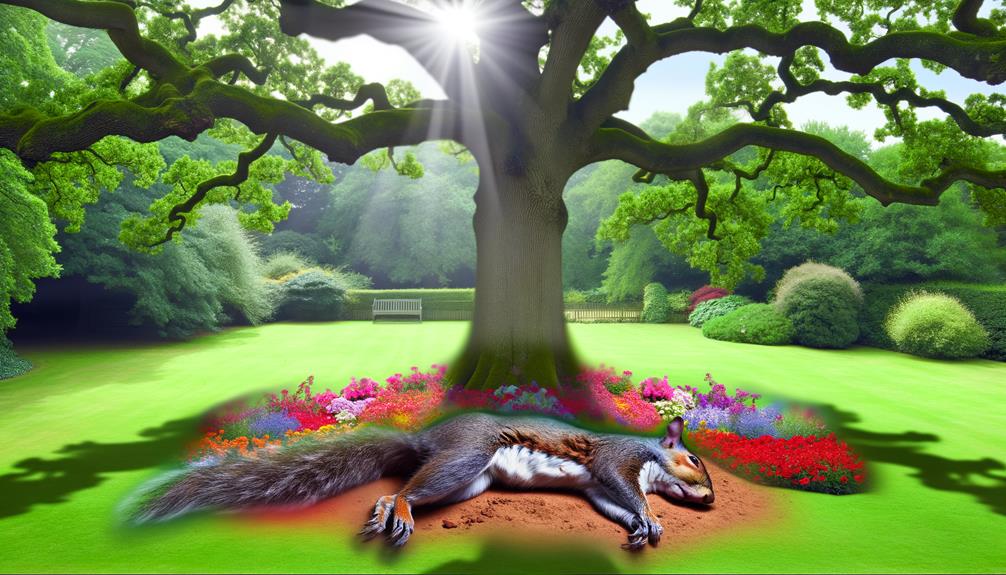
The appearance of a dead squirrel can serve as a poignant reminder of the delicate balance between life and death.
This moment invites us to reflect on the symbolism of mortality, gain insights from nature’s cycles, and consider how these observations contribute to our spiritual growth.
Recognizing this balance encourages a deeper understanding of our own existence and the transient nature of life.
Symbolism of Mortality
Encountering a dead squirrel can serve as a poignant reminder of life’s fragile balance between existence and mortality. This unexpected sight can evoke a deep emotional response and prompt reflection on the ephemeral nature of life.
The sight of the lifeless creature might lead one to contemplate:
- Acceptance of Life’s Transience: Embracing the impermanence of all living things can foster a deeper appreciation for the present moment.
- Appreciation of Loved Ones: Such encounters can encourage us to cherish our relationships and express gratitude more often.
- Personal Growth: Reflecting on mortality can inspire personal development and a more profound understanding of our own life’s purpose.
Nature’s Cycle Observations
Observing the delicate interplay between life and death in nature reveals profound insights into the interconnectedness of all living things.
Witnessing a dead squirrel in one’s yard can be a poignant reminder of this balance, urging us to reflect on the cyclical nature of existence. Nature constantly evolves through birth, growth, decay, and rebirth, each stage contributing essential elements to the ecosystem.
| Life Stage | Significance |
|---|---|
| Birth | Beginning of new life |
| Growth | Development and maturity |
| Decay | Return to earth |
| Rebirth | Continuation of the cycle |
Recognizing these stages helps us appreciate the natural order and our place within it. Through this understanding, we can cultivate a deeper respect for the rhythms of life and death.
Spiritual Growth Insights
Understanding the balance between life and death can offer profound spiritual growth insights, fostering a deeper awareness of our own existence and interconnectedness.
Encountering a dead squirrel in your yard may prompt reflection on the fragility and preciousness of life.
This moment serves as a powerful reminder to:
- Cherish Every Moment: Life’s brevity underscores the importance of treasuring each experience and relationship.
- Honor Life’s Cycles: Recognize that death is an integral part of nature’s cycle, paving the way for renewal and transformation.
- Cultivate Compassion: Witnessing death can deepen empathy and compassion for all living beings.
Messages of Playfulness
Amid the often solemn interpretations of animal symbolism, the appearance of a dead squirrel can also serve as a poignant reminder to embrace the joy and spontaneity in life.
Squirrels are naturally playful creatures, symbolizing the importance of taking time to enjoy light-hearted moments. Their presence can serve as a gentle nudge to balance responsibilities with periods of fun and relaxation.
| Aspect | Meaning |
|---|---|
| Playfulness | Reminder to incorporate joy into daily life |
| Spontaneity | Embrace unexpected opportunities for fun |
| Balance | Blend work with leisure for holistic well-being |
| Mindfulness | Be present in joyful moments |
| Reflection | Contemplate how to reintroduce playfulness |
Understanding Loss
While the playful nature of squirrels encourages us to embrace joy, the sight of a dead squirrel invites a deeper reflection on the themes of loss and impermanence.
This moment can serve as a poignant reminder of life’s transient nature, urging us to contemplate:
- Acceptance: Recognize that loss is an intrinsic part of life, essential for personal growth.
- Appreciation: Cherish moments with loved ones, understanding that time is finite.
- Resilience: Find strength in adversity, transforming grief into a source of inner fortitude.
These reflections can guide us toward a more profound understanding of our own experiences with loss.
Embracing New Beginnings
In the wake of loss, the concept of embracing new beginnings can serve as a beacon of hope and renewal. A dead squirrel in your yard, while initially unsettling, symbolizes the closure of one chapter and the dawning of another.
This change encourages introspection and the recognition of life’s cyclical nature. By allowing ourselves to process grief and let go of what no longer serves us, we create space for growth and transformation.
Just as nature shifts through seasons, so too can we find strength in change. Embracing new beginnings involves honoring the past while courageously stepping into the future, fostering resilience and a renewed sense of purpose.
Conclusion
The dead squirrel in the yard symbolizes a profound spiritual message, intertwining themes of preparation, transformation, and the delicate balance of life and death.
Such an encounter invites contemplation on the cycles of existence, urging an embrace of new beginnings amidst loss.
This small creature’s demise serves as an emblem of resilience and change, reminding that within the sorrow of endings lies the seed of renewal, much like the phoenix rising from its ashes.