
Go Down Moses Spiritual Meaning: Freedom
When you explore the spiritual meaning of ‘Go Down Moses,’ you’ll find a profound connection to resistance and hope during American slavery. The song’s roots lie in biblical narratives, using Moses as a symbol of divine intervention and liberation from oppression.
Its refrain, ‘Let my people go,’ not only echoes Exodus 5:1 but also served as a covert call for freedom among enslaved individuals. The spiritual became a tool for clandestine communication, reflecting the harsh realities of bondage while fostering a shared struggle for liberation.
If you look deeper, you’ll uncover its lasting impact and contemporary relevance.

Go Down Moses Spiritual Meaning: Symbolism of Freedom and Divine Deliverance
| Symbolism | Meaning |
|---|---|
| Freedom from Bondage | Represents liberation from slavery, both physical and spiritual |
| Divine Intervention | Symbolizes God’s power and will to rescue the oppressed |
| Moses as a Prophet | Embodies leadership, obedience, and spiritual guidance |
| Resistance and Hope | Inspires courage in the face of injustice |
| Spiritual Awakening | Calls for awareness of divine truth and moral responsibility |
| Redemption | Reflects the journey toward salvation and spiritual renewal |
Historical Background
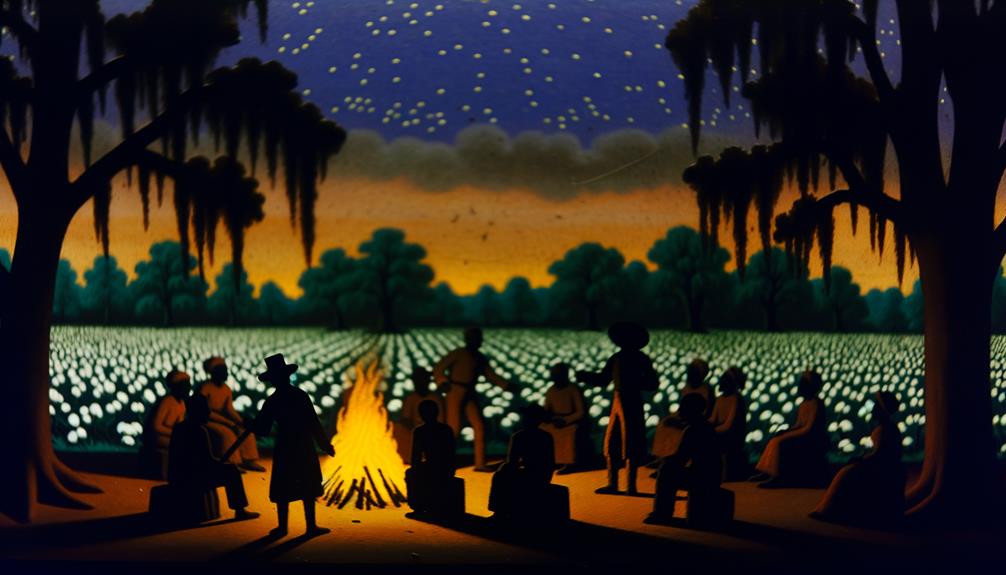
Although often associated with the African American spiritual tradition, ‘Go Down Moses‘ has roots that trace back to the era of American slavery, serving both as a form of resistance and a source of hope.
You’ll find that this song was more than just a melody; it was a powerful tool for enslaved individuals. They used it to communicate covert messages and to bolster their spirits amidst the harsh realities of bondage.
The song’s lyrics, filled with calls for deliverance, resonated deeply with those yearning for freedom. By singing ‘Go Down Moses,’ enslaved people could express their collective suffering and their unwavering hope for liberation, transforming the spiritual into an anthem of resilience and defiance.
Biblical References
The song ‘Go Down Moses‘ draws heavily from the biblical narrative of Moses leading the Israelites out of Egyptian bondage, creating a powerful parallel that underscores the spiritual’s themes of deliverance and liberation.
You see this most clearly in the refrain, “Let my people go,” directly echoing Exodus 5:1 where Moses demands Pharaoh release the Israelites.
This biblical reference isn’t just historical; it’s symbolic of a broader yearning for freedom. The plagues and eventual exodus signify divine intervention and justice.
By invoking these stories, the song connects to a deep-seated hope for emancipation, resonating profoundly with those under oppression.
Understanding these references enriches your appreciation of the spiritual’s enduring significance and its layered call for liberation.
Symbolism of Moses

When you consider Moses in the context of ‘Go Down Moses,’ you’ll see him as a powerful symbol of liberation and deliverance, embodying the struggle for freedom.
His leadership and faith journey not only guide the Israelites out of bondage but also offer a profound narrative of resilience and divine purpose.
Analyzing these aspects, you can better understand how Moses represents both physical and spiritual emancipation.
Liberation and Deliverance Symbol
In the spiritual narrative of ‘Go Down Moses,’ the figure of Moses stands as a potent symbol of liberation and deliverance, resonating deeply with themes of freedom and divine intervention. Through his journey, you can see how Moses embodies the struggle against oppression and the quest for emancipation.
The symbolism extends beyond mere historical context, touching on universal ideas of breaking free from bondage, whether physical or spiritual.
Moses’ role in leading the Israelites out of Egypt parallels the broader human yearning for liberation from diverse forms of captivity. This makes the story both timeless and relevant.
| Aspect | Symbolic Representation |
|---|---|
| Liberation | Emancipation from slavery |
| Deliverance | Divine intervention and guidance |
| Oppression | Struggle against tyranny |
| Emancipation | Quest for freedom |
| Universality | Broad human yearning for liberation |
Leadership and Faith Journey
Moses’ leadership journey, marked by unwavering faith and resilience, epitomizes the archetype of a spiritual guide steering through the complexities of human struggle and divine purpose. By examining his role, you can glean profound insights into the nature of leadership and faith.
Moses’ narrative encapsulates:
- Divine Mandate: He received and acted upon God’s direct commands.
- Resilient Faith: Despite immense challenges, he maintained steadfast belief in divine guidance.
- Mediation: Moses often stood as the intermediary between God and the Israelites.
These elements highlight that true leadership, in a spiritual context, transcends mere authority. It involves a deep commitment to faith, moral fortitude, and the capacity to navigate through adversities.
Coded Messages
The spirituals, including ‘Go Down Moses,’ often served as clandestine forms of communication among enslaved African Americans, embedding messages of hope, resistance, and liberation within their lyrics.
By invoking the Biblical narrative of Moses and the Israelites, this spiritual subtly conveyed the desire for freedom and the imminent call to action.
You’ll notice that the repetition of lines like ‘Let my people go’ wasn’t just a plea; it was a rallying cry, a coded directive for escape attempts or planned uprisings.
The allegorical nature of these songs allowed for a shared, covert language that circumvented the scrutiny of overseers.
Consequently, ‘Go Down Moses’ transcended its spiritual roots, becoming an essential tool in the fight against oppression.
Impact on Slavery Resistance

By serving as both a spiritual anthem and a covert communication tool, ‘Go Down Moses’ considerably galvanized enslaved African Americans in their resistance against the oppressive systems of slavery.
This spiritual not only instilled a sense of hope and resilience but also conveyed crucial information and strategies for escape.
When you analyze its impact, consider how it:
- Fostered a sense of community and shared struggle among the enslaved.
- Provided coded messages that aided in planning and executing escapes.
- Strengthened spiritual resolve by drawing parallels with the biblical Exodus.
These elements collectively empowered individuals to challenge their bondage and seek freedom, illustrating the profound role of spirituals in the fight against slavery.
Modern Interpretations
In contemporary times, ‘Go Down Moses’ continues to resonate deeply, serving as a powerful symbol of liberation and resistance in various cultural and social contexts.
You can see its influence in modern civil rights movements, where activists draw parallels between the biblical Exodus and the ongoing fight for racial justice.
The spiritual’s call for freedom transcends its historical origins, offering a universal message of hope and perseverance.
Musicians and artists reinterpret the song, infusing it with contemporary relevance and highlighting its enduring significance.
Conclusion
In understanding ‘Go Down Moses,’ you’ll grasp its powerful role in historical and modern contexts.
For instance, Harriet Tubman, often called the ‘Moses of her people,’ exemplifies the song’s call for liberation. The spiritual’s coded messages inspired countless enslaved individuals to seek freedom, underlining its enduring impact.
Today, it remains a symbol of resilience and resistance, reminding us of the continuous struggle for justice and equality. By delving into its layers, you honor an enduring legacy of courage.