
Spiritual Meaning of Bread in the Bible: Sustenance and Life
In the Bible, bread holds deep spiritual meaning, symbolizing divine provision and sustenance. It is intricately tied to God’s care for humanity, as seen from manna in the desert, which sustained the Israelites, to the Showbread in the Temple, representing God’s eternal covenant.
Jesus’ proclamation as the ‘Bread of Life‘ emphasizes the need for continual spiritual nourishment through Him. Furthermore, the Last Supper and Christian Eucharist rituals underline bread as a symbol of Christ’s body and sacrifice.
These elements collectively portray bread as essential for spiritual growth and communal unity, inviting further exploration into its profound implications.
Spiritual Meaning of Bread in the Bible: Symbolism of Provision, Salvation, and Spiritual Nourishment
| Aspect | Biblical Meaning |
|---|---|
| Provision & Sustenance | Bread symbolizes God’s provision and sustenance, representing daily physical and spiritual nourishment provided by God (Matthew 6:11). |
| Jesus as the Bread of Life | Jesus referred to Himself as the “Bread of Life,” symbolizing that He is the source of eternal life, spiritual fulfillment, and salvation (John 6:35). |
| Communion & Fellowship | Bread plays a central role in Christian communion, representing the body of Christ that was broken for the salvation of humanity (Luke 22:19). |
| Hospitality & Sharing | In biblical culture, bread is a symbol of hospitality and sharing, reflecting the importance of community, generosity, and fellowship (Genesis 18:6). |
| Word of God | Bread also symbolizes the Word of God, offering spiritual nourishment and guidance, essential for living a righteous life (Matthew 4:4). |
Bread as Divine Provision

Throughout the Bible, bread is frequently depicted as a symbol of divine provision, illustrating God’s care and sustenance for His people. This symbolism is rooted in numerous scriptural references, especially in Genesis 3:19, where bread signifies the fruits of human labor granted by God.
The act of breaking bread in communal settings, such as in Luke 24:30-31, further underscores its role as a divine gift fostering fellowship and unity.
Bread’s recurring presence in religious rituals, including the Passover and the Last Supper, reinforces its sanctified status as an emblem of God’s unwavering provision.
Such instances collectively emphasize the theological importance of bread as a tangible manifestation of divine generosity and spiritual nourishment, central to Judeo-Christian faith.
Manna in the Desert
The narrative of manna provided in the desert epitomizes the profound symbolism of divine provision, underscoring the essence of sustenance and faith in the biblical context.
This miraculous sustenance not only met the physical needs of the Israelites but also served as a continuous demonstration of God’s providence and reliability.
Moreover, manna’s daily appearance required an exercise of faith, emphasizing the reliance on divine timing and sufficiency.
Divine Provision Symbolism
In the narrative of the Israelites’ exodus from Egypt, manna serves as a profound symbol of divine provision and sustenance. This miraculous bread from heaven underscores God’s unwavering commitment to meet the needs of His people during their desert sojourn.
The daily provision of manna, as described in Exodus 16, exemplifies a covenantal relationship wherein God guarantees His people’s survival despite seemingly insurmountable natural conditions. Theologically, manna embodies the idea of divine grace, as it was provided without human intervention or merit.
Its ephemeral nature, requiring daily collection, highlights the transient yet consistently renewing aspect of divine gifts. Consequently, manna’s symbolism extends beyond physical nourishment to encompass spiritual and relational dimensions of God’s care and providence.
Sustenance and Faith
Examining the role of manna in the Israelites’ journey reveals not only its function as physical sustenance but also its deeper implications for fostering faith and reliance on divine provision. Manna, provided daily, required the Israelites to trust in God’s continuous care, thereby nurturing a spiritual dependency. This dual role can be broken down as follows:
| Aspect | Description |
|---|---|
| Physical Need | Manna served as daily nourishment, preventing starvation in the desert. |
| Faith Building | The daily provision required trusting God for tomorrow’s sustenance. |
| Obedience | Collecting manna according to God’s instructions tested their obedience. |
| Covenant | Manna symbolized the ongoing covenant and God’s faithfulness to His people. |
This multifaceted provision underscores the integral relationship between divine sustenance and faith.
The Showbread in the Temple

Central to the rituals of the ancient Israelites, the Showbread in the Temple symbolized God’s perpetual covenant and provision for His people.
Placed on a golden table within the Holy Place, the twelve loaves represented the twelve tribes of Israel and served as a continual offering before the Lord. This practice, rooted in divine instruction in Exodus 25:30, signified the presence of God among His people and His unwavering sustenance.
The meticulous weekly renewal of the Showbread underscored the enduring nature of this sacred relationship.
Scholarly interpretations suggest that the Showbread also prefigured deeper theological themes of divine fellowship and spiritual nourishment, reflecting broader covenantal themes pervasive in biblical theology.
Jesus as the Bread of Life
Building upon the rich symbolism of the Showbread in the Temple, Jesus’ declaration as the ‘Bread of Life’ in John 6:35 further elucidates the profound spiritual nourishment He offers to believers. This metaphor underscores His role as essential sustenance for spiritual well-being, paralleling the physical nourishment bread provides. The concept emphasizes the necessity of a continuous relationship with Jesus for eternal life, as articulated in His teachings.
| Symbolism | Interpretation |
|---|---|
| Showbread | God’s provision and presence |
| Bread of Life | Jesus as spiritual sustenance |
| Physical Bread | Temporary satisfaction |
This theological perspective positions Jesus as crucial for spiritual health, transcending mere ritualistic observance and inviting a deeper, personal communion with the divine.
The Last Supper
During the Last Supper, Jesus established a profound theological connection between bread and His impending sacrifice, symbolizing His body given for the salvation of humanity.
This act is deeply rooted in the Jewish Passover traditions, yet Jesus reinterpreted it, giving it unprecedented significance.
By breaking the bread and sharing it with His disciples, He prefigured His own brokenness on the cross and the communal sharing of His sacrificial love.
The bread, consequently, transcends its physical form, becoming a tangible representation of divine grace and redemption.
This moment underscores the integral role of bread in Christian theology, serving as a poignant reminder of the covenant between God and humankind, sealed through Christ’s ultimate sacrifice.
Bread in Christian Rituals
In Christian rituals, bread serves as a profound symbol with multifaceted significance, integral to practices such as the Eucharist and Communion.
It represents divine provision and sustenance, echoing biblical themes of God’s care for His people.
Additionally, the act of breaking bread together fosters a sense of unity and shared faith within the Christian community.
Eucharist and Communion Significance
The use of bread in the Eucharist and Communion rituals symbolizes the body of Christ, serving as a profound representation of spiritual nourishment and unity among believers.
This eucharistic bread is not merely a religious symbol but an integral element of communal worship, reflecting the Last Supper where Jesus broke bread and shared it with His disciples.
The theological implications are manifold: it signifies the sacrificial love of Christ, the new covenant between God and humanity, and the shared faith that binds the Christian community.
Symbol of Divine Provision
Beyond its role in the Eucharist and Communion, bread in Christian rituals also stands as a potent symbol of divine provision, reflecting God’s sustenance and care for humanity throughout biblical narratives.
The manna provided to the Israelites in the wilderness (Exodus 16:4-15) exemplifies divine intervention and sustenance, symbolizing God’s unwavering support during times of need.
Additionally, Jesus’ declaration, ‘I am the bread of life‘ (John 6:35), underscores the spiritual nourishment He offers, signifying an ongoing divine provision that transcends physical sustenance.
This symbolism extends into Christian rituals, where bread embodies God’s unending grace and care, reinforcing theological themes of reliance on divine providence and the sufficiency of God’s provision in both physical and spiritual domains.
Breaking Bread Together
Engaging in the act of breaking bread together within Christian rituals resonates deeply as a symbol of unity, fellowship, and the communal aspect of faith. This practice, rooted in the Last Supper, emphasizes the shared experience of Christ’s sacrifice and the breaking of barriers among believers.
The Eucharist, or Holy Communion, serves as a profound embodiment of this tradition, where bread represents Christ’s body, fostering spiritual intimacy and collective identity.
Analyzing the theological implications, the ritual underscores a transformative encounter with the divine, reinforcing communal bonds and spiritual nourishment.
Consequently, breaking bread acts as both a tangible and metaphysical act, encapsulating essential Christian doctrines and fostering a cohesive community of faith.
Symbolism of Leaven and Unleavened Bread
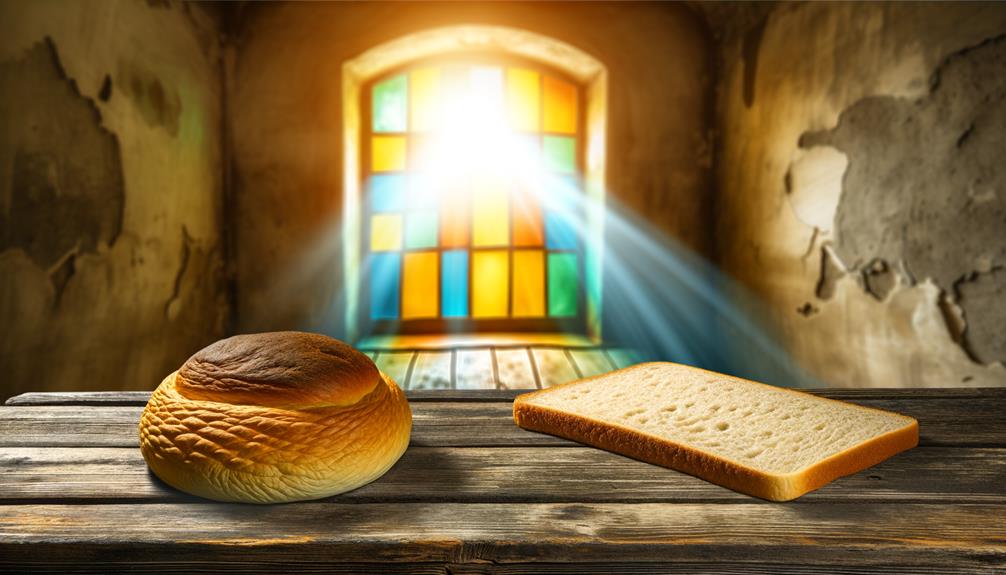
In biblical texts, leaven and unleavened bread serve as profound symbols, each carrying distinct theological and moral implications.
Leaven, often representing sin and corruption, is seen in passages like 1 Corinthians 5:6-8, where Paul warns against the pervading influence of malice and wickedness.
Conversely, unleavened bread symbolizes purity and sincerity, as exemplified during the Feast of Unleavened Bread (Exodus 12:15-20), commemorating Israel’s exodus from Egypt. This feast mandates the removal of leaven, signifying the need for spiritual preparedness and sanctification.
Through these contrasting symbols, Scripture communicates deeper truths about human nature and divine expectations, urging believers to cultivate an existence marked by purity, free from the corrupting influences of sin.
Conclusion
To conclude, bread in biblical texts serves as a multifaceted symbol, representing divine provision, spiritual sustenance, and sacred rituals.
From manna in the desert to Jesus declaring Himself the Bread of Life, bread’s recurring presence underscores its profound theological significance.
The contrast between leavened and unleavened bread further enriches its metaphorical depth.
Understanding these layers of symbolism invites a deeper appreciation of its role in the tapestry of biblical narrative and Christian practice, much like a key revealing hidden spiritual treasures.