
Spiritual Meaning of Earrings in the Bible: Identity
In the Bible, earrings carry profound spiritual connotations, symbolizing wealth, societal status, and religious dedication. In Genesis, they denote prosperity, while in Exodus, they are linked to idolatry during the creation of the golden calf.
Earrings also appear in contexts of devotion and as offerings to God, indicating spiritual cleansing and transformation. Gender roles influenced their use, where men’s earrings signified tribal affiliation and women’s earrings reflected familial wealth.
Additionally, prophetic imagery employs earrings to underscore themes of infidelity and divine favor. Exploring these dimensions reveals the intricate interplay between material culture and spirituality in biblical texts.
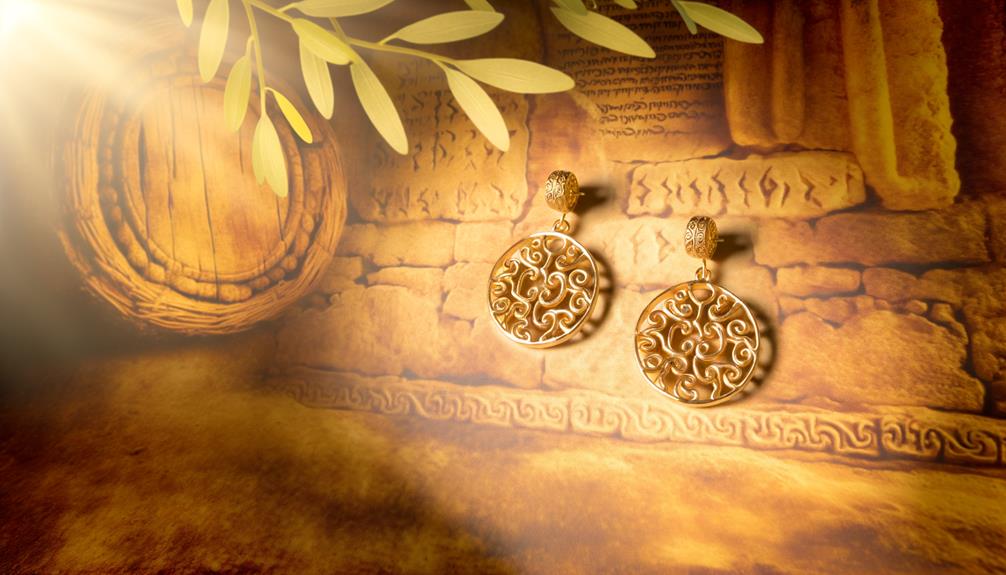
Spiritual Meaning of Earrings in the Bible: Identity, Devotion, and Transformation
| Aspect | Description | Spiritual Significance |
|---|---|---|
| Cultural Identity | Genesis 35:4 | Earrings often represented status or affiliation in biblical times |
| Devotion & Submission | Exodus 32:2–4 | Jewelry offered for idol worship shows the need to surrender worldly attachments |
| Spiritual Transformation | Genesis 35:2–4 | Removal of earrings as part of purification before seeking God |
| Sign of Slavery & Loyalty | Exodus 21:6 | Pierced ears marked lifelong service and loving submission to a master |
| Adornment & Warning | Ezekiel 16:12–15 | God adorned Israel, but misuse of blessings became spiritual unfaithfulness |
Earrings as Symbols of Wealth

Throughout biblical history, earrings have often been depicted as symbols of wealth, reflecting the societal status and affluence of their wearers.
Scriptural references, such as those found in Genesis 24:22, illustrate how earrings were given as gifts to signify prosperity and favor. These adornments, crafted from precious metals and stones, served not only as decorative items but also as tangible representations of economic standing.
The cultural context of biblical times placed great value on material possessions, and earrings were a visible indication of one’s financial success.
This association with wealth underscores the pivotal role of earrings in conveying social hierarchy and prestige, contributing to a deeper understanding of their spiritual and cultural significance in biblical narratives.
Earrings in Idolatrous Practices
In the biblical context, earrings often symbolized more than mere adornment; they were frequently associated with idolatrous practices and pagan worship.
The Israelites, during periods of disobedience, used earrings to fashion icons of false gods, as evidenced in the narrative of the golden calf (Exodus 32:2-4).
Such practices underscore the complex and often negative spiritual connotations attributed to earrings within scriptural accounts.
Symbol of Pagan Worship
Earrings in the biblical context often served as significant symbols in various idolatrous practices, reflecting the broader cultural and spiritual deviations of the communities involved.
These adornments were frequently associated with pagan worship, where they transcended mere decorative purposes and became conduits for spiritual and ritualistic significance. In many instances, the use of earrings was intertwined with the veneration of idols, embodying the community’s departure from monotheistic worship.
| Reference | Context | Significance |
|---|---|---|
| Genesis 35:4 | Removal of foreign gods | Symbolic cleansing and renewal |
| Exodus 32:2-3 | Creation of the golden calf | Idolatry and collective transgression |
| Judges 8:24-27 | Earrings from Ishmaelites used for idol | Cultural and spiritual syncretism |
| Hosea 2:13 | Adornment in pursuit of false gods | Representation of infidelity |
This symbolic use underscores the complex interplay between physical artifacts and spiritual allegiances.
False Gods and Earrings
The association of earrings with false gods in biblical narratives highlights the multifaceted role these adornments played in the practice of idolatry.
In Exodus 32:2-4, Aaron instructs the Israelites to remove their gold earrings, which are then melted and fashioned into the infamous golden calf. This episode underscores how earrings were not merely decorative but were integral to creating objects of worship.
Similarly, in Hosea 2:13, earrings are mentioned in the context of Israel’s unfaithfulness and idol worship. These scriptural references suggest that earrings were often seen as instruments facilitating spiritual infidelity.
Understanding this context allows us to appreciate the symbolic weight earrings carried, representing a tangible link between personal adornment and collective idolatrous practices in biblical times.
Earrings as Tokens of Dedication

Throughout biblical scripture, earrings often symbolize an individual’s dedication and commitment to a higher spiritual purpose.
This symbolism is elucidated in passages such as Exodus 32:2-3, where Aaron instructs the Israelites to bring their golden earrings to create the golden calf. While this act was ultimately condemned, the initial offering of earrings can be seen as a gesture of devotion.
Additionally, in Numbers 31:50, warriors present earrings as part of their offerings to God, signifying their gratitude and allegiance.
These instances highlight the dual role of earrings as both physical adornments and spiritual tokens, reflecting an individual’s loyalty and consecration to divine will.
Consequently, earrings serve as powerful symbols within the biblical narrative, embodying acts of faith and dedication.
Cultural Significance in Ancient Israel
In Ancient Israel, earrings served as potent symbols of social status, religious practices, and gender roles.
They were not merely decorative items, but also carried significant cultural meanings, often reflecting one’s position within the societal hierarchy.
Moreover, earrings played a role in religious ceremonies and were indicative of gender-specific customs and expectations within the community.
Symbol of Status
How did earrings function as a symbol of status within the cultural framework of ancient Israel?
In ancient Israel, earrings were not merely decorative but served as significant indicators of social and economic status.
Wealthier individuals often adorned themselves with elaborate and intricately designed earrings made from precious metals and gemstones, signifying their affluence and societal position.
This practice is supported by biblical references such as those in Genesis 24:22, where Abraham’s servant gifts Rebekah a gold earring, symbolizing wealth and honor.
Additionally, earrings could denote familial or tribal affiliation, further embedding them within the social fabric.
Consequently, the use of earrings in ancient Israel extended beyond aesthetic appeal, functioning as tangible markers of one’s status and identity within the community.
Religious Practices
Beyond their role as markers of social and economic status, earrings in ancient Israel also held significant religious connotations, often being associated with acts of devotion and rituals as documented in various biblical passages.
For instance, in Genesis 35:4, Jacob instructs his household to remove their earrings as part of a purification ritual, signifying a renunciation of idolatry.
Similarly, in Exodus 32:2-3, Aaron collects earrings to create the golden calf, highlighting their use in worship, albeit in a context of apostasy.
These examples illustrate how earrings transcended mere adornment, serving as tangible symbols in religious practices.
Consequently, their presence in biblical narratives underscores the intersection of material culture with spiritual devotion in ancient Israelite society.
Gender Roles
The cultural significance of earrings in ancient Israelite society reflects deeply ingrained gender roles, wherein adornment practices were often delineated along lines of gender, social status, and religious function.
Men and women wore earrings, but the styles, materials, and contexts differed, denoting varied societal roles. For women, earrings were frequently symbolic of marital status and familial wealth, while for men, they could signify tribal affiliation or warrior status.
Ritualistic uses also existed, with earrings sometimes being offerings or symbols of covenantal relationships with Yahweh.
Textual evidence, such as in Exodus 32:2-3 and Judges 8:24-26, illustrates how earrings were not merely decorative but carried substantial cultural and spiritual weight, reinforcing the distinct roles and identities within the community.
Gender Roles and Earrings

In biblical times, the use of earrings by different genders often reflected broader cultural, social, and religious norms that governed personal adornment.
Men and women wore earrings, but the significance differed based on context and intention. Men’s earrings could signify status, tribal affiliation, or servitude, while women’s earrings often symbolized beauty, wealth, and marital status.
| Gender | Significance |
|---|---|
| Men | Status, affiliation, servitude |
| Women | Beauty, wealth, marital status |
| Both | Cultural and religious identity |
The cultural context deeply influenced these practices, as earrings were not merely decorative but imbued with social meaning. This symbolism was further reinforced by scriptural references, reflecting the interplay between gender roles and personal adornment in ancient societies.
Earrings in Prophetic Imagery
Prophetic texts within the Bible often employ the imagery of earrings to symbolize themes of devotion, idolatry, and transformation. In Ezekiel 16:12, earrings are part of the adornment bestowed upon Jerusalem, signifying divine favor and covenantal relationship.
Conversely, in Hosea 2:13, earrings are associated with Israel’s infidelity, where they are depicted as elements of pagan worship and idolatry. This dual imagery serves to highlight the spiritual state of the people, oscillating between faithfulness and rebellion.
The use of earrings in prophetic literature underscores their role as powerful symbols, reflecting deeper theological narratives. Such imagery invites readers to engage with the text on a level that transcends mere physical adornment, offering insights into the spiritual condition of the community.
Spiritual Transformation and Earrings

Earrings in biblical texts often symbolize significant moments of spiritual transformation, reflecting shifts in identity and covenantal status.
For instance, in Genesis 35:4, Jacob’s household relinquishes their earrings along with foreign gods, symbolizing a profound rededication to Yahweh.
Similarly, in Exodus 32:2-3, the collection of earrings to forge the golden calf represents a tragic departure from divine allegiance.
The act of removing or donning earrings often marks a pivotal spiritual metamorphosis, denoting either a return to or a deviation from covenantal fidelity.
These instances underscore the earrings’ role as tangible indicators of inner spiritual states and communal religious commitments, encapsulating the dynamics of faith, repentance, and identity within the biblical narrative.
Modern Interpretations of Biblical Earrings
Examining contemporary perspectives reveals that biblical references to earrings are often reinterpreted through the lenses of cultural symbolism, religious identity, and personal spirituality.
In modern contexts, earrings are seen not merely as ornamental objects but as profound expressions of faith and individuality. For some, they serve as a demonstration of religious heritage, often echoing the ancient biblical narratives that associate earrings with covenantal commitments and divine favor.
Additionally, earrings can symbolize personal spiritual journeys, representing internal transformations and milestones in one’s faith.
This nuanced understanding reflects a shift from traditional interpretations, where earrings were sometimes viewed with suspicion, towards a more inclusive and multifaceted appreciation of their spiritual and cultural significance in contemporary society.
Conclusion
The multifaceted symbolism of earrings in biblical contexts underscores their significance as markers of wealth, instruments of idolatry, tokens of dedication, and cultural signifiers within ancient Israelite society.
The prophetic imagery and gender roles associated with earrings further reveal the complex interplay between material adornment and spiritual meaning.
This complexity endures, inviting modern interpretations that resonate with contemporary spiritual transformations.
Consequently, biblical earrings serve as a spiritual Swiss Army knife, with diverse meanings that continue to evolve and inspire.