
Spiritual Meaning of Passion Flower: Sacrifice and Faith
The passion flower carries profound spiritual significance across cultures, symbolizing personal growth, inner peace, and a deep connection to the divine. In Christianity, its intricate parts represent elements of Jesus Christ’s crucifixion.
South American, Native American, and Eastern traditions see it as a symbol of tranquility, healing, and mindfulness. This beautiful flower inspires reflection and transformation, urging individuals to shed old patterns and gracefully embrace change.
Its calming presence aids in emotional healing and enhances meditation practices, fostering a deeper self-connection. Those who seek inner peace and spiritual awakening will find the passion flower’s message both profound and uplifting.

Spiritual Meaning of Passion Flower: Symbol of Devotion, Healing, and Spiritual Awakening
| Aspect | Spiritual Meaning |
|---|---|
| Devotion and Faith | Represents deep spiritual commitment and divine connection |
| Sacrifice and Redemption | Associated with Christ’s passion, symbolizing spiritual sacrifice |
| Emotional Healing | Promotes calmness, peace, and restoration of the soul |
| Divine Love | Reflects unconditional love and compassion from the universe |
| Spiritual Awakening | Encourages higher awareness and inner transformation |
Symbolism in Christianity
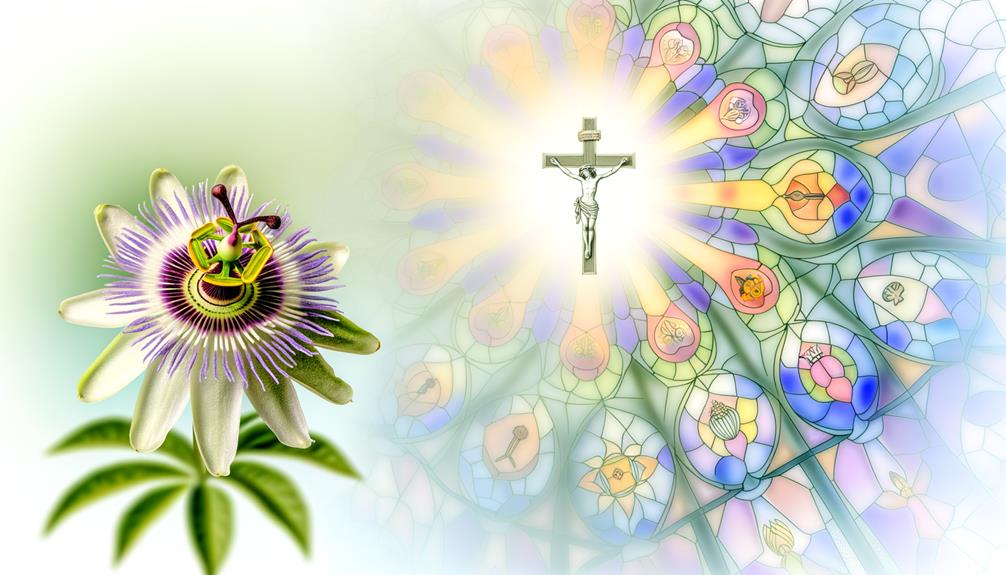
In Christianity, the passion flower is revered for its profound symbolism of Jesus Christ’s crucifixion and resurrection. Each part of the flower holds deep significance.
The ten petals and sepals represent the ten faithful apostles, excluding Judas and Peter. The radial filaments symbolize the crown of thorns placed on Jesus’s head. Three stigmas reflect the three nails used during the crucifixion, while the five anthers signify the five wounds Christ endured.
This intricate flower serves as a visual reminder of Jesus’s sacrifice and the promise of eternal life through his resurrection. Its beauty and complexity inspire believers to reflect on their faith, offering a tangible connection to the divine narrative of suffering and redemption.
Representations in Different Cultures
How do various cultures around the world interpret the spiritual essence of the passion flower?
In South American traditions, the passion flower symbolizes peace and tranquility, often used in rituals to promote calm and spiritual harmony.
Native American cultures view it as a symbol of healing and hope, connecting the physical and spiritual domains.
In Eastern philosophies, the flower represents mindfulness and the journey toward enlightenment, urging individuals to find balance within themselves.
European folklore links the passion flower to purity and the divine, reflecting its intricate beauty and mystique.
Each culture imbues the passion flower with unique meanings, yet they all converge on the idea of spiritual elevation and inner peace, showcasing its universal appeal and profound essence.
Personal Growth and Transformation
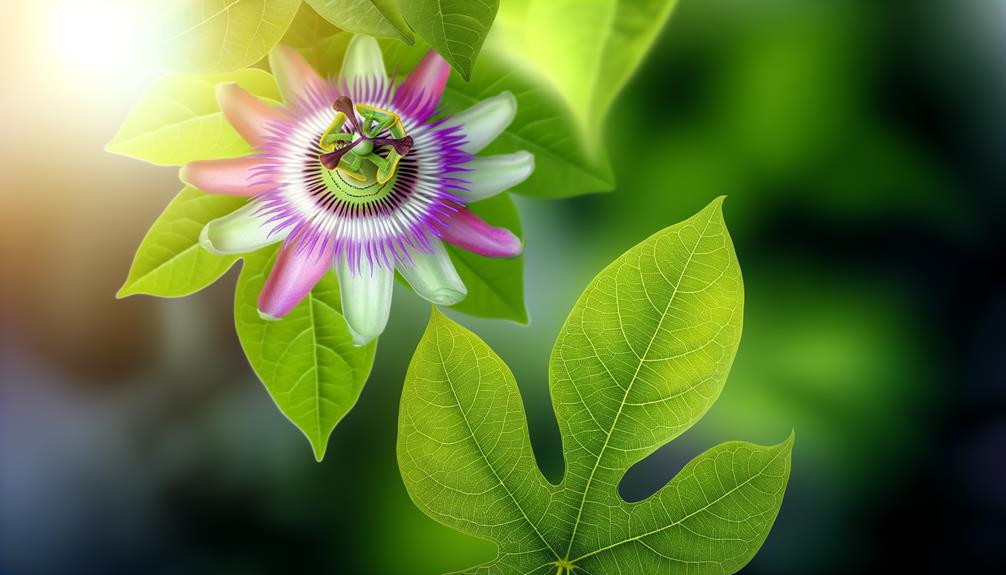
The passion flower serves as a powerful emblem of personal growth and transformation, guiding individuals on their journey towards self-discovery and enlightenment.
Its intricate design mirrors the complex layers of human experience, encouraging introspection and the shedding of old patterns.
By embracing the symbolism of the passion flower, one can find the courage to navigate life’s changes with grace and purpose.
It invites a mindful approach to change, reminding us that growth often comes through challenges and perseverance.
As individuals bloom into their true selves, the passion flower stands as a gentle reminder that transformation is both beautiful and essential.
It’s a symbol that whispers, “Trust the process, for each stage of growth brings you closer to your authentic self.”
Inner Peace and Healing
Embodying a sense of serenity, the passion flower offers a pathway to inner peace and profound healing. Its delicate petals and intricate design mirror the complexity of the human spirit, guiding individuals toward a calmer, more balanced state.
By integrating the passion flower into their spiritual practices, people can experience:
- Stress Reduction: The passion flower’s calming properties help to alleviate anxiety and promote a serene mind.
- Emotional Healing: It encourages the release of past traumas, allowing emotional wounds to mend.
- Enhanced Meditation: The flower aids in deepening meditation practices, fostering a greater connection to one’s inner self.
Through these avenues, the passion flower serves as a gentle reminder that peace and healing are always within reach, waiting to be embraced.
Spiritual Awakening and Enlightenment
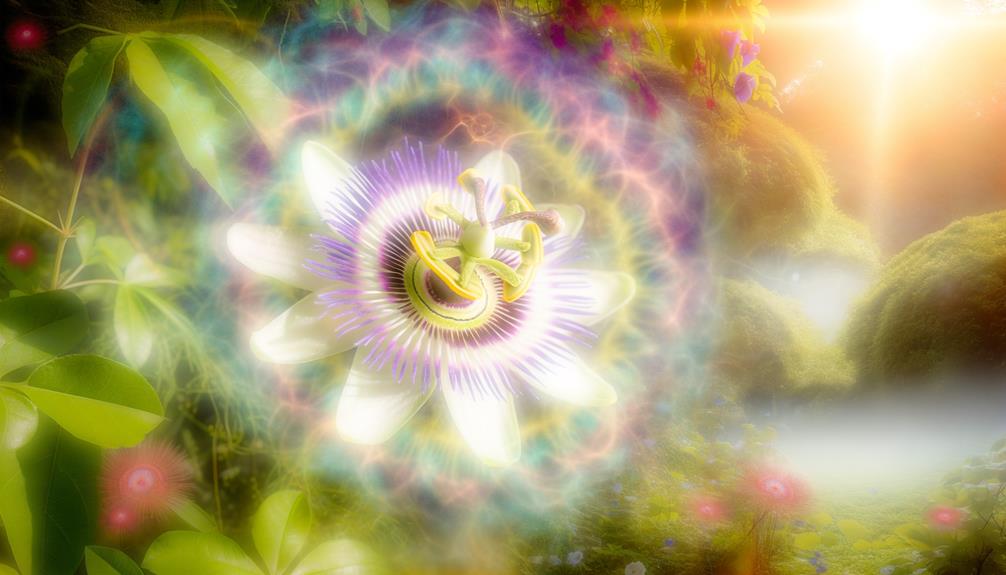
In its vibrant bloom, the passion flower symbolizes a gateway to spiritual awakening and enlightenment. This unique flower invites individuals to explore deeper dimensions of consciousness and self-discovery.
Its intricate design mirrors the complexity and beauty of the spiritual journey. The passion flower encourages reflection, fostering a connection to the divine and a sense of inner harmony. As one gazes upon this enchanting flower, they are reminded of the interconnectedness of all life and the boundless potential within.
| Aspect | Representation |
|---|---|
| Blooming petals | Awakening of consciousness |
| Complex structure | Depth of spiritual journey |
| Vibrant colors | Joy and liveliness in enlightenment |
| Interconnected tendrils | Unity with the divine |
| Graceful presence | Inner peace and harmony |
The passion flower’s symbolism serves as a gentle reminder of the spiritual path awaiting exploration.
Conclusion
To sum up, the passion flower holds profound spiritual significance across various cultures.
Did you know that in Christianity, the flower’s unique structure is believed to symbolize the Crucifixion, with each part representing an element of Christ’s suffering?
Embracing its symbolism can inspire personal growth, inner peace, and spiritual awakening.
By understanding the passion flower’s deep meanings, individuals may find a path to healing and enlightenment, enriching their spiritual journey.