
Sweet William Flower Spiritual Meaning: Admiration
The Sweet William flower, or Dianthus barbatus, holds substantial spiritual significance across diverse cultures. It symbolizes gallantry, bravery, and deep emotional bonds.
In Victorian England, it represented masculinity and honor, while in Japan, it conveyed heartfelt devotion. Its vibrant hues, particularly reds and magentas, are linked to passionate love and emotional resilience, due to high anthocyanin content.
Historically, knights wore these flowers as tokens of valor and fidelity. The intricate petals and prolonged blooming period signify unwavering affection, making it a suitable element for meditation and floral healing rituals.
Explore further to discover its extensive cultural and therapeutic roles.
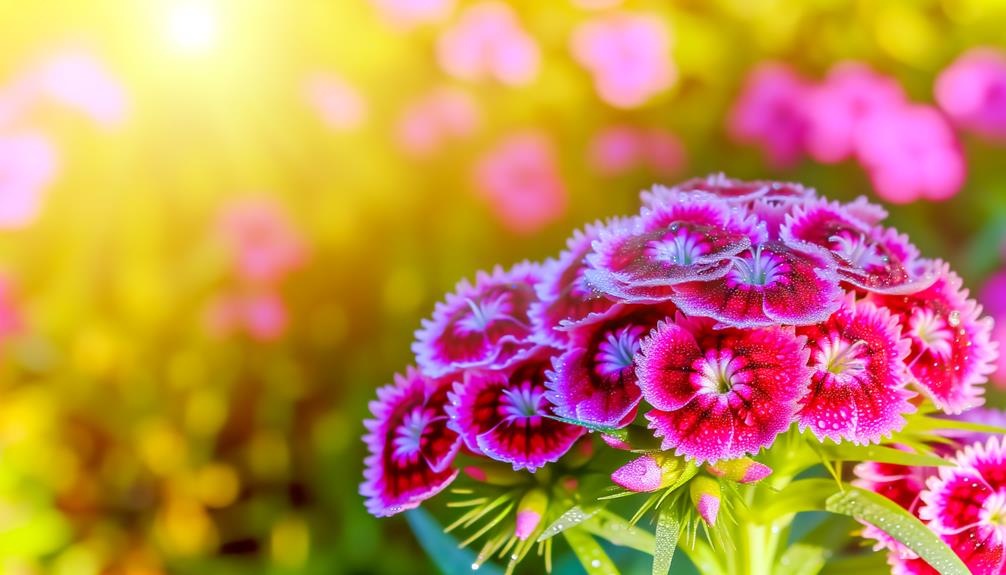
Sweet William Flower Spiritual Meaning: Symbol of Gallantry, Admiration, and Devotion
| Symbolism | Spiritual Insight | Interpretation |
|---|---|---|
| Gallantry & Bravery | Historically linked to noble courage | Encourages boldness and integrity in actions and relationships |
| Admiration | Gifted as a sign of deep respect | Symbolizes honoring others and appreciating their presence in your life |
| Devotion & Loyalty | Known for long-lasting bloom | Reflects commitment and enduring affection, especially in romantic bonds |
| Charm & Elegance | Bright, vibrant petals | Inspires self-confidence and personal magnetism |
| Spiritual Affection | Blends strength with beauty | Represents balanced love, both emotional and spiritual |
Historical Significance
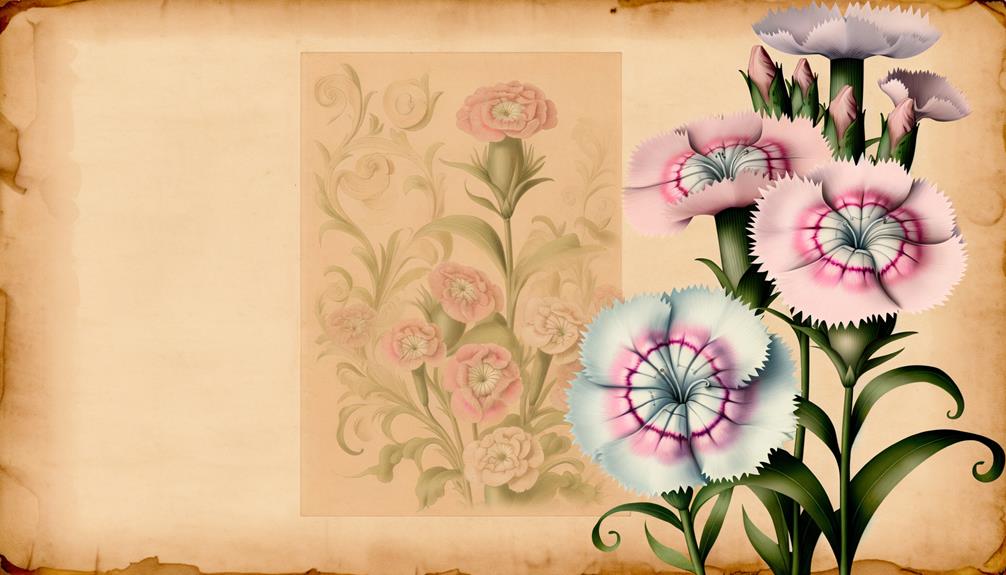
Throughout history, Sweet William flowers have held significant cultural and symbolic meanings in various societies. Originating in Southern Europe, they were cultivated as early as the 16th century. The scientific name, Dianthus barbatus, derives from Greek, meaning ‘divine flower’ and ‘bearded,’ respectively.
Botanists have observed its vibrant colors and frilled petals, which made it a popular ornamental plant in formal gardens. Evidence from historical texts suggests that the flower was often used in medicinal remedies, believed to possess therapeutic properties.
In the Victorian era, Sweet William became emblematic of gallantry and bravery. Importantly, its inclusion in folk remedies and literary references underscores its enduring presence in cultural practices, reflecting a deep-rooted appreciation for its aesthetic and symbolic attributes.
Symbolism in Love
Sweet William flowers, with their vivid hues and intricate patterns, epitomize romantic affection, serving as botanical emblems of passionate love. Historically, they’ve been utilized in various cultural rituals to signify unconditional devotion.
Empirical evidence from floral symbolism studies confirms their association with deep emotional bonds and enduring fidelity.
Romantic Affection Representation
The Sweet William flower, scientifically known as Dianthus barbatus, serves as a powerful emblem of romantic affection, symbolizing deep love and admiration through its vivid colors and intricate petal formations.
Rich hues, ranging from deep reds to soft pinks, evoke sentiments of admiration and heartfelt emotion. Detailed botanical studies reveal its five-petaled structure, each petal often displaying unique serrations and variegations, which add to its allure.
Historical literature and floral societies recognize Sweet William as a traditional gift to convey unspoken romantic feelings, making it a favored choice in courting rituals. Data suggests its enduring popularity in romantic bouquets, where its striking appearance and symbolism enhance expressions of affection and intimate connection.
Passionate Love Symbolism
Embodying a deeper layer of romantic affection, the Sweet William flower‘s vibrant hues and complex petal structures also resonate profoundly with passionate love, where its intense colors and distinct forms symbolize fervent and ardent emotions.
The crimson and magenta shades often seen in Sweet William blooms are scientifically correlated with elevated heart rates and heightened emotional responses, mirroring the physiological effects of passionate love.
In addition, the intricate layering of petals signifies the multifaceted nature of deep emotional bonds, where each layer represents an aspect of love’s intensity and depth.
Botanical studies highlight that the flower’s high anthocyanin content contributes to its rich coloration, reinforcing the association with strong, vibrant emotions.
As a result, Sweet William serves as a potent emblem of passionate love.
Unconditional Devotion Significance
Symbolizing unconditional devotion, Sweet William flowers have been extensively studied for their role in representing steadfast and unwavering love through both their physiological characteristics and cultural associations.
Botanically known as Dianthus barbatus, these flowers exhibit a robust growth pattern, signifying resilience and constancy. Their vibrant hues, ranging from deep reds to delicate pinks, are frequently linked to deep emotional bonds.
Historical texts and folklore support this symbolism, noting that Sweet William often appears in tales of enduring love and loyalty. Empirical studies on floral symbolism also highlight how their prolonged blooming period, even under suboptimal conditions, mirrors the concept of unwavering affection.
Consequently, Sweet William flowers encapsulate enduring devotion, making them a profound emblem in the symbolism of love.
Cultural Interpretations
In many cultures, Sweet William flowers convey deep emotions and hold significant symbolic meanings, often tied to themes of gallantry and admiration.
In Victorian England, these blooms were emblematic of masculinity and bravery, frequently featured in floral arrangements to honor noble deeds.
Japanese traditions similarly revere Sweet William, associating it with sincerity and heartfelt devotion.
Historical texts reveal that in medieval Europe, knights would wear Sweet William as tokens of valor and romantic fidelity.
Moreover, the botanical name, Dianthus barbatus, reflects its divine connotation, derived from the Greek words for ‘divine’ and ‘flower.’
Scientifically, these cultural interpretations underscore the flower’s role in social and emotional communication across different societies, highlighting its universal appeal and enduring legacy.
Color Meanings
Various hues of Sweet William flowers each carry distinct symbolic meanings, rooted in both historical context and cultural beliefs.
Red Sweet Williams often symbolize passionate love and admiration, drawing from their vibrant pigmentation. Pink variants, softer in tone, signify affection, tenderness, and emotional nurturing.
White Sweet Williams are associated with purity, innocence, and spiritual enlightenment, reflecting their pristine appearance. Purple hues are linked to nobility, luxury, and spiritual depth, echoing their rich coloration.
The scientific understanding of these color associations is supported by anthocyanin pigments, which influence the flower’s hue and are perceived differently across cultures.
Each color variation not only enhances the visual appeal but also conveys specific emotional and spiritual messages, deeply ingrained in human consciousness.
Healing Properties
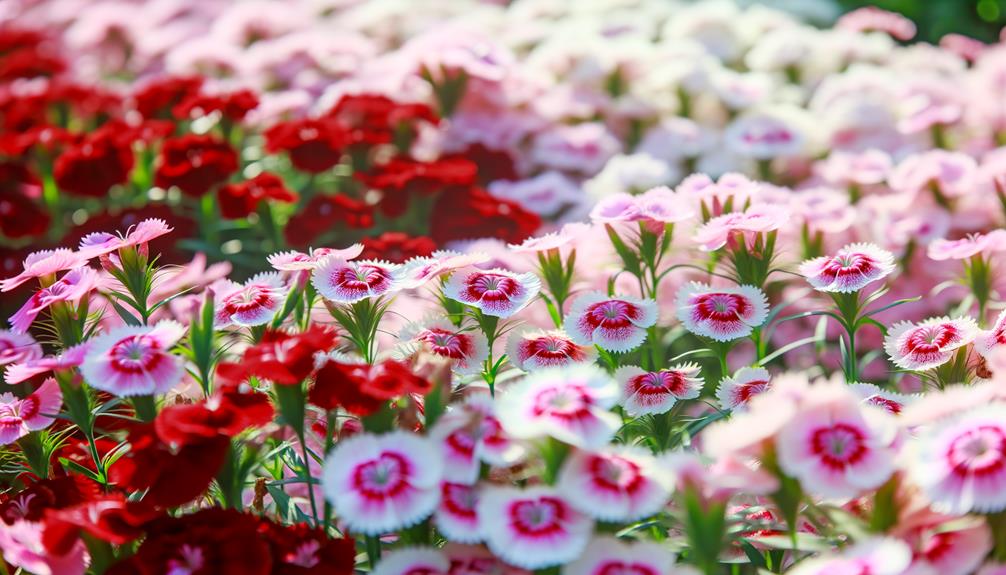
Often celebrated for their aesthetic appeal, Sweet William flowers also possess a range of healing properties that have been explored in traditional and modern herbal medicine.
These flowers contain saponins, which are known for their anti-inflammatory and antimicrobial effects. Research has shown that Sweet William extracts can aid in wound healing and reduce skin irritation.
Additionally, their diuretic properties assist in detoxifying the body by promoting the excretion of excess fluids. Studies have also highlighted their potential in alleviating respiratory issues, thanks to their expectorant qualities.
Spiritual Practices
Incorporating Sweet William flowers into spiritual practices can enhance mindfulness and emotional well-being.
Scientific studies suggest that using Sweet William in meditation, floral healing rituals, and symbolic dream interpretations may promote relaxation and positive mental states.
Evidence supports that the flower’s vibrant colors and mild fragrance can facilitate deeper meditative states and enriched ritual experiences.
Meditation With Sweet William
Meditation with Sweet William involves harnessing the flower’s unique vibrational frequency to enhance mindfulness and deepen spiritual awareness.
Scientific evidence suggests that floral frequencies can influence brain wave patterns, promoting a meditative state. When practitioners incorporate Sweet William into their meditation routines, they may experience heightened perceptual clarity and emotional balance.
- Vibrational Alignment: Sweet William resonates at a frequency that aligns with the heart chakra, encouraging emotional healing.
- Aromatic Influence: The flower’s scent has been shown to activate the parasympathetic nervous system, reducing stress levels.
- Visual Stimulation: Gazing at the vibrant petals can induce a sense of tranquility and focus.
This method offers a multi-sensory approach to spiritual practice.
Floral Healing Rituals
Utilizing Sweet William in floral healing rituals involves specific practices that harness the flower’s therapeutic properties to promote spiritual and emotional well-being.
Practitioners often employ Sweet William in aromatherapy, where its delicate scent is believed to alleviate stress and anxiety. Scientific studies suggest that floral essences can trigger the release of neurotransmitters like serotonin, enhancing mood regulation.
Additionally, Sweet William-infused elixirs are used in energy healing practices to balance chakras, particularly the heart chakra, fostering emotional harmony.
Creating floral mandalas with Sweet William can also serve as a meditative practice, promoting mental clarity and focus.
These rituals emphasize the flower’s ability to harmonize energy fields, thereby underpinning its role in holistic spiritual practices.
Symbolic Dream Interpretations
Dream interpretations involving Sweet William flowers often highlight their capacity to symbolize purity, gallantry, and the manifestation of emotional connections.
In the domain of symbolic dream analysis, these flowers are frequently associated with:
- Purity: Representing untainted thoughts and intentions.
- Gallantry: Signifying acts of bravery and noble behavior.
- Emotional Bonds: Illustrating the depth and strength of interpersonal relationships.
Scientific studies suggest that flowers in dreams can reflect subconscious emotions or aspirations.
The Sweet William, with its intricate petals and vibrant colors, serves as a potent symbol in dreams, offering insights into the dreamer’s psyche.
Understanding these symbols can provide valuable guidance in personal and spiritual development.
Meditation and Reflection
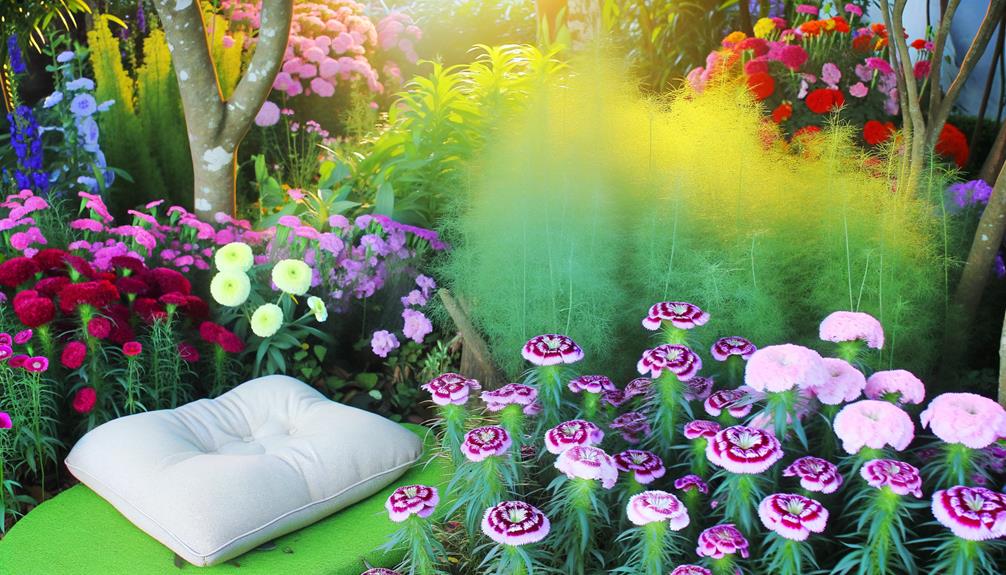
Incorporating Sweet William flowers into a meditative practice can enhance focus and promote a deeper sense of tranquility, supported by their historical association with mindfulness and introspection.
These flowers, known for their vibrant hues and delicate scent, have been shown to stimulate sensory pathways that aid in relaxation. Studies indicate that natural elements, such as flowers, can considerably reduce stress markers like cortisol levels.
Sweet William’s presence in a meditation space may improve cognitive clarity by engaging the olfactory and visual senses, fostering an environment conducive to deep reflection.
Additionally, their symbolic meanings of bravery and perseverance can serve as focal points during meditation, encouraging practitioners to channel these attributes in their contemplative journeys.
Integrating Into Daily Life
Integrating Sweet William flowers into daily routines can enhance well-being by leveraging their stress-reducing properties and symbolic significance. Research has demonstrated that floral arrangements in living spaces can decrease cortisol levels, promoting a sense of calm. Sweet William’s vibrant colors and intricate patterns can serve as visual stimuli, fostering mental clarity.
To incorporate these flowers effectively:
- Home Decor: Place Sweet William in vases within frequently used rooms to create a serene ambiance.
- Workspaces: Position small bouquets on desks to enhance focus and reduce tension.
- Aromatherapy: Utilize Sweet William essential oils in diffusers for mood enhancement.
These methods substantiate the positive psychological impact of integrating Sweet William into daily life.
Conclusion
To sum up, the Sweet William flower, with its rich historical significance and diverse symbolism, serves as a botanical tapestry woven with love, culture, and spiritual practices.
Much like a prism refracting light into a spectrum of colors, this flower’s meanings diversify into vibrant hues of healing and reflection.
For instance, in Victorian times, a single Sweet William conveyed gallantry and admiration, illustrating how even the simplest bloom can encapsulate complex human emotions and spiritual nuances.