
Spiritual Meaning of Olive Oil in the Bible: Anointing and Healing
Olive oil holds profound spiritual meaning in the Bible, symbolizing provision, consecration, and divine favor. Integral to ancient Israelite culture, it was used in daily life and religious rituals, denoting prosperity and God’s blessings.
Anointing with olive oil marked divine selection for leadership roles and signified the Holy Spirit’s presence. It also embodied healing and purity, seen in rituals cleansing the sick and sanctifying sacred objects.
Additionally, olive oil’s role in lampstands symbolized divine illumination and continual presence. Its multifaceted symbolism extends from ancient texts to contemporary spiritual practices, offering deepened insights into the intersection of faith and tradition.

Spiritual Meaning of Olive Oil in the Bible: Anointing, Healing, and Divine Presence
| Aspect | Description | Spiritual Significance |
|---|---|---|
| Anointing | 1 Samuel 16:13 | Used to anoint kings and prophets, symbolizing God’s calling and empowerment |
| Healing | James 5:14 | Represents spiritual and physical healing through prayer and faith |
| Consecration | Exodus 30:25–30 | Olive oil used in sacred rituals to set apart holy things and people |
| Holy Spirit | Zechariah 4:1–6 | Oil from the lampstands symbolizes the continual flow of the Spirit |
| Provision & Blessing | Deuteronomy 8:8 | Olive oil reflects God’s abundance and covenant blessings |
Olive Oil in Ancient Israel
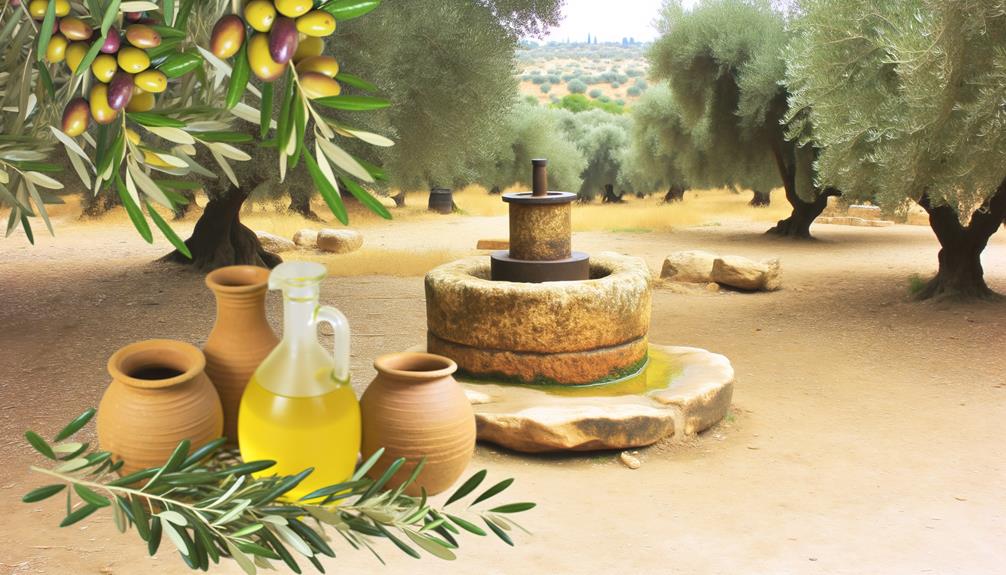
In ancient Israel, olive oil was not only a staple of daily life but also held profound cultural, economic, and religious significance.
It served as a key commodity in trade, reflecting its economic importance. Daily, olive oil was used for cooking, lighting lamps, and as a base for perfumes and cosmetics, indicating its pervasive presence in household activities.
Culturally, olive oil symbolized prosperity and well-being, often mentioned in biblical texts as a sign of divine blessing.
Its religious role extended beyond physical uses; it was integral in ritualistic practices, including offerings and consecrations.
These multifaceted roles underscore how olive oil transcended mere utility, embodying a complex interplay of practical, symbolic, and spiritual dimensions in ancient Israelite society.
Anointing Kings and Priests
The practice of anointing kings and priests with olive oil in biblical times served as a potent symbol of divine favor and approval.
This ritual not only signified the chosen individual’s consecration and sanctification but also underscored the importance of ritual purity as an essential prerequisite for leadership.
Symbol of Divine Favor
Throughout biblical narratives, olive oil emerges as a profound symbol of divine favor, particularly in the anointing of kings and priests.
This sacred act of anointing conferred God’s blessing and authority upon chosen individuals, signifying their divine selection and empowerment for leadership. The use of olive oil in such rituals underscores its spiritual connotation, as it was believed to carry God’s presence.
Key points to reflect upon include:
- Divine Selection: Olive oil was used to mark those chosen by God for significant roles.
- Empowerment: Anointing with oil bestowed spiritual authority and responsibility.
- Sanctification: It symbolized purification and dedication to God’s service.
- Covenantal Blessing: Represented God’s promises and favor upon the anointed.
Ritual Purity Significance
Additionally, the ritual use of olive oil in anointing kings and priests held profound significance for maintaining ritual purity, emphasizing the sanctity and divine approval required for their sacred duties.
In ancient Israelite culture, anointing with olive oil symbolized a divine consecration, setting individuals apart for holy service. This act was not merely ceremonial but was deeply embedded in the theological understanding of purity and divine selection.
The anointed were believed to be imbued with the Spirit of God, enabling them to fulfill their roles with divine guidance and protection. Such rituals underscored the close relationship between divine will and human leadership, reinforcing the notion that true authority and purity stemmed from adherence to divine commandments and blessings.
Symbol of the Holy Spirit

Olive oil frequently symbolizes the Holy Spirit in biblical texts, representing purity, sanctification, and divine presence. This multifaceted symbol is deeply embedded within scriptural narratives and theological concepts.
The anointing of kings, priests, and prophets with olive oil underscores its role as a conduit for divine empowerment and consecration. Olive oil’s significance is further amplified in various biblical passages, highlighting its spiritual depth and resonance.
Key elements associated with olive oil as a symbol of the Holy Spirit include:
- Divine Anointing: Used to consecrate individuals for sacred roles.
- Illumination: Fuel for lamps, symbolizing enlightenment and guidance.
- Sanctification: Purifying agents, signifying holiness.
- Healing: Metaphor for spiritual and physical restoration.
This symbolism enriches theological understanding and spiritual practice.
Healing and Purification
In biblical texts, olive oil is frequently depicted as a potent agent of healing and purification, embodying both physical and spiritual renewal.
It is used in various contexts, from anointing the sick to symbolizing the cleansing of sins. For instance, James 5:14 advocates for anointing the ill with oil as an act of prayerful healing.
Olive oil’s purificatory properties are also evidenced in Levitical rituals, where it plays a role in the cleansing of lepers (Leviticus 14:15-18).
This dual function of olive oil underscores its importance in conveying God’s restorative power and sanctifying presence.
Thus, olive oil serves as a tangible representation of divine intervention, bridging the physical and spiritual domains through its consecrated use.
Offering and Sacrifice

The use of olive oil in offerings and sacrifices within biblical texts underscores its significance as a symbol of consecration and divine favor.
Olive oil was often combined with grain offerings, enhancing their sanctity and representing a heartfelt dedication to God. This practice not only illustrated the wealth and abundance of the offeror but also their spiritual devotion.
Key aspects include:
- Anointing Sacrifices: Olive oil was used to anoint sacrifices, symbolizing their purification and acceptance by God.
- Covenantal Relationship: It acted as a tangible sign of the covenant between God and His people.
- Holiness: Olive oil consecrated the altar and sacred objects, setting them apart for divine purposes.
- Thanksgiving: Offerings with olive oil expressed gratitude to God.
Lampstands and Light
Throughout biblical texts, lampstands and the light they emit serve as profound symbols of divine presence and guidance, often illuminated by the sacred use of olive oil.
In the Tabernacle and later the Temple, the menorah, a seven-branched lampstand, was kept perpetually lit with pure olive oil, symbolizing God’s eternal presence among His people (Exodus 27:20-21). This perpetual light represented not only God’s unending guidance but also purity and holiness.
Olive oil’s role in fueling these lamps underscores its sacredness, creating a tangible connection between the divine and the mundane.
Additionally, in the New Covenant, Jesus refers to believers as the ‘light of the world‘ (Matthew 5:14), linking the symbolism of light and righteousness to spiritual enlightenment and moral integrity.
Olive Oil in Parables

In the parables of the New Covenant, olive oil frequently emerges as a multifaceted symbol representing preparedness, illumination, and anointing.
For instance, the Parable of the Ten Virgins underscores the necessity of readiness, where the wise virgins’ possession of oil signifies spiritual vigilance.
Similarly, the use of olive oil in these narratives often implies a source of divine light and a mark of consecration, thereby intertwining practical utility with profound theological significance.
Symbol of Preparedness
Frequently, olive oil emerges as a potent symbol of preparedness within the parables of the Bible, offering profound insights into spiritual readiness and vigilance.
This symbolism is vividly illustrated in the Parable of the Ten Virgins (Matthew 25:1-13), where the wise virgins’ possession of sufficient olive oil signifies their preparedness for the bridegroom’s arrival, contrasting with the foolish virgins’ lack of foresight.
Key lessons from this parable include:
- Spiritual Vigilance: Maintaining readiness for divine encounters.
- Provisioning: Ensuring one has the necessary spiritual resources.
- Wisdom: Making prudent, forward-thinking decisions.
- Consequences: Understanding the repercussions of unpreparedness.
In essence, olive oil within biblical parables encapsulates the essence of being spiritually prepared and vigilant.
Source of Light
Beyond its role as a symbol of preparedness, olive oil in biblical parables also serves as a metaphor for illumination, embodying the light of spiritual understanding and divine presence.
In the Parable of the Ten Virgins (Matthew 25:1-13), the oil in the lamps signifies the readiness of the wise virgins, illustrating how spiritual vigilance and enlightenment enable believers to welcome the bridegroom, symbolizing Christ.
Furthermore, olive oil was used in ancient lamps to produce light, reinforcing its representation as a source of divine wisdom.
This dual function of olive oil underscores its significance in fostering an environment where spiritual clarity and divine guidance can flourish, thereby deepening its theological implications within the biblical narrative.
Sign of Anointing
As a profound emblem of anointing within biblical parables, olive oil encapsulates the sanctification and consecration bestowed upon individuals chosen for divine purposes. This sacred act of anointing with olive oil signifies a spiritual endowment and a divine appointment, often seen in the anointing of kings, prophets, and priests.
Furthermore, olive oil in parables extends its significance by illustrating deeper spiritual truths and divine favor.
- David’s Anointing: Symbolizes divine selection and empowerment (1 Samuel 16:13).
- The Good Samaritan: Demonstrates healing and compassion through anointing (Luke 10:34).
- The Foolish Virgins: Highlights preparedness and spiritual readiness (Matthew 25:1-13).
- Priestly Consecration: Represents a holy calling and service (Exodus 30:30).
In these instances, olive oil transcends its physical form, embodying spiritual significance and divine interaction.
Blessings and Prosperity
In biblical texts, olive oil often symbolizes blessings and prosperity, reflecting its integral role in both daily life and religious ceremonies in ancient Israel.
The abundance of olive oil was considered a divine favor, as it was essential for food preparation, lighting, and medicinal purposes. Scripture frequently associates olive oil with divine provision, as seen in stories like the widow’s unending jar of oil in 2 Kings 4:1-7.
Additionally, olive oil’s use in anointing rituals underscored its connection to sanctity and divine blessing. Agricultural prosperity, including the fruitful yield of olive trees, was viewed as a manifestation of God’s covenantal promises.
Consequently, olive oil epitomized a tangible sign of God’s generosity and care for His people.
Modern Spiritual Significance

Contemporary interpretations of olive oil’s spiritual significance often draw from its rich historical and biblical connotations while integrating modern perspectives on health, wellness, and holistic practices.
Today, olive oil is not just a symbol of divine blessing but also a cornerstone of various spiritual and wellness routines. This duality enriches its contemporary relevance.
- Holistic Healing: Used in aromatherapy and massage, olive oil promotes physical and emotional well-being.
- Meditative Practices: Its calming properties make it a staple in meditation and mindfulness exercises.
- Ritualistic Use: Employed in modern anointing ceremonies, it symbolizes purity and sanctity.
- Dietary Benefits: Appreciated for its health benefits, it aligns with holistic nutritional philosophies.
This multifaceted significance underscores its enduring spiritual and practical value.
Conclusion
In summation, olive oil in biblical texts serves as a potent metaphor, rich with spiritual connotations.
Its use in anointing rituals underscores divine selection, while its association with the Holy Spirit, healing, and purification reflects profound theological significance.
The substance also figures prominently in offerings, sacrificial rites, and as a source of illumination, further highlighting its multifaceted role.
Through parables and blessings, olive oil continues to symbolize prosperity and divine favor, maintaining its relevance in contemporary spiritual discourse.