
Spiritual Meaning of Boxes in the Bible: Containment
In biblical narratives, boxes carry profound spiritual symbolism, encompassing divine presence, covenant, and devotion. The Ark of the Covenant, a wooden box overlaid with gold, represents God’s enduring covenant with Israel and houses sacred objects like the Ten Commandments.
The alabaster box epitomizes sacrificial love, seen in the anointing of Jesus. Jars of manna and spices signify divine provision and spiritual richness.
Offerings boxes in the Temple highlight generosity and community unity. Through various forms, boxes symbolize sacred spaces and encapsulate the essence of faith and holiness.
Continue to uncover deeper insights into these rich symbols.

Spiritual Meaning of Boxes in the Bible: Containment, Revelation, and Divine Mystery
| Aspect | Description | Spiritual Significance |
|---|---|---|
| Containment | Boxes hold valuable items | Symbol of keeping sacred or hidden things safe |
| Revelation | Opening a box reveals contents | Represents unveiling of spiritual truths or divine will |
| Protection | Ark of the Covenant as a holy chest | Shows how God protects His covenant and presence |
| Mystery | Hidden or sealed items | Reflects God’s hidden plans waiting to be revealed |
| Personal Reflection | Emotional or spiritual boxes | Symbolizes things we store within the heart or soul |
The Ark of the Covenant
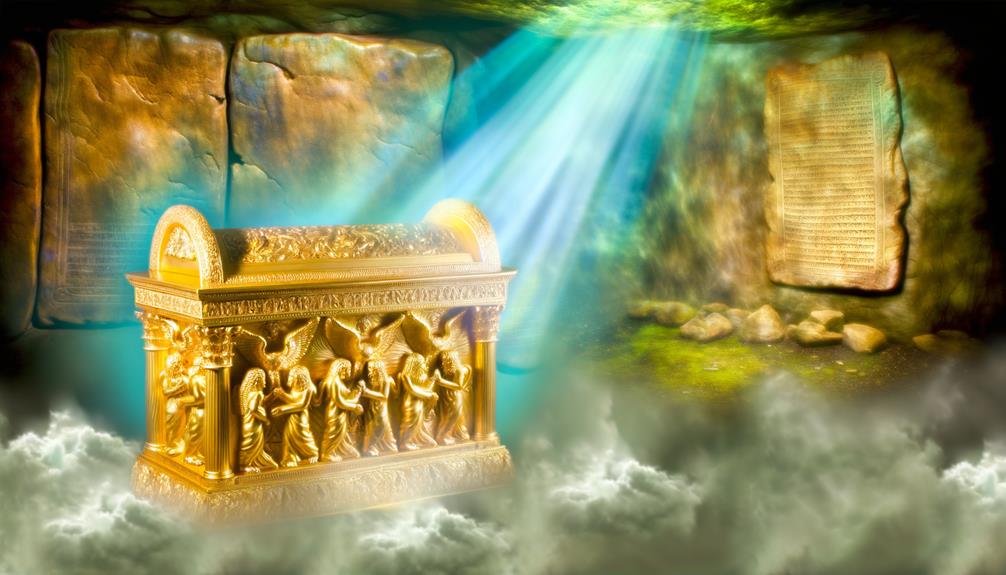
Among the most significant and sacred artifacts in biblical tradition, the Ark of the Covenant stands as a profound symbol of God’s presence and covenant with the people of Israel.
Constructed under divine instruction, the Ark was meticulously crafted from acacia wood and overlaid with pure gold. It housed the stone tablets inscribed with the Ten Commandments, embodying divine law and spiritual authority.
The Ark was not merely a physical container but a potent representation of the divine-human relationship. Its presence signified God’s guidance and favor, particularly during the Israelites’ journey through the wilderness and their battles.
The Ark’s significance is profound, underscoring themes of holiness, divine promise, and the enduring covenant between God and His chosen people.
The Alabaster Box
The alabaster box, particularly in the account of Mary anointing Jesus, serves as a profound symbol of devotion, representing the ultimate act of sacrifice and an expression of boundless love.
This narrative underscores the spiritual significance of offering one’s most treasured possessions in service to the divine.
Symbol of Devotion
In the context of biblical narratives, the alabaster box emerges as a profound emblem of unwavering devotion and sacrificial love. This exquisitely crafted container, often filled with precious ointment, symbolizes the heartfelt reverence that believers bestow upon the divine.
The alabaster box is most prominently associated with the act of anointing Jesus, an act steeped in deep spiritual significance. Within the Gospel accounts, the woman’s decision to break the alabaster box and pour its contents signifies an ultimate offering of respect and adoration.
Such an act transcends mere ritual, embodying an intimate and personal commitment to the sacred. This tangible demonstration of devotion serves as a timeless reminder of the depth of one’s dedication to spiritual faith.
Act of Sacrifice
Breaking the alabaster box, the woman demonstrated an act of profound sacrifice, reflecting an ultimate commitment to spiritual devotion and surrender. This sacrificial act is meticulously narrated in the Gospels, serving as an archetype of giving one’s utmost to the divine.
The alabaster box, filled with precious ointment, symbolizes significant material and spiritual value. By breaking it, she relinquished worldly possessions and pride, embodying complete humility and reverence.
This gesture underscores the principle that true sacrifice involves a total relinquishment of personal treasure for a higher spiritual calling. It reveals an intimate connection between sacrifice and sanctity, compelling believers to evaluate their own levels of dedication and willingness to offer their most cherished assets in service of divine purpose.
Expression of Love
Demonstrating an unparalleled devotion, the act of anointing Jesus with the contents of the alabaster box epitomizes a profound expression of love and reverence. This narrative, found in the Gospels, reveals the depth of sacrificial love, as the woman broke an expensive jar of perfume to honor Christ.
The alabaster box, symbolically, transcends its material value, embodying the giver’s heartfelt dedication and adoration. This act serves as a poignant reminder of the transformative power of love in spiritual practice.
The woman’s willingness to forgo worldly possessions for a divine purpose underscores the biblical principle that true love often involves selfless giving, thereby enhancing our understanding of spiritual devotion and the sacredness of authentic expressions of love.
The Manna in a Jar

The preservation of manna in a jar, as commanded by God to Moses, serves as a profound symbol of divine provision and a witness to the enduring nature of God’s covenant with His people.
This act transcends mere sustenance, embodying the perpetual faithfulness of God and His unwavering care for His followers. The jar of manna, kept before the Ark of the Covenant, was a tangible reminder of God’s miracles and a call to trust in His promises.
| Symbol | Meaning |
|---|---|
| Manna | Divine provision and sustenance |
| Jar | Preservation and remembrance |
| Command to Moses | Divine authority and instruction |
| Ark of Covenant | God’s presence and covenant |
| Perpetual Faith | Enduring nature of God’s promises |
This narrative encapsulates the essence of divine constancy and eternal grace.
The Box of Spices
The Box of Spices, often referenced in scriptural contexts, carries profound symbolic significance, reflecting themes of preservation and sanctity.
Throughout biblical narratives, spices were utilized in both religious rituals and as offerings, signifying their integral role in worship and devotion.
This discussion will elucidate the multifaceted spiritual implications of spices, exploring their emblematic and practical uses within the sacred texts.
Symbolism of Spices
In biblical texts, the use of spices, often contained in ornate boxes, symbolizes not only the material wealth but also the spiritual richness and sanctity associated with worship and offerings.
These fragrant elements, meticulously preserved in exquisite containers, conveyed profound symbolic meanings:
- Purification: Spices were integral in rituals to purify sacred spaces and objects.
- Divine Presence: The aroma of spices was believed to invite and honor the presence of God.
- Healing: With medicinal properties, spices symbolized divine healing and restoration.
- Sacred Offerings: Spices were valuable gifts, representing devotion and reverence.
This symbolism underscores the multifaceted roles spices played in enhancing spiritual experiences.
Biblical Spice Uses
Many instances in biblical narratives highlight the use of spice-filled boxes in religious rituals and daily life, reflecting their profound spiritual and cultural significance.
Spices such as frankincense, myrrh, and cinnamon were not merely aromatic substances but sacred elements integral to worship and anointing practices. The box of spices, often crafted with care, symbolized purity and dedication to divine service.
In Exodus 30:34-36, God commands Moses to prepare a holy incense blend, underscoring the sanctity of these items. Additionally, the Magi’s presentation of gold, frankincense, and myrrh to the infant Jesus (Matthew 2:11) illustrates their role in honoring the divine.
Consequently, spice-filled boxes encapsulate a blend of reverence, holiness, and devotion within biblical traditions.
Spiritual Significance Explained
A box of spices in biblical contexts serves as a profound symbol of spiritual purity and consecration, reflecting the deep reverence and holiness attributed to religious practices.
The meticulous selection and preservation of spices within a box were integral to various sacred rituals, embodying the essence of devotion and sanctity.
The spiritual significance of such boxes can be discerned through multiple dimensions:
- Purification: Spices were often used in purification rites, symbolizing the cleansing of the soul.
- Offerings: Boxes of spices were commonly employed as offerings, representing gratitude and devotion.
- Anointing: Spices played a vital role in anointing oils, signifying divine blessing and empowerment.
- Symbol of Wealth: Such boxes indicated spiritual and material abundance.
The Box in the Tabernacle

Central to the Tabernacle’s sacred design, the Ark of the Covenant serves as the most iconic and spiritually significant box in biblical history. This revered artifact, crafted under divine instruction, housed the stone tablets of the Ten Commandments, Aaron’s rod, and a pot of manna.
Its construction from acacia wood, overlaid with pure gold, symbolizes purity and divinity. The Ark’s presence within the Holy of Holies underscores its role as a divine throne, where God’s presence manifested between the cherubim.
In the broader theological context, the Ark epitomizes God’s covenant with Israel, serving as a tangible representation of His guidance, law, and provision. Consequently, the Ark’s profound spiritual symbolism permeates the fabric of biblical narrative and worship.
The Offerings Box
While the Ark of the Covenant stands as a divine witness to God’s covenant with Israel, the offerings box represents a tangible expression of the people’s devotion and obedience to God’s commands.
Situated within the Temple, the offerings box served as a focal point for the faithful to deposit their tithes and offerings.
This practice underscores several spiritual principles:
- Obedience: Adhering to God’s command to give.
- Generosity: Reflecting the heart’s willingness to share blessings.
- Community: Supporting the needs of the congregation.
- Worship: An act of reverence and dedication.
This sacred act of giving not only sustained the Temple’s functions but also reinforced the spiritual discipline of the believers, fostering a community aligned with divine will.
Symbolism of Hidden Treasure

Throughout biblical narratives, the symbolism of hidden treasure often signifies the profound and elusive nature of divine wisdom and spiritual riches.
This metaphor is vividly illustrated in passages such as Matthew 13:44, where the Kingdom of Heaven is likened to treasure hidden in a field.
The discovery and subsequent concealment of this treasure underscore the transformative value of spiritual insight, attainable only through diligent seeking and divine revelation.
In Proverbs 2:4-5, the pursuit of wisdom is equated to searching for hidden treasures, emphasizing that the journey toward spiritual understanding demands perseverance and reverence.
Hence, hidden treasures in the Bible encapsulate the sanctity and depth of divine knowledge, awaiting those who earnestly endeavor to uncover them.
The Box as a Sacred Space
In biblical contexts, the box often serves as a sanctified vessel, symbolizing a space consecrated for divine purposes and spiritual communion.
This sacred symbolism is intricately woven into various scriptural narratives, where boxes and chests are imbued with religious significance.
The Ark of the Covenant stands as a preeminent example, embodying the divine presence and covenant between God and Israel. Similarly, the alabaster box used by Mary to anoint Jesus signifies a profound act of worship and devotion.
- Ark of the Covenant: Central to Israelite worship.
- Alabaster Box: Symbol of sacrificial love.
- Noah’s Ark: Preservation of life.
- Moses’ Basket: Salvation and divine protection.
These instances underscore the box’s role as a locus of holiness and divine interaction.
Conclusion
In examining the spiritual meaning of boxes in the Bible, one unearths a rich tapestry of symbolism and divine purpose.
These containers, whether holding sacred artifacts, precious offerings, or divine manna, serve as vessels of God’s covenant and grace.
Much like a hidden treasure chest, each box reveals deeper layers of spiritual truths and sacred spaces, encapsulating the profound relationship between the divine and the faithful. In this way, these boxes are not mere objects but sanctified holders of divine mysteries.