
Spiritual Meaning of Christmas in the Bible: Divine Birth
The spiritual meaning of Christmas in the Bible is deeply rooted in the fulfillment of Old Scriptures prophecies and the miraculous birth of Jesus Christ. Prophets like Isaiah and Micah foretold the Messiah’s arrival, emphasizing divine promises and validation of Jesus as the Savior.
The Annunciation by Angel Gabriel to Mary underscores the divine plan for redemption, linking Old and New Scriptures narratives. Key theological elements such as the virgin birth and the nativity scene highlight themes of humility, divine love, and reconciliation between God and humanity.
The role of shepherds, angels, and magi further enriches this divine narrative, inviting deeper contemplation.
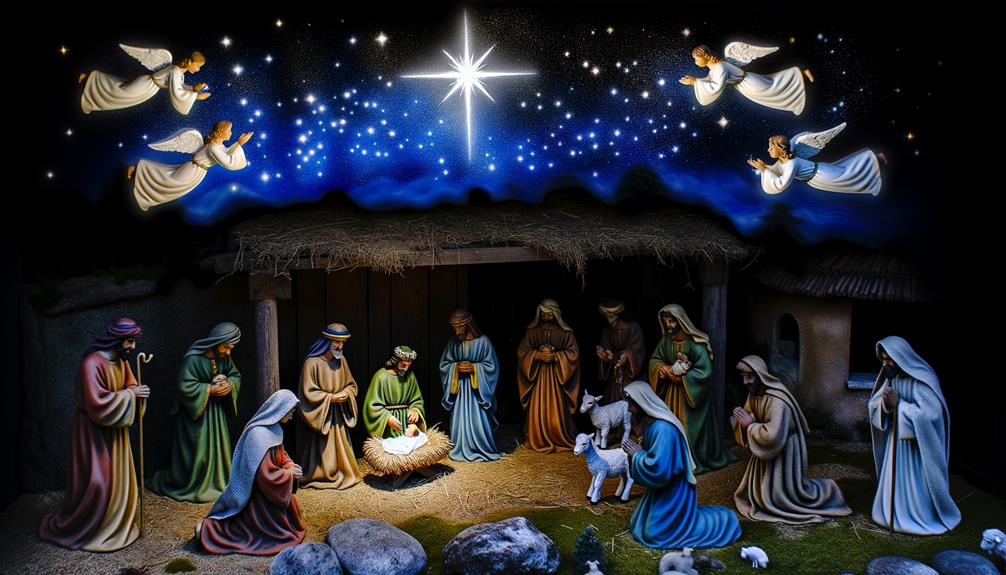
Spiritual Meaning of Christmas in the Bible: Birth of Christ, Hope, and Divine Salvation
| Aspect | Biblical Spiritual Meaning |
|---|---|
| Birth of the Savior | Celebrates the arrival of Jesus, the promised Messiah (Luke 2:11) |
| Fulfillment of Prophecy | Marks God’s faithfulness through Old Testament prophecies (Isaiah 9:6) |
| Hope and Redemption | Symbolizes new beginnings and salvation for humanity |
| God’s Love Manifested | Reflects the ultimate expression of love—God sending His Son (John 3:16) |
| Light in Darkness | Jesus as the Light of the World bringing truth and peace (John 8:12) |
Prophecies of the Messiah

Foretold by numerous Old Scripture prophets, the prophecies of the Messiah lay a foundational framework that underscores the spiritual significance of Christmas in the biblical narrative.
These prophecies, ranging from Isaiah’s foretelling of a virgin birth (Isaiah 7:14) to Micah’s prediction of the Messiah’s birthplace in Bethlehem (Micah 5:2), serve as divine harbingers of hope and redemption.
Such prophetic declarations are not merely historical anticipations but also theological affirmations that underscore the divine orchestration in the unfolding of salvation history.
The anticipation of the Messiah encapsulates the collective yearning for divine intervention and deliverance, fulfilling the covenantal promises made to Israel.
Consequently, these prophecies enrich the spiritual depth and significance of the Christmas narrative.
The Annunciation
The Annunciation encapsulates a pivotal moment in biblical history, marked by the angel Gabriel‘s proclamation to Mary of her divine role in bearing the Messiah.
This event not only highlights Mary’s extraordinary faith and obedience but also signifies the fulfillment of Old Scriptures prophecies concerning the coming of the Savior.
Analyzing these elements reveals the theological depth and spiritual significance that underlie the nativity narrative.
Angel Gabriel’s Message
Frequently depicted in Christian art and literature, the Annunciation marks a pivotal moment in biblical narrative where the Angel Gabriel delivers God’s message to the Virgin Mary, heralding the miraculous conception of Jesus Christ.
This divine communication, recorded in Luke 1:26-38, is laden with theological significance. Gabriel’s greeting, ‘Hail, favored one! The Lord is with you,’ emphasizes Mary’s unique role in salvation history. His proclamation, ‘You will conceive in your womb and bear a son,’ underscores the fulfillment of Messianic prophecies.
Gabriel’s message not only reveals God’s plan for redemption but also exemplifies divine grace and favor. The Annunciation, consequently, serves as an essential juncture, bridging Old Covenant prophecies with New Covenant realizations.
Mary’s Divine Role
Mary’s divine role in the Annunciation represents a profound intersection of human obedience and divine purpose, illustrating her unparalleled position in the narrative of salvation history.
The Annunciation, as depicted in Luke 1:26-38, reveals Mary as the chosen vessel through whom God’s redemptive plan would unfold. Her response, “Behold, I am the servant of the Lord; let it be to me according to your word,” exemplifies profound faith and submission.
This act of acceptance underscores her unique cooperation in divine will, making her an essential agent in the Incarnation.
Mary’s willing consent highlights the theological concept of theotokos—God-bearer—underscoring the mystery of God becoming man while respecting human freedom and participation.
Prophecy Fulfillment
In the Annunciation, the fulfillment of ancient prophecies is vividly illustrated, connecting the event to the broader tapestry of messianic expectations in the Hebrew Scriptures.
The angel Gabriel‘s proclamation to Mary (Luke 1:26-38) resonates with Isaiah’s prophecy: ‘Behold, the virgin shall conceive and bear a son, and shall call his name Immanuel’ (Isaiah 7:14). This moment encapsulates divine intervention and the realization of God’s redemptive plan.
The Annunciation not only heralds the coming of Jesus but reinforces the consistency and reliability of biblical prophecy.
It serves as a pivotal confirmation of God’s promises, emphasizing the continuity between the Old and New Covenants.
Consequently, it underscores the theological significance of Christ’s birth within the biblical narrative.
Birth of Jesus
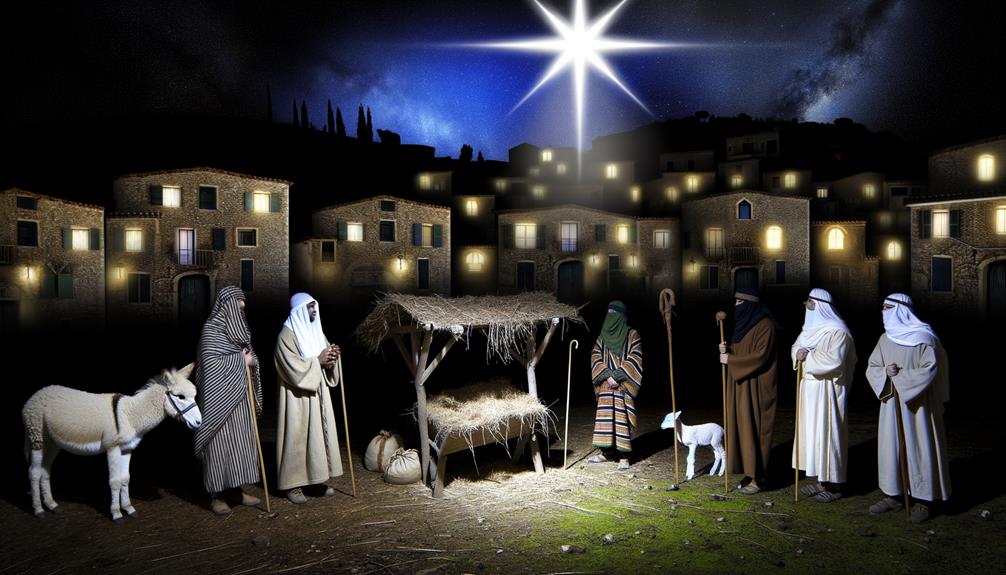
The birth of Jesus, as recounted in the Gospels of Matthew and Luke, holds profound theological significance, symbolizing the incarnation of divine love and the fulfillment of Messianic prophecies.
This narrative is not merely a historical event but a moment of divine intervention, where God enters human history in the form of an infant.
The nativity scene, marked by humble beginnings in a manger, underscores themes of humility and divine grace. Shepherds and magi paying homage further illustrate the universal scope of Christ’s mission.
The birth of Jesus signifies the convergence of heaven and earth, heralding a new era of reconciliation between God and humanity.
This pivotal event epitomizes the essence of Christmas as a celebration of divine love manifested in human form.
The Virgin Birth
Central to the narrative of Christ’s nativity, the doctrine of the Virgin Birth underscores the miraculous and divine nature of Jesus’ conception, as foretold by the prophet Isaiah and affirmed in the Gospels.
Isaiah 7:14 prophesies, ‘Behold, a virgin shall conceive and bear a son,’ a prediction realized in the accounts of Matthew and Luke. This cornerstone of Christian theology signifies God’s direct intervention in human history, bypassing natural procreation to affirm Jesus’ divine origin.
Mary’s purity and obedience highlight the sanctity of the incarnation, presenting a model of faithfulness.
The Virgin Birth therefore encapsulates the mystery of the Incarnation, where divinity intertwines with humanity, serving as a profound indication to the uniqueness of Christ’s mission on Earth.
Shepherds and Angels
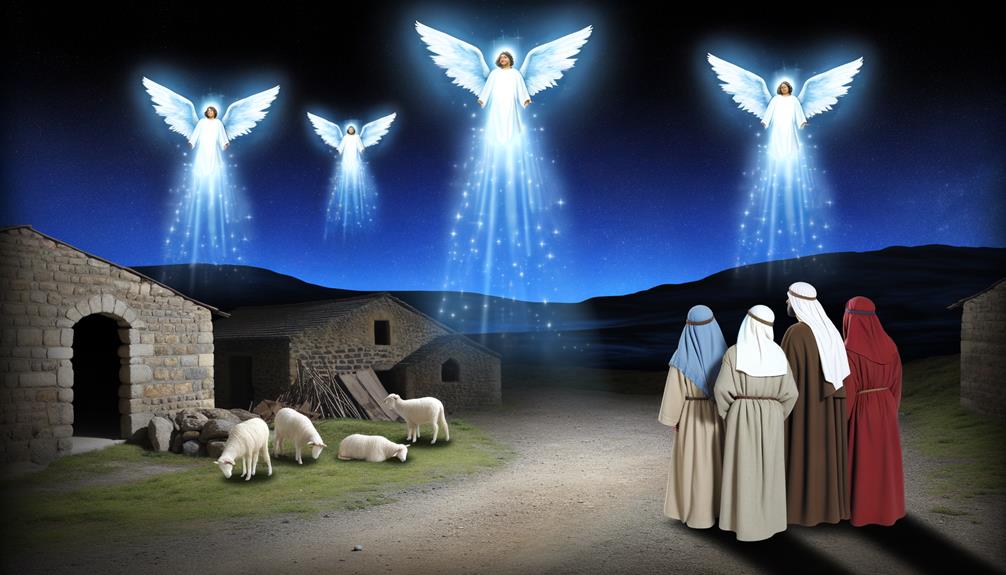
Amidst the pastoral landscapes of Bethlehem, the shepherds’ encounter with the angelic host heralds the advent of a new epoch in salvation history.
This narrative, found in Luke 2:8-20, symbolizes the inclusivity of the divine message, as shepherds, often marginalized in society, are chosen to receive the first proclamation of Christ’s birth.
The angelic announcement, ‘Glory to God in the highest, and on earth peace, good will toward men,’ underscores the universal promise of peace and reconciliation.
The shepherds’ immediate journey to witness the newborn Messiah represents a paradigm of faith and obedience, illustrating the transformative power of divine revelation.
Consequently, the shepherds and angels encapsulate the essence of Christmas as a celestial invitation to partake in divine joy.
Wise Men and Gifts
Guided by a celestial phenomenon, the Magi’s journey to honor the newborn Jesus marks a significant moment of recognition and reverence in the biblical narrative.
These Wise Men, traditionally known as kings or astrologers from the East, bear gifts of gold, frankincense, and myrrh, each laden with profound symbolism.
Gold signifies kingship and divinity, frankincense represents priestly role and divine worship, and myrrh, often used in embalming, prefigures Jesus’ mortality and sacrificial death.
The act of gift-giving by the Magi underscores the acknowledgment of Jesus’ multifaceted identity as King, Priest, and Sacrifice. This narrative element enriches the spiritual meaning of Christmas, highlighting themes of homage, prophecy, and the divine orchestration of events surrounding Christ’s birth.
Fulfillment of Old Testament
The fulfillment of Old Covenant prophecies is integral to understanding the spiritual meaning of Christmas, as it underscores the divine orchestration of Jesus’ birth.
The prophetic declarations concerning the Messiah, including His birthplace in Bethlehem and the virgin birth, are pivotal in establishing the legitimacy of Jesus as the anticipated savior.
These elements not only validate the continuity between the Old and New Covenants but also emphasize the meticulous fulfillment of God’s promises to humanity.
Prophecies About Messiah
Numerous prophecies within the Old Covenant anticipate the coming of the Messiah, and their fulfillment in the New Agreement underscores the deep spiritual significance of Christmas in Christian theology.
These prophecies span centuries, linking the Hebrew Scriptures to the life and mission of Jesus Christ. The alignment between prophetic announcements and New Testament events not only validates the Christian faith but enriches the meaning of the Nativity.
| Prophecy | Fulfillment |
|---|---|
| Isaiah 7:14 | Matthew 1:22-23 (Virgin birth) |
| Micah 5:2 | Matthew 2:1 (Birth in Bethlehem) |
| Isaiah 9:6-7 | Luke 1:32-33 (Eternal reign) |
This interconnectedness highlights divine orchestration, affirming the belief in Jesus as the awaited Messiah and enhancing the spiritual depth of Christmas.
Birthplace of Jesus
Identifying Bethlehem as the birthplace of Jesus fulfills the prophecy in Micah 5:2, underscoring the continuity between Old Covenant predictions and New Covenant events.
This fulfillment is significant for several reasons:
- Prophetic Precision: Micah’s prophecy, made centuries prior, specifically mentions Bethlehem, emphasizing divine orchestration.
- Davidic Lineage: Bethlehem, the City of David, connects Jesus to David, fulfilling messianic expectations of a Davidic king.
- Humility: Bethlehem’s humble status highlights the contrast between earthly expectations of grandeur and God’s preference for modest beginnings.
- Theological Continuity: The fulfillment of this prophecy affirms the reliability and interconnectedness of Scriptural narratives, reinforcing faith in biblical inerrancy.
Thus, Bethlehem’s role in Jesus’ birth is a cornerstone in understanding the spiritual and prophetic dimensions of Christmas.
Virgin Birth Significance
Foretold by the prophet Isaiah, the virgin birth of Jesus serves as a pivotal fulfillment of Old Covenant prophecy, underscoring the divine nature of His incarnation.
Isaiah 7:14 proclaims, ‘Behold, the virgin shall conceive and bear a son, and shall call his name Immanuel.’ This prophetic declaration is not merely a miraculous event but signifies God’s direct intervention in human history.
The virgin birth emphasizes Jesus’ purity and divine origin, distinct from ordinary human procreation, thereby reinforcing His identity as both fully God and fully man. It also validates the trustworthiness of biblical prophecy, serving as a cornerstone for Christian faith.
Consequently, the virgin birth is integral to understanding the theological foundation of the Christmas narrative.
Jesus as Savior
Central to the spiritual meaning of Christmas in the Bible is the recognition of Jesus as the Savior, a role that embodies profound theological significance and fulfills ancient prophecies.
The title ‘Savior’ signifies:
- Redemption: Jesus’ sacrifice redeems humanity from sin, as prophesied in Isaiah 53:5.
- Atonement: Through His death and resurrection, Jesus atones for the sins of mankind (Romans 3:25).
- Fulfillment of Prophecy: His birth fulfills messianic prophecies, especially in Micah 5:2 and Isaiah 7:14.
- Hope and Salvation: Jesus’ role as Savior offers hope and eternal salvation to believers (John 3:16).
These elements collectively underscore Jesus’ pivotal role in Christian theology, making His birth a cornerstone of the Christmas celebration.
Symbolism of Light

Illuminating both the physical and spiritual domains, the symbolism of light in the biblical narrative of Christmas underscores the divine presence and guidance inherent in the birth of Jesus.
The star of Bethlehem, guiding the Magi to the newborn Christ, epitomizes divine illumination leading humanity towards salvation.
Light, frequently associated with God’s purity and holiness, finds rich expression in the nativity story, as it heralds the arrival of the ‘Light of the World‘ (John 8:12).
This metaphorical light dispels spiritual darkness, symbolizing enlightenment and the revelation of divine truth.
Through this lens, Christmas is not merely a historical event but a perpetual invitation to embrace the transformative light of Christ in one’s life.
Themes of Hope and Love
The themes of hope and love are intricately woven throughout the biblical narrative of Christmas, epitomized by the birth of Jesus, which signifies the advent of divine hope for humanity.
Central to this narrative is God’s unconditional love, manifested in the incarnation, which serves as a proof of His unwavering commitment to human redemption.
This profound act of love underscores the promise of salvation, offering a renewed sense of purpose and assurance of eternal life.
Birth of Jesus
Among the most profound narratives in the biblical account of Christmas is the birth of Jesus, which encapsulates enduring themes of hope and love. This event is pivotal, signifying divine intervention in human history.
The nativity story elucidates several key spiritual themes:
- Fulfillment of Prophecy: Jesus’ birth fulfills Old Scriptures prophecies, offering hope to those awaiting a savior.
- Divine Love: The incarnation of Jesus represents God’s profound love for humanity.
- Humility and Service: Born in a manger, Jesus’ humble beginnings emphasize the value of humility.
- Universal Salvation: The birth signifies a message of salvation available to all, transcending social and cultural boundaries.
These elements collectively underscore the foundational Christian beliefs of redemption and divine benevolence.
God’s Unconditional Love
Central to the spiritual meaning of Christmas is the profound demonstration of God’s unconditional love, epitomized through the birth of Jesus Christ. This event signifies more than a historical occurrence; it embodies a divine act of love and grace.
In Christian theology, the incarnation of Jesus is perceived as God’s ultimate gift to humanity, transcending human limitations and imperfections. The narrative underscores themes of hope and love, illustrating how divine love is extended without conditions or prerequisites.
This unconditional love invites believers to reflect on their relationship with the divine and with one another, fostering a sense of unity and compassion. Consequently, Christmas serves as a reminder of the boundless love that underpins the Christian faith.
Promise of Salvation
How does the promise of salvation, manifested through the birth of Jesus Christ, encapsulate the themes of hope and love intrinsic to the spiritual meaning of Christmas?
The nativity narrative in the Bible provides not only a historical account but also a profound demonstration of divine compassion and redemption. This promise of salvation is characterized by:
- Hope for Humanity: Jesus’ birth signifies a new beginning, offering hope to a world burdened by sin.
- Unconditional Love: God’s willingness to send His only Son exemplifies unparalleled love.
- Redemptive Grace: The incarnation marks the initiation of humanity’s reconciliation with God.
- Enduring Faith: The prophetic fulfillment strengthens believers’ faith in God’s promises.
Through these elements, the spiritual essence of Christmas is realized, intertwining hope and love profoundly.
Divine Intervention
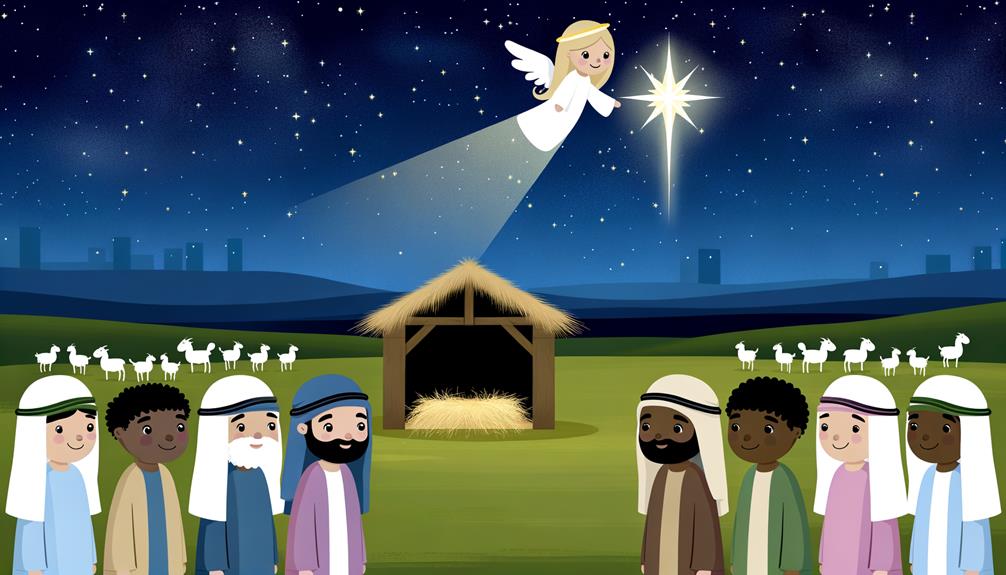
The narrative of Christmas in the Bible is replete with instances of divine intervention, highlighting the active role of the divine in the unfolding of sacred events.
From the angel Gabriel’s annunciation to Mary, to the dream revelations granted to Joseph, divine guidance orchestrates the nativity story. This divine orchestration underscores the theological principle that God’s will is integral to the fulfillment of biblical prophecies.
The appearance of the angelic hosts to shepherds further exemplifies the heavenly involvement in heralding the birth of Christ.
These miraculous occurrences serve not merely as narrative elements but as profound theological statements about the omnipotence and omnipresence of God within the human domain, emphasizing the sacred significance of the Christmas event.
Conclusion
The biblical narrative of Christmas encapsulates profound spiritual themes, including prophecy fulfillment, divine intervention, and the embodiment of hope and love.
For instance, consider a destitute family finding solace in the story of Jesus’ humble birth, reflecting the universal promise of salvation and light amidst darkness.
This narrative encourages a deeper understanding of Christmas, not merely as a historical event, but as an enduring symbol of divine love and redemption that transcends time and circumstance.