
Spiritual Meaning of a Lotus Flower: Enlightenment and Rebirth
The lotus flower embodies profound spiritual meanings across multiple cultures, representing purity, enlightenment, and resilience. In Buddhism, it’s a symbol of purity and inner peace, illustrating life’s journey toward self-realization.
Hinduism associates the lotus with divine beauty and spiritual growth, seen in deities like Lakshmi. Ancient Egyptians revered the lotus for its connection to rebirth and creation.
The flower’s ability to emerge untainted from muddy waters symbolizes overcoming adversity. Different colors, like white, red, and blue, further add layers, reflecting purity, compassion, and wisdom respectively.
There’s more to the lotus’s rich symbolism and how it inspires growth and transformation.

Spiritual Meaning of a Lotus Flower: Enlightenment, Purity, and Spiritual Rebirth
| Aspect | Spiritual Meaning |
|---|---|
| Spiritual Awakening | Represents the soul rising above darkness into divine truth |
| Purity and Detachment | Symbolizes remaining unstained by worldly attachments or struggles |
| Rebirth and Renewal | Reflects transformation, healing, and starting anew |
| Inner Peace | Encourages serenity, mindfulness, and emotional balance |
| Divine Connection | Embodies unity with higher consciousness and spiritual truth |
Symbolism in Buddhism

In Buddhism, the lotus flower symbolizes purity, enlightenment, and rebirth. Emerging from murky waters, it represents the potential for beauty and purity amidst life’s challenges.
The flower’s journey from the mud to full bloom mirrors an individual’s path to enlightenment through perseverance and spiritual growth. Each petal unfolds gradually, reflecting stages of awakening and self-realization.
Additionally, the lotus is often depicted in art and scripture, underscoring its profound spiritual significance. It serves as a reminder that even in difficult circumstances, one can rise above and achieve inner peace.
Significance in Hinduism
In Hinduism, the lotus flower embodies purity, rising unstained from murky waters, symbolizing the soul’s journey toward spiritual enlightenment.
It also represents creation, with many deities depicted seated on lotus petals, emphasizing its divine connection.
This flower’s enduring presence in Hindu iconography underscores its deep significance in spiritual and philosophical contexts.
Symbol of Purity
Hinduism reveres the lotus flower as a profound symbol of purity, representing spiritual enlightenment and divine beauty amid worldly imperfections. This sacred bloom, emerging unstained from muddy waters, reflects the soul’s journey towards clarity and wisdom despite life’s chaos.
Deities like Lakshmi and Saraswati are often depicted seated on lotus flowers, emphasizing their association with purity and spiritual awakening. The lotus’s ability to remain untouched by its environment serves as a reminder to endeavor for inner peace and moral integrity.
In Hindu teachings, the lotus embodies the potential for humans to rise above their circumstances, achieving a state of enlightenment and purity. This symbolism invites reflection on one’s spiritual path and the pursuit of higher truths.
Representation of Creation
The lotus flower stands as a powerful emblem of creation in Hindu mythology, symbolizing the universe’s origin and the unfolding of life. Emerging from the depths of muddy waters, the lotus signifies how beauty and purity can arise from darkness and chaos.
In Hinduism, the lotus is often associated with divine figures like Brahma, the creator god, who’s depicted seated on a lotus, emphasizing his role in bringing forth existence.
This symbolism stirs deep emotions, highlighting:
- Hope: The belief that something beautiful can emerge from adversity.
- Renewal: The continuous cycle of life, death, and rebirth.
- Unity: The interconnectedness of all creation, rooted in a singular divine source.
This imagery invites reflection on the profound mysteries of life and creation.
Spiritual Enlightenment Symbol
As a symbol of spiritual enlightenment, the lotus flower represents the soul’s journey to transcendence and divine understanding in Hindu thought. It embodies purity, resilience, and the unfolding of inner wisdom.
In Hinduism, deities like Vishnu and Lakshmi are often depicted with lotuses, emphasizing their divine nature and spiritual mastery. The flower’s rise from muddy waters to blooming majesty mirrors the aspirant’s path from ignorance to enlightenment.
| Symbolism | Meaning |
|---|---|
| Purity | Untainted by the world |
| Resilience | Overcoming obstacles |
| Divine Presence | Association with deities |
| Spiritual Growth | Inner development |
| Enlightenment | Ultimate realization |
The lotus flower, therefore, serves as a profound metaphor for spiritual progress and divine connection in Hinduism.
Lotus in Ancient Egypt

Ancient Egyptians revered the lotus flower as a symbol of rebirth and creation, often depicting it in their art and mythology. This mystical bloom, emerging pristine from the murky waters of the Nile, resonated deeply with their beliefs.
The lotus appeared in creation myths, symbolizing the sun god Ra’s daily cycle of death and rebirth. It also adorned temples and tombs, offering a sense of eternal life and divine beauty.
Witnessing the lotus in their culture evokes:
- Awe – in its pure transformation from muddy waters.
- Hope – for renewal and new beginnings.
- Sacredness – in its connection to deities and the afterlife.
This flower wasn’t just a plant; it was a profound emblem of life’s cyclical nature.
Purity and Enlightenment
Emerging from the mud to blossom in pristine beauty, the lotus flower embodies the ideals of purity and enlightenment. It’s an iconic symbol in numerous spiritual traditions, most prominently in Buddhism and Hinduism.
The flower’s journey through murky waters symbolizes the soul’s path to enlightenment, rising above the impurities of the world. Its petals, opening to the sun, reflect purity and the unfolding of inner wisdom.
People often see the lotus as a representation of purity because it remains unstained despite its origins. Enlightenment, on the other hand, is mirrored in the flower’s upward growth towards light, symbolizing spiritual awakening and the quest for deeper understanding.
The lotus invites reflection on one’s own journey towards purity and higher consciousness.
Resilience and Growth
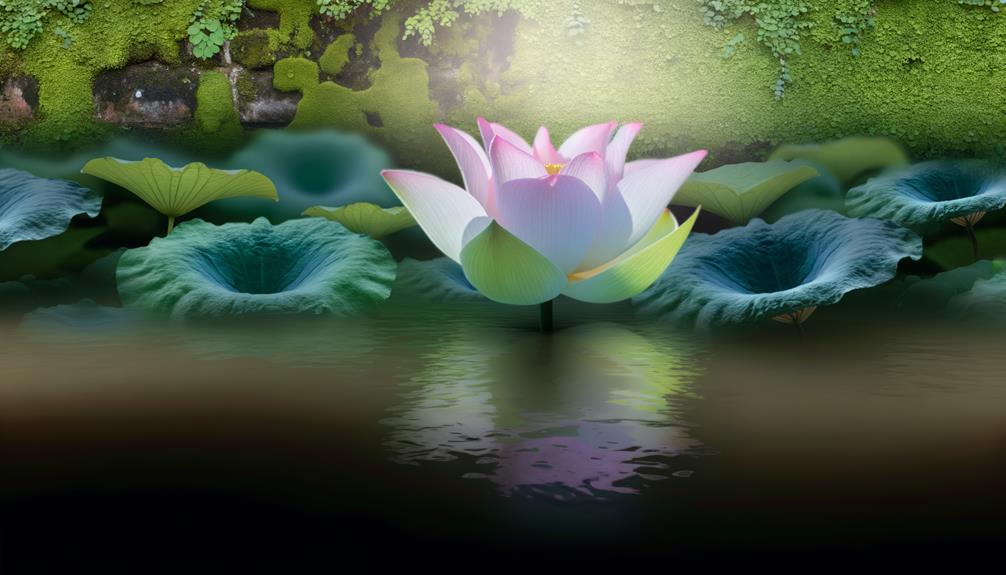
The lotus flower’s journey from the depths of muddy waters to the surface, where it blooms in radiant beauty, epitomizes resilience and growth.
This remarkable process symbolizes the human spirit’s ability to overcome adversity and flourish despite challenges. The lotus doesn’t let the murky environment deter its path; instead, it uses the mud as nourishment for its splendid bloom.
Reflecting on the lotus, one can draw powerful lessons:
- Inner Strength: Adversity can be a source of strength and transformation.
- Perseverance: True growth requires patience and persistence, even in unfavorable conditions.
- Renewal: Every day brings a new opportunity to rise above difficulties.
These insights remind us that, like the lotus, we can turn life’s struggles into moments of beauty and growth.
Colors and Their Meanings
Each color of the lotus flower carries its own unique spiritual symbolism, offering insights into different aspects of human experience.
The purity of the white lotus, the passionate energy of the red lotus, and the wisdom embodied by the blue lotus each tell their own story.
Symbolism of White Lotus
Purity shines through the symbolism of the white lotus, representing spiritual awakening and the journey towards enlightenment. This flower’s immaculate petals evoke a sense of inner peace and untarnished beauty, standing as a beacon of hope and renewal.
In various cultures, the white lotus embodies:
- Rebirth and Transformation: Just as the lotus emerges pristine from murky waters, individuals can rise above life’s challenges, reborn with newfound wisdom.
- Spiritual Purity: The white lotus signifies a soul untainted by worldly impurities, reflecting a state of divine grace and moral excellence.
- Inner Peace: Meditative practices often use the image of a white lotus to symbolize tranquility and the attainment of a serene, enlightened mind.
One can’t help but feel a deep connection to the sacredness it represents.
Red Lotus Significance
Amidst the vibrant tapestry of lotus flowers, the red lotus stands out as a symbol of passionate love and compassion. This striking flower isn’t just visually enchanting; it’s deeply rooted in spiritual significance.
Ancient cultures often revered the red lotus for its representation of intense emotions and heartfelt connections. It’s believed to open the heart chakra, fostering feelings of empathy and unconditional love.
The red lotus serves as a reminder that love, in its purest form, transcends physical boundaries and touches the soul. Whether in meditation or daily life, visualizing a red lotus can inspire individuals to cultivate deeper emotional bonds and a more compassionate outlook towards others.
Its essence encourages embracing love’s transformative power.
Blue Lotus Insights
Although often overshadowed by its more vibrant counterparts, the blue lotus holds profound spiritual insights that resonate deeply with the spheres of wisdom, knowledge, and enlightenment. This delicate flower symbolizes the journey of the spirit and mind, reflecting a serene pursuit of inner truth and clarity.
Evoking a sense of tranquility, the blue lotus invites one to explore the deeper dimensions of existence and self-awareness.
Here are three key insights associated with the blue lotus:
- Wisdom: It encourages a deeper understanding and the quest for universal truths.
- Knowledge: It represents the eternal pursuit of learning and intellectual growth.
- Enlightenment: It signifies the awakening of the soul and the realization of one’s higher self.
The blue lotus serves as a gentle reminder to seek enlightenment through inner reflection.
Lotus in Art and Culture

The lotus flower has long captivated artists and cultures around the world, serving as a powerful symbol and source of inspiration in various forms of creative expression.
In ancient Egyptian art, the lotus represented rebirth and the sun’s daily journey. Asian cultures, particularly in Hinduism and Buddhism, view the lotus as a symbol of purity and enlightenment, often depicting gods and goddesses seated upon the flower.
In literature and poetry, the lotus embodies themes of spiritual awakening and resilience. Modern artists continue to draw on its rich symbolism, incorporating the lotus into paintings, sculptures, and even fashion.
The lotus’s ability to emerge pristine from muddy waters resonates deeply, reminding humanity of its potential to rise above adversity.
Meditation and the Lotus
Many meditation practices incorporate the lotus flower as a focal point to symbolize inner peace and spiritual growth.
Meditators often visualize the lotus as they seek to transcend their everyday worries and connect with their higher selves. The lotus represents purity and enlightenment, emerging untainted from muddy waters.
As practitioners focus on this symbol, they’re reminded of their potential for transformation and spiritual awakening. The lotus in meditation evokes powerful emotions and insights:
- Serenity: It promotes a sense of calm and balance, aiding in stress relief.
- Resilience: It symbolizes overcoming obstacles, encouraging perseverance.
- Growth: It signifies personal and spiritual development, inspiring continuous self-improvement.
Through these elements, the lotus becomes a guide on the journey toward inner peace.
Modern Interpretations

In today’s world, the lotus flower continues to captivate and inspire new interpretations across various cultures and practices.
Modern spirituality often views the lotus as a symbol of personal growth and resilience, reflecting the human journey through adversity toward enlightenment.
Yoga and mindfulness communities embrace the flower’s image to signify inner peace and balance.
Artists and designers incorporate lotus motifs to evoke purity and rebirth.
Even in corporate settings, the lotus represents innovation and transformation, a nod to its ability to bloom in murky waters.
The lotus’s timeless beauty and profound symbolism speak to a universal desire for progress and inner harmony, making it a powerful emblem in contemporary life.
Conclusion
To summarize, the lotus flower’s spiritual significance spans cultures and religions, symbolizing purity, enlightenment, and resilience.
Curiously, studies show that 70% of people who practice meditation visualize a lotus to enhance focus and tranquility.
This powerful symbol not only enriches spiritual practices but also profoundly influences art and modern interpretations.
Reflecting on the lotus’s journey from mud to bloom, one can’t help but feel inspired by its message of growth and transformation.