Spiritual Meaning of Christmas Tree
The Christmas tree, deeply rooted in ancient traditions, stands as a powerful symbol of hope, renewal, and unity. Originating from pagan practices celebrating the winter solstice, the evergreen’s continuous life through winter represents eternal life and resilience.
Lights on the tree symbolize spiritual enlightenment, while ornaments reflect qualities like love, faith, and joy. The tree also mirrors the Tree of Life, highlighting interconnectedness and personal growth.
Through its branches and roots, the Christmas tree invites reflection on enduring spirit and the deeper meanings of the holiday season, encouraging a journey into its rich and inspiring symbolism.

Spiritual Meaning of Christmas Tree: Symbol of Eternal Life, Hope, and Divine Light
| Aspect | Spiritual Meaning |
|---|---|
| Eternal Life | The evergreen tree symbolizes life that endures beyond seasons |
| Hope and Renewal | Represents spiritual rebirth and the return of light during winter |
| Divine Light | Lights on the tree symbolize divine presence and spiritual illumination |
| Unity and Family | Reflects the spiritual strength of love, connection, and togetherness |
| Gratitude and Blessings | Encourages reflection on blessings and spiritual abundance |
Origins of the Christmas Tree

The origins of the Christmas tree can be traced back to ancient pagan traditions that celebrated the winter solstice. These early customs involved bringing evergreen branches into homes to symbolize life and renewal during the darkest days of the year.
Over time, these practices evolved and merged with Christian traditions. In the 16th century, devout Christians in Germany started bringing full trees into their homes and decorating them. This heartfelt practice spread across Europe and eventually to America.
The Christmas tree, hence, carries a rich tapestry of history, blending diverse beliefs and customs. It represents a beacon of hope and unity, reminding us of the enduring human spirit and our shared desire for warmth, light, and connection during the winter season.
Symbolism of Evergreens
Evergreens, with their steadfast greenery throughout the year, symbolize eternal life and nature’s resilience. They remind individuals of the enduring spirit that persists through life’s challenges.
As people gather around the Christmas tree, they connect with these profound themes, finding hope and inspiration in the perennial beauty of the evergreens.
Eternal Life Representation
Symbolizing eternal life, evergreens stand resilient through the harshest winters, reminding us of nature’s unwavering promise and the enduring spirit of Christmas.
These trees, with their perpetual greenery, serve as a powerful metaphor for life’s continuity and hope, even in the darkest times.
| Aspect | Symbolism |
|---|---|
| Leaves’ Permanence | Unending life |
| Winter Resilience | Strength in hardships |
| Evergreen Color | Faith and renewal |
| Year-round Growth | Consistency of love |
Evergreens call forth a sense of calm and assurance, whispering that life, like their leaves, persists beyond the seasons.
They remind everyone that amidst life’s challenges, there is a core of enduring energy, echoing the spirit of Christmas, which celebrates life, rebirth, and eternal hope.
Nature’s Resilience Symbol
Beyond symbolizing eternal life, evergreens embody nature’s resilience, standing tall and vibrant despite the harshest conditions. They remind us that life can persevere through adversity.
The evergreen’s steadfastness through winter’s chill serves as a powerful metaphor for human strength and endurance. People often look to these trees as symbols of hope and renewal, finding comfort in their unwavering green amidst a world turned cold and barren.
Their ability to withstand and even thrive through seasonal cycles encourages individuals to believe in their own inner fortitude. They inspire a sense of spiritual grounding, a reminder that, like these trees, they too can endure life’s storms.
In a world often fraught with challenges, the evergreen stands as a beacon of resilience and hope.
Light as a Spiritual Symbol
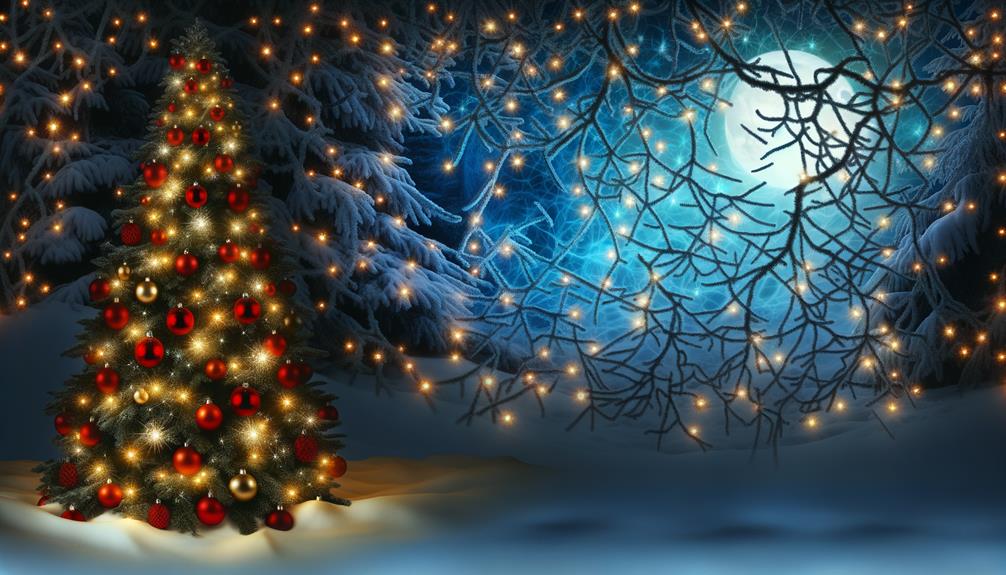
In the glow of the Christmas tree lights, one can find a profound symbol of spiritual enlightenment and hope. These twinkling lights remind individuals of the light within themselves and others.
They represent guidance through dark times, illuminating paths of kindness, love, and wisdom. Each light symbolizes a beacon of warmth, offering comfort to those who seek solace during challenging moments.
By adorning the tree with these lights, people can celebrate the triumph of light over darkness, embodying the essence of spiritual growth. This tradition encourages everyone to reflect on their inner light and share it with the world, fostering a spirit of unity and compassion.
The simple act of lighting a tree becomes a powerful, spiritual ritual.
The Tree of Life
The Tree of Life stands as a powerful symbol across various cultures, signifying unity and the interconnectedness of all living things.
It reminds humanity of their intrinsic link to nature and the endless possibilities for spiritual growth.
During the Christmas season, this ancient emblem encourages everyone to embrace a deeper connection with the world around them and within themselves.
Symbolism in Various Cultures
Many cultures around the world view the Christmas tree as a profound symbol of the Tree of Life, representing growth, renewal, and eternal life. This evergreen icon holds deep spiritual significance across various traditions and inspires a sense of unity and hope.
In ancient cultures, the Tree of Life was seen as a bridge between the heavens and the earth, connecting humanity to the divine.
- Norse Mythology: Yggdrasil, the World Tree, connects all domains and signifies wisdom and protection.
- Celtic Tradition: Trees are sacred, embodying the essence of life and the continuity of nature.
Connection to Nature
Drawing from these rich traditions, the Christmas tree embodies a profound connection to nature through the symbolism of the Tree of Life.
Evergreen trees, resilient and enduring through harsh winters, remind people of nature’s perpetual cycle of life, death, and renewal. This symbolism speaks to the interconnectedness of all living beings, urging everyone to recognize and honor their place within the broader tapestry of life.
By bringing a tree into their homes, individuals are invited to reflect on nature’s beauty and resilience. This act encourages a deeper appreciation for the natural world and a commitment to environmental stewardship.
In this way, the Christmas tree stands as a beacon of hope, reminding us of life’s continuous renewal and the enduring bond with nature.
Spiritual Growth Representation
Embodying the essence of spiritual growth, the Christmas tree mirrors the Tree of Life, symbolizing personal development, resilience, and the interconnected journey of the soul.
Each branch reaching toward the heavens represents our aspirations and the challenges we overcome. The evergreen nature of the tree signifies eternal life and hope, reminding us of our capacity for growth, even in the harshest conditions.
To further explore this symbolism, consider the following:
- Roots: Grounded in love and wisdom, they provide stability and nourishment.
- Trunk: Represents strength and the core of our being, supporting growth.
This sacred tree serves as an enduring reminder of life’s endless possibilities.
Pagan Roots and Christian Adoption
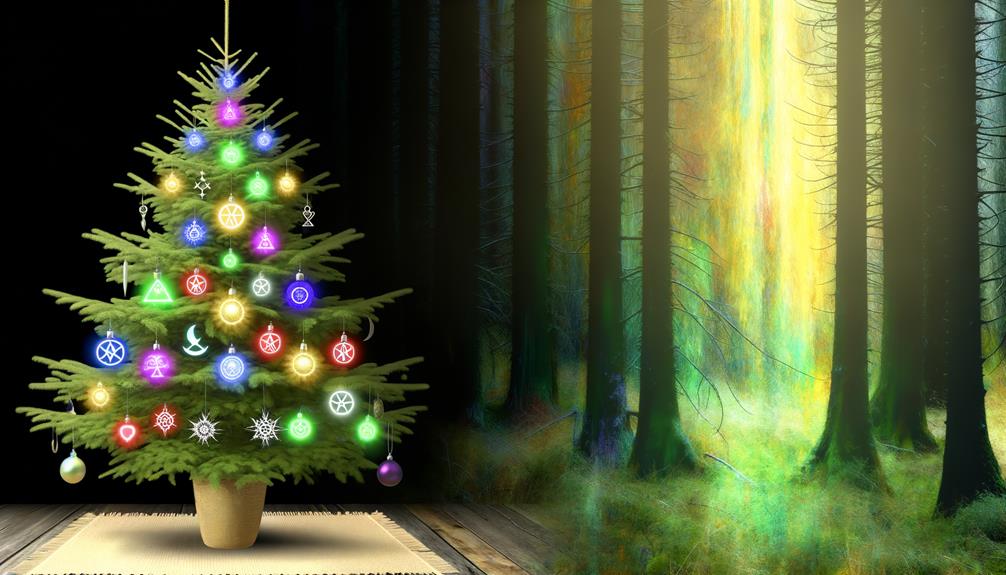
The Christmas tree, with its vibrant evergreen branches, traces its origins to ancient pagan traditions that celebrated the winter solstice.
Pagans revered the evergreen as a symbol of life and resilience during the darkest days of winter.
When Christianity spread across Europe, early Christians adopted and adapted these traditions, infusing them with new spiritual meanings to celebrate the birth of Christ.
| Pagan Tradition | Symbolism | Christian Adaptation |
|---|---|---|
| Evergreen Trees | Eternal life | Tree of eternal life in Christ |
| Winter Solstice | Rebirth of the sun | Birth of the Son (Jesus) |
| Decorations | Nature’s bounty | Ornaments reflecting faith |
| Feasts | Community and gratitude | Celebrations of Christ’s birth |
This harmonious blend of beliefs enriches the spiritual significance of the Christmas tree, symbolizing unity, hope, and enduring faith.
The Role of Ornaments
As the evergreen tree stands adorned in homes, the ornaments that grace its branches carry profound spiritual meanings that enhance the celebration of Christ’s birth.
Each ornament reflects a deeper symbolism connected to the Christian faith and the season of giving. Angels remind believers of heavenly messengers proclaiming Christ’s birth.
Stars represent the Star of Bethlehem that guided the Wise Men. Bells, often seen on trees, symbolize joy and the proclamation of Christ’s arrival.
These ornaments aren’t just decorations; they serve as reminders of the sacred story and the virtues of love, hope, and joy that Christmas embodies.
- Angels: Remind us of the heavenly messengers.
- Stars: Reflect the Star of Bethlehem.
Christmas Tree in Different Cultures
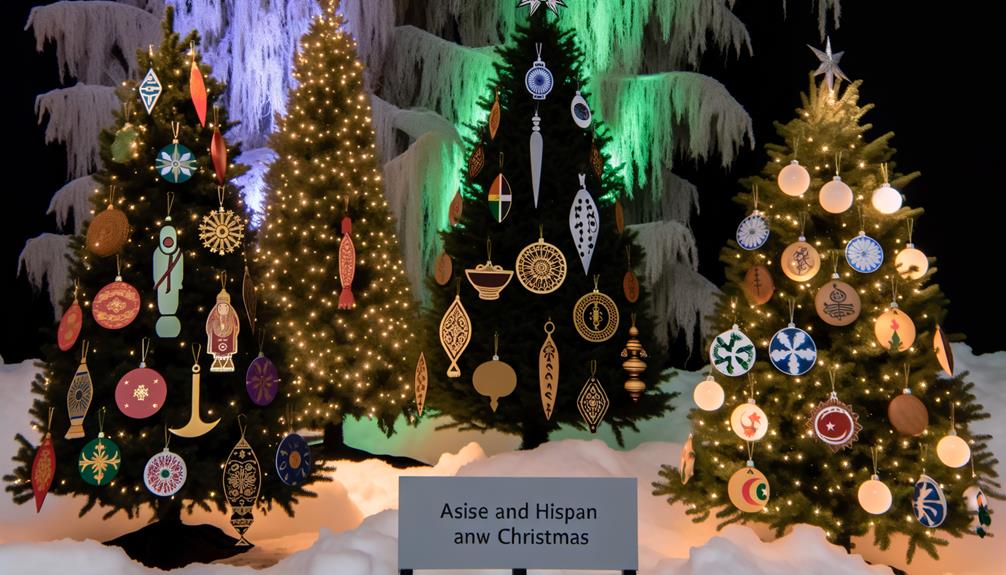
Across the globe, the Christmas tree takes on unique cultural expressions, reflecting each society’s traditions and beliefs while still embodying the universal spirit of the season.
In Germany, the birthplace of the modern Christmas tree, families gather to adorn their Tannenbaum with handmade ornaments and lit candles, symbolizing hope and light.
In Mexico, the Nacimiento, or Nativity scene, often takes precedence, but a Christmas tree still stands as a vibrant symbol of festivity.
Japan, while not traditionally a Christian country, embraces the tree as a representation of joy and goodwill, often decorated with origami and paper cranes.
Each culture, while diverse in its customs, sees the Christmas tree as a beacon of unity, love, and shared celebration.
The Star and the Angel
Guiding both hearts and homes, the star and the angel atop the Christmas tree carry profound spiritual significance, illuminating the values of hope and divine presence.
The star, symbolizing the Star of Bethlehem, directs believers to a place of spiritual awakening, just as it led the Wise Men to the Christ child. Meanwhile, the angel represents divine messengers, embodying protection and the heralding of joyous news.
- Symbol of Hope: The star shines brightly, encouraging faith and optimism.
- Divine Guidance: Both symbols serve as reminders of higher guidance and the importance of trust.
These symbols invite reflection and connection during the holiday season.
Modern Spiritual Interpretations
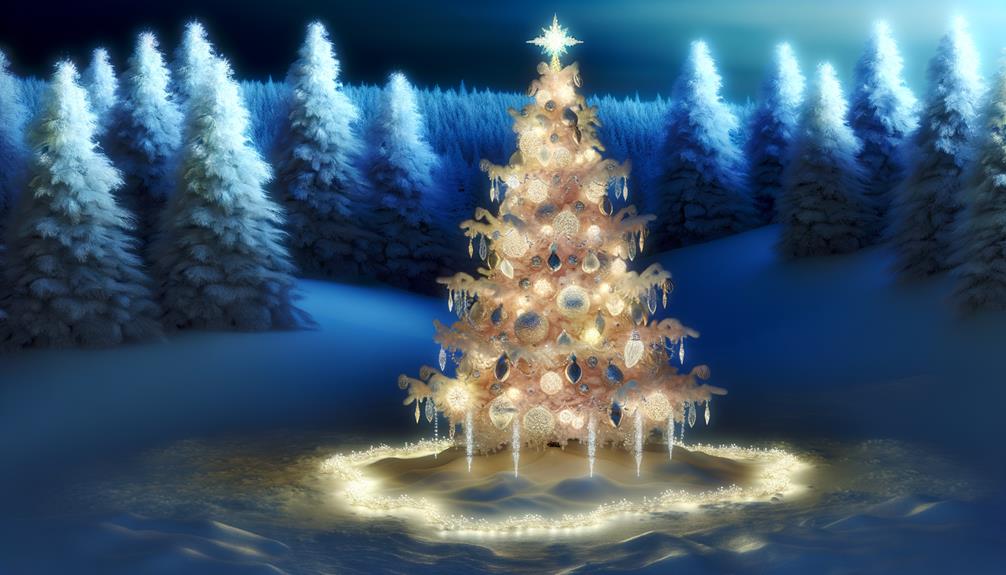
In contemporary times, the Christmas tree continues to evolve as a symbol of inner reflection and spiritual growth. People now see it as a beacon of hope, unity, and renewal.
The evergreen branches remind them of resilience and the enduring spirit. Each ornament can represent a cherished memory or aspiration, turning the act of decorating into a meditative practice.
Lights strung on the tree symbolize enlightenment and the illumination of the soul’s journey. Gathering around the tree fosters a sense of community and love, encouraging individuals to embrace compassion and connectedness.
Consequently, the modern Christmas tree transcends its traditional roots, inviting everyone to explore deeper layers of meaning and personal transformation during the holiday season.
Conclusion
In the tapestry of traditions, the Christmas tree stands as a beacon of unity and hope.
Just as each ornament adds its unique charm, every individual brings their light to the world.
The evergreen whispers tales of eternal life, while the star and angel guide us toward higher truths.
Embracing its rich symbolism, the Christmas tree becomes not just a festive decoration, but a profound reminder of love, resilience, and the interconnectedness of all souls.