Spiritual Meaning of a Bonsai Tree
The bonsai tree symbolizes a deep spiritual connection to nature, embodying patience, inner peace, and mindfulness. Cultivating a bonsai teaches observing nature’s rhythms, reminding one of the delicate balance between growth and restraint.
Each careful pruning session reflects life’s impermanence and the beauty found in transformation. By nurturing a bonsai, individuals engage in a meditative practice that fosters a deeper understanding of themselves and the world around them.
This age-old art reveals profound lessons in seeing beauty in subtle, gradual changes. To explore further, one may find richer insights hidden within this miniature universe of tranquility.
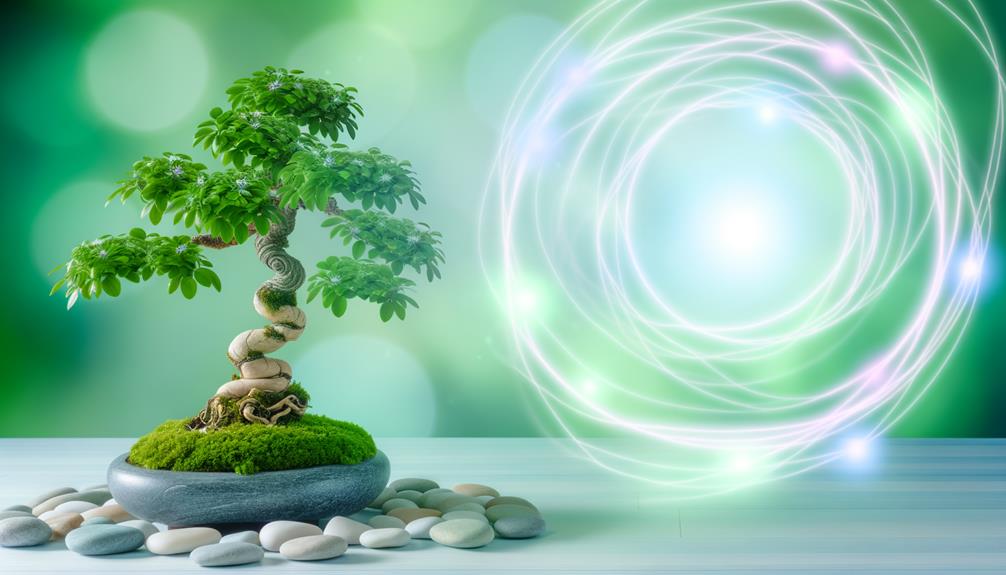
Spiritual Meaning of a Bonsai Tree: Symbol of Harmony, Patience, and Mindful Growth
| Aspect | Spiritual Meaning |
|---|---|
| Patience and Discipline | Symbolizes slow, intentional spiritual growth over time |
| Harmony and Balance | Reflects alignment between nature, self, and the universe |
| Mindfulness | Encourages being present and nurturing spiritual stillness |
| Inner Peace | Represents serenity, calm, and introspection |
| Mastery and Control | Embodies the art of shaping life with care, purpose, and awareness |
Harmony With Nature
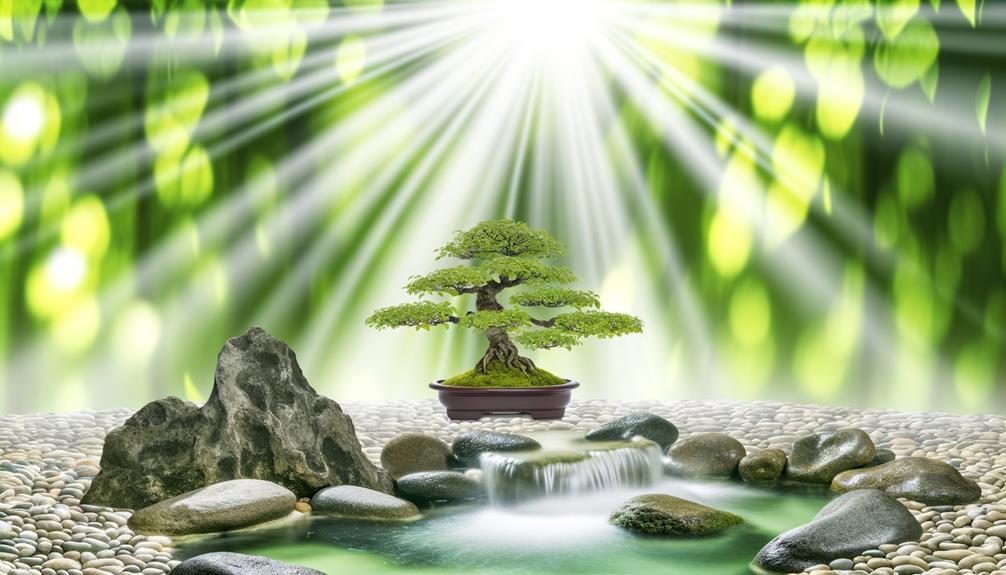
Cultivating a bonsai tree invites one to embrace harmony with nature, fostering a deep connection through mindful care and observation. This ancient art teaches the importance of balance, as one nurtures the delicate interplay between growth and restraint.
Every trim, every wire, becomes a meditation, a moment to reflect on life’s impermanence and beauty. The bonsai, in its miniature grandeur, embodies nature’s vastness, reminding the caretaker of their place within the larger tapestry of life.
Through this practice, one learns to listen to the subtle whispers of the tree, gaining insight into nature’s rhythms. It’s a journey of mutual respect, where both human and tree grow together, finding peace in the quiet moments of shared existence.
Symbol of Patience
Nurturing a bonsai tree teaches the profound virtue of patience, as each tiny branch and leaf unfolds in its own time, revealing the slow, deliberate artistry of nature.
This delicate process can’t be rushed; it requires the caregiver’s gentle hand and unwavering attention. Each moment spent trimming, watering, and observing becomes a meditation on the passage of time.
Through the bonsai, one learns that growth can’t be forced but must be allowed to occur naturally. The tree stands as a living symbol to the rewards of patience, showing that beauty and form arise not from haste but from persistent, thoughtful care.
In tending to a bonsai, one embraces the wisdom of waiting, finding fulfillment in the gradual journey of life.
Reflection of Inner Peace
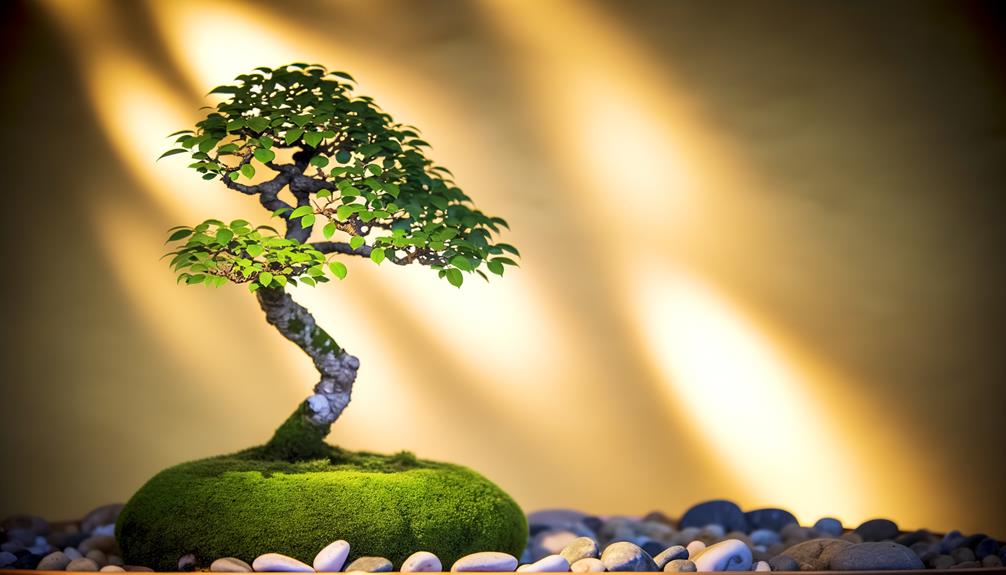
Tending to a bonsai tree invites a profound sense of inner peace, as the meticulous care required fosters mindfulness and tranquility.
Each delicate snip and gentle shaping mirrors the gardener’s journey toward self-discovery and serenity. In the quiet moments spent nurturing the tree, one finds a sanctuary from life’s chaos.
The bonsai, with its graceful branches and resilient spirit, symbolizes the balance between strength and gentleness, reflecting the essence of inner harmony.
This meditative practice encourages a deeper connection with nature and oneself, revealing layers of calm and clarity.
Through this serene engagement, the soul finds respite, and the mind is cleansed of clutter, allowing a pure, unbroken stream of peace to flow within.
Mindfulness in Practice
In the act of caring for a bonsai tree, one embodies mindfulness, each movement becoming a deliberate and present moment.
Tending to the bonsai requires full attention; pruning branches, watering roots, and shaping the tree all demand focus and care. The practice becomes a meditation, a way to connect deeply with the present.
Observing the tree’s growth, one learns to appreciate the small, subtle changes, fostering patience and awareness. The mindful gardener finds tranquility in these rituals, realizing that each step, however minute, holds significance.
Through this attentive care, the bonsai tree becomes a mirror reflecting the gardener’s inner state, encouraging a harmonious balance between mind and nature.
Here, mindfulness isn’t just a practice—it’s a way of being.
Embracing Impermanence
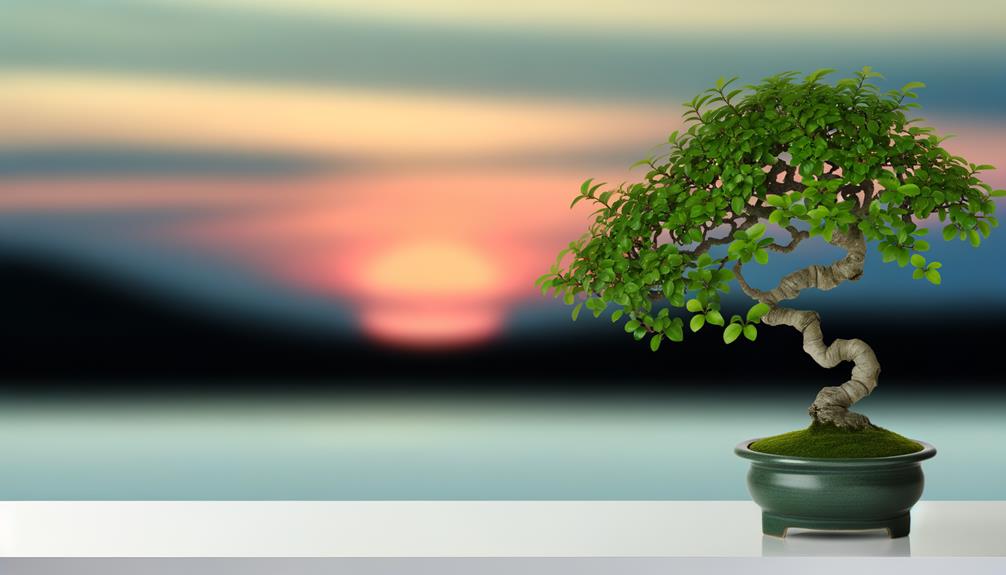
The bonsai tree, with its ever-changing form, teaches us to embrace the beauty of impermanence. Each leaf, branch, and root evolves over time, reflecting the natural cycle of growth and decay.
This miniature tree encourages us to appreciate life’s transient moments, reminding us that change is a constant companion. By tending to the bonsai, one learns that beauty isn’t found in permanence but in the ongoing process of transformation.
The tree’s delicate balance between life and decay mirrors our own journey, urging us to find peace in the ephemeral. Through this practice, individuals awaken to the profound lesson that every ending is but a new beginning, and in letting go, they discover the true essence of living fully.
Conclusion
In the delicate dance of pruning and nurturing a bonsai tree, one finds more than just a hobby—it’s a mirror reflecting the essence of life’s journey.
The bonsai symbolizes patience, inner peace, and mindfulness, teaching us to embrace impermanence like leaves in the wind.
By tending to this miniature world, one harmonizes with nature, cultivating a serene heart and a mindful spirit.
The bonsai tree, indeed, whispers the timeless wisdom of the universe.