
Spiritual Meaning of Gold in the Bible: Divinity and Purity
In the Bible, gold signifies divine presence, purity, and glory. It is used lavishly in the construction of sacred spaces such as the Tabernacle and Solomon’s Temple, symbolizing the sanctity and holiness of these sites.
This precious metal also reflects God’s immutable essence, unblemished purity, and eternal glory. Gold is integral in prophetic imagery, such as the New Jerusalem, emphasizing the perpetual nature of God’s kingdom.
Additionally, it represents divine wisdom, holding greater value than material wealth. Each mention of gold underscores deeper spiritual truths and theological doctrines, inviting further reflection into its rich, symbolic significance.

Spiritual Meaning of Gold in the Bible: Divinity, Purity, and Eternal Value
| Aspect | Description | Spiritual Significance |
|---|---|---|
| Divine Glory | Exodus 25:11 (Ark overlaid with gold) | Represents God’s majesty, holiness, and unapproachable light |
| Purity & Refinement | Zechariah 13:9 | Symbolizes faith tested by fire and spiritual purification |
| Eternal Value | Revelation 21:18 | Gold in heaven reflects lasting spiritual treasures |
| Worship & Honor | Matthew 2:11 (Gift of the Magi) | Given to Jesus as a sign of kingship and divine worth |
| Heavenly Standard | 1 Kings 6:22 (Temple design) | Used in sacred places to reflect God’s perfection and presence |
Gold in the Tabernacle

Examining the use of gold in the Tabernacle reveals its profound symbolic significance in the biblical narrative, representing divine presence and sanctity.
The construction and furnishing of the Tabernacle, as detailed in the Book of Exodus, employ gold extensively, from the Ark of the Covenant to the menorah. This lavish use of gold serves not merely an aesthetic function but underscores theological themes.
Gold, being precious and incorruptible, symbolizes God’s purity, glory, and eternal nature. The golden overlay on sacred objects enhances their holiness, demarcating the Tabernacle as a dwelling place of God among His people.
Consequently, gold in the Tabernacle transcends material wealth, embodying a sacred covenant between the divine and the earthly domains.
Solomon’s Temple and Gold
Constructed under King Solomon’s reign, the Temple in Jerusalem stands as a monumental symbol to the extensive and purposeful use of gold, reflecting its enduring spiritual and theological significance in the biblical tradition.
Gold was meticulously integrated into the Temple’s design, from the inner sanctum to the altar, symbolizing divine presence and glory. The lavish use of gold not only demonstrated Israel’s devotion to God but also conveyed the sacredness and reverence of the space.
Every element within the Temple, including the cherubim and furnishings, glistened with gold, portraying an earthly reflection of heavenly splendor. This opulent manifestation underscores the belief in gold as a medium through which divine majesty and holiness are vividly expressed.
Symbol of Divine Purity

The extensive use of gold in Solomon’s Temple not only highlighted its physical grandeur but also served as a profound symbol of divine purity, reflecting the theological belief in gold’s association with spiritual perfection and holiness.
Scriptural references consistently link gold with purity, as seen in passages like Job 23:10, where gold refined by fire symbolizes tested righteousness. This precious metal’s incorruptible nature becomes a metaphor for the unblemished and eternal essence of the divine.
In biblical narratives, gold’s untarnished quality underscores God’s purity and sovereign sanctity, setting a divine standard for human conduct and spiritual aspiration. The Temple’s golden elements consequently transcended mere material opulence, embodying an ideal of celestial purity that believers were called to emulate.
Gold and God’s Glory
Gold, in the biblical context, serves as a profound symbol of God’s glory, reflecting His divine presence and majesty.
The imagery of gold within the heavenly sanctuary signifies the sanctity and perfection of the eternal kingdom.
This precious metal’s association with divine attributes underscores its representation of God’s unblemished and eternal nature.
Divine Presence Symbolism
In biblical scripture, gold is often employed as a profound symbol of divine presence and the manifestation of God’s glory. This precious metal’s enduring brilliance and rarity render it an apt representation of the divine’s unapproachable majesty and purity.
For example, in the construction of the Tabernacle and Solomon’s Temple, gold’s pervasive use underscores the sanctity and divine inhabitation of these sacred spaces. The biblical narrative also associates gold with visions of heaven and divine encounters, reinforcing its symbolism as a conduit to the divine domain.
Consequently, the use of gold transcends mere aesthetic value, embodying theological truths about God’s transcendence and immanence. Through gold, scripture communicates the splendor and holiness inherent in the divine presence.
Heavenly Sanctuary Imagery
Numerous biblical passages depict gold as integral to the heavenly sanctuary, symbolizing God’s unparalleled glory and majestic sovereignty.
In Exodus, the Tabernacle, constructed according to divine specifications, features extensive use of gold, from the Ark of the Covenant to the golden lampstand. This imagery underscores gold’s association with divine purity and holiness.
Similarly, the Book of Revelation describes the New Jerusalem, whose streets are pure gold, transparent as glass, reflecting an unblemished divine presence.
Such scriptural references emphasize that gold, in its resplendence and incorruptibility, serves as a metaphor for the divine nature, embodying qualities of eternity, sanctity, and divine illumination.
This sacred symbolism elevates gold beyond mere material value, framing it as a manifestation of God’s infinite grandeur.
Eternal Kingdom Representation
The profound symbolism of gold extends beyond the heavenly sanctuary to encompass the eternal kingdom, where it epitomizes the glory and everlasting nature of God’s reign.
In biblical texts, gold’s immutable and radiant properties symbolize the divine perfection and majesty of God’s eternal kingdom.
This representation is evident through:
- Revelation 21:18-21: The New Jerusalem is described with streets of pure gold, underscoring the city’s sanctity and divine splendor.
- Exodus 25:10-11: The Ark of the Covenant, overlaid with pure gold, signifies the abiding presence and majesty of God.
- 1 Kings 6:20-22: Solomon’s Temple, adorned with gold, reflects the eternal glory and holiness of God’s dwelling place.
Thus, gold in the Bible serves as a profound metaphor for God’s eternal and glorious kingdom.
Gold in Heavenly Visions

Within biblical literature, gold frequently appears in heavenly visions as a symbol of divine purity and eternal value.
In the Book of Revelation, the New Jerusalem is depicted as having streets of pure gold, ‘like transparent glass’ (Revelation 21:21), illuminating the city’s divine perfection and sanctity.
The Prophet Isaiah also envisions a time when the people will be clothed in gold, reflecting divine favor and glory (Isaiah 60:17).
Such imagery underlines gold’s association with the divine nature and the unblemished domain of heaven.
These heavenly visions serve to illustrate the transcendence and ultimate worth of God’s presence, reinforcing the idea that spiritual richness far surpasses earthly wealth.
Gold, consequently, becomes a profound metaphor for divine majesty and holiness.
Wisdom and Gold
In the Bible, gold frequently symbolizes divine wisdom, reflecting its unparalleled value and purity.
This precious metal is often referenced in teachings to illustrate the incomparable worth of wisdom and understanding.
Scriptural passages such as Proverbs 3:14-15 and Psalm 19:10 underscore gold’s role as a metaphor for the supreme and enduring nature of spiritual insight.
Symbolism of Divine Wisdom
Frequently in scripture, gold serves as a profound symbol of divine wisdom, representing purity, value, and eternal truth.
This symbolic association can be understood through several key elements:
- Purity: Gold’s refined nature, often achieved through intense fire, parallels the process of gaining divine wisdom, which requires discernment and perseverance.
- Value: Just as gold is highly prized, divine wisdom is considered invaluable, guiding believers toward righteous living and deeper spiritual understanding.
- Eternal Truth: Gold’s enduring qualities mirror the timelessness of divine wisdom, which remains constant and unchanging through the ages.
Through these characteristics, gold in the Bible transcends its material worth, embodying the sacred attributes of divine wisdom and offering believers insights into the nature of God’s eternal truths.
Gold’s Role in Teachings
Throughout biblical teachings, gold emerges as a pivotal element in illustrating the profound connection between material wealth and spiritual wisdom. Gold, due to its enduring value and imperishable nature, serves as a metaphor for divine wisdom, which is treasured above all earthly riches.
The biblical literature often contrasts the ephemeral nature of material wealth with the everlasting worth of spiritual insight. For instance, in Proverbs, wisdom is described as more precious than gold, emphasizing its superior, eternal value.
This dichotomy urges believers to prioritize spiritual growth and understanding over the pursuit of material gain. By elevating wisdom above gold, the scriptures convey a timeless message: true wealth is found in the pursuit of divine knowledge and virtuous living.
Biblical References to Gold
Scriptural narratives abound with references to gold, underscoring its dual symbolism as both a material of great value and a representation of divine wisdom. This duality is illustrated through various biblical passages:
- Proverbs 16:16 – ‘How much better to get wisdom than gold, to get insight rather than silver!’ This verse emphasizes the superiority of wisdom over material wealth.
- 1 Kings 10:14 – The account of King Solomon receiving gold annually highlights his wisdom and the divine favor bestowed upon him.
- Job 28:12-19 – This passage juxtaposes the value of wisdom against gold, asserting that true wisdom is priceless and beyond material riches.
These references collectively reveal gold as a metaphor for divine wisdom and spiritual enlightenment.
Gold in Sacrificial Offerings
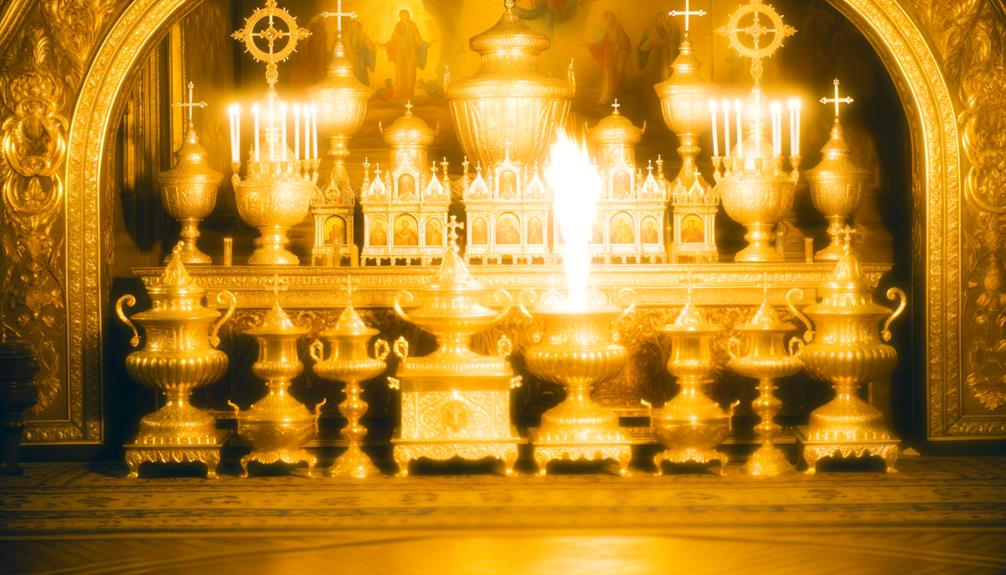
In the biblical context, gold held a significant role in sacrificial offerings, symbolizing purity, divinity, and the highest form of devotion to God.
The use of gold in offerings underscored its intrinsic value and its association with the divine presence. Exodus 25:3-7 details the materials required for the Tabernacle, prominently featuring gold, underscoring its sanctity.
Gold’s inclusion in sacrifices was not merely ornamental but conveyed a deeper spiritual symbolism, reflecting the worshippers’ reverence and their recognition of God’s supreme holiness.
The offering of gold consequently became an act of profound spiritual significance, representing the surrender of earthly wealth in acknowledgment of divine sovereignty and the quest for spiritual purity.
This practice underscored gold’s transcendent role in biblical worship.
Prophetic Imagery of Gold
In the prophetic texts of the Bible, gold serves as a profound symbol of divine purity, representing the unblemished nature of God’s presence.
Additionally, gold encapsulates the splendor and eternal value of the heavenly kingdom, underscoring its imperishable and sacred essence.
These attributes collectively underscore gold’s role in conveying the spiritual and prophetic dimensions of biblical revelation.
Divine Purity Symbolism
Gold frequently embodies divine purity in biblical prophetic imagery, serving as a profound symbol of God’s unblemished and holy nature. This radiant metal, refined to remove impurities, mirrors the purification process believers undergo to draw closer to the divine.
Several instances in scripture highlight this symbolism:
- Tabernacle and Temple: Gold extensively adorned sacred spaces, representing the sanctity and pure presence of God (Exodus 25:10-22).
- Prophetic Visions: Prophets like Daniel and John envisioned golden elements signifying divine glory and purity (Daniel 10:5-6; Revelation 1:12-16).
- Wisdom Literature: Gold is used metaphorically to describe the invaluable and pure nature of godly wisdom (Proverbs 3:13-14).
Such imagery underscores the divine call to purity and sanctity.
Heavenly Kingdom Representation
Prophetic visions frequently employ gold to illustrate the splendor and eternal perfection of the Heavenly Kingdom, symbolizing the ultimate divine territory where believers aspire to dwell.
Biblical texts, especially in Revelation, depict the New Jerusalem adorned with gold, emphasizing its purity and divine craftsmanship. The streets of gold in Revelation 21:21 are not merely decorative but signify the unblemished and incorruptible nature of God’s realm.
Gold’s immutable quality is a profound theological metaphor for the everlasting and unchangeable essence of the divine kingdom. Such imagery conveys the unparalleled glory and sanctity of the celestial abode, offering believers a tangible representation of their spiritual aspirations and reinforcing the promise of a transcendent, divine inheritance.
Eternal Value Significance
The symbolic use of gold in biblical prophecy extends beyond divine craftsmanship to underscore its eternal value, reflecting the imperishable nature of God’s promises and the unending worth of spiritual inheritance. Gold’s prophetic imagery serves as a profound reminder of the following:
- Divine Covenant: Gold represents the everlasting covenant between God and His people, emphasizing unbreakable divine commitments.
- Heavenly Treasure: It symbolizes the eternal treasures awaiting the faithful in Heaven, surpassing all earthly wealth.
- Purity and Refinement: Gold’s refinement process mirrors spiritual purification, signifying the believer’s journey towards holiness and ultimate perfection.
This theological symbolism invites believers to contemplate the transcendent worth of their spiritual journey and the immutable assurances of their faith.
Gold in the Holy of Holies

Within the sanctified confines of the Holy of Holies, gold was employed not merely as a decorative element but as a profound symbol of divine purity and eternal worth.
This sacred space, which housed the Ark of the Covenant, utilized gold to signify the omnipotence and sanctity of God. The use of gold was meticulous and deliberate, encompassing items like the Mercy Seat and the cherubim.
Here is a table illustrating key elements adorned in gold:
| Element | Description | Symbolism |
|---|---|---|
| Ark of the Covenant | Central sacred chest | God’s presence and covenant |
| Mercy Seat | Cover of the Ark | Divine mercy |
| Cherubim | Angelic figures | Guardians of divine glory |
| Lampstand | Golden candelabrum | Spiritual enlightenment |
| Incense Altar | Altar for burning incense | Prayers ascending to heaven |
This use of gold underscores its spiritual significance in the biblical narrative.
Gold and Eternal Value
In biblical symbolism, gold transcends its material worth to embody the eternal values of divine glory and incorruptibility.
This precious metal is frequently used to represent the heavenly domain and God’s unchanging nature. Its attributes align seamlessly with spiritual truths:
- Divine Glory: Gold’s radiance mirrors the glory of God, often depicted in the splendor of His heavenly throne.
- Incorruptibility: Unlike other metals, gold does not tarnish, symbolizing the purity and eternal nature of divine promises.
- Eternal Value: Gold represents enduring worth, reflecting the timeless and unchanging essence of God’s word and His covenant with humanity.
Thus, gold serves as a profound metaphor for the immutable and everlasting aspects of the divine in biblical texts.
Spiritual Lessons From Gold

Having established gold’s symbolic representation of divine glory and eternal value, we now explore the profound spiritual lessons that this precious metal imparts in biblical teachings.
Gold’s purity and incorruptibility serve as metaphors for a sanctified life, urging believers to seek spiritual refinement and moral integrity.
The process of refining gold, often involving intense heat, parallels the trials faced by the faithful, which ultimately purify and strengthen one’s faith.
Additionally, gold’s enduring nature signifies the steadfastness required in spiritual devotion, encouraging believers to remain unwavering in their commitment to divine principles.
Consequently, gold not only symbolizes divine attributes but also provides a tangible model for personal spiritual growth and resilience in the face of life’s adversities.
Conclusion
In the biblical narrative, gold emerges as a profound symbol interwoven with divine purity, eternal value, and heavenly glory.
Its presence in sacred spaces such as the Tabernacle, Solomon’s Temple, and the Holy of Holies elevates the spiritual significance, reflecting God’s unblemished nature and majestic splendor.
The prophetic imagery and heavenly visions imbue gold with a transcendent quality, inviting contemplation on its deeper spiritual lessons.
Consequently, gold remains an enduring emblem of the divine, shimmering with eternal truths.