
Spiritual Meaning of Olive Tree: Peace and Resilience
The olive tree, cherished by many cultures and faiths, stands as a powerful symbol of peace, resilience, and divine connection. Its enduring presence teaches essential lessons in perseverance, thriving in adversity, and personal growth.
The olive tree’s deep roots and calming branches inspire inner peace, while its ancient wisdom fosters a profound spiritual bond with the divine. Revered in sacred texts and mythology, it represents harmony, renewal, and divine favor.
Embracing the olive tree’s spiritual meaning can enrich one’s life, offering insights into a journey of healing and strength. Discover more about this timeless symbol’s rich and inspiring legacy.
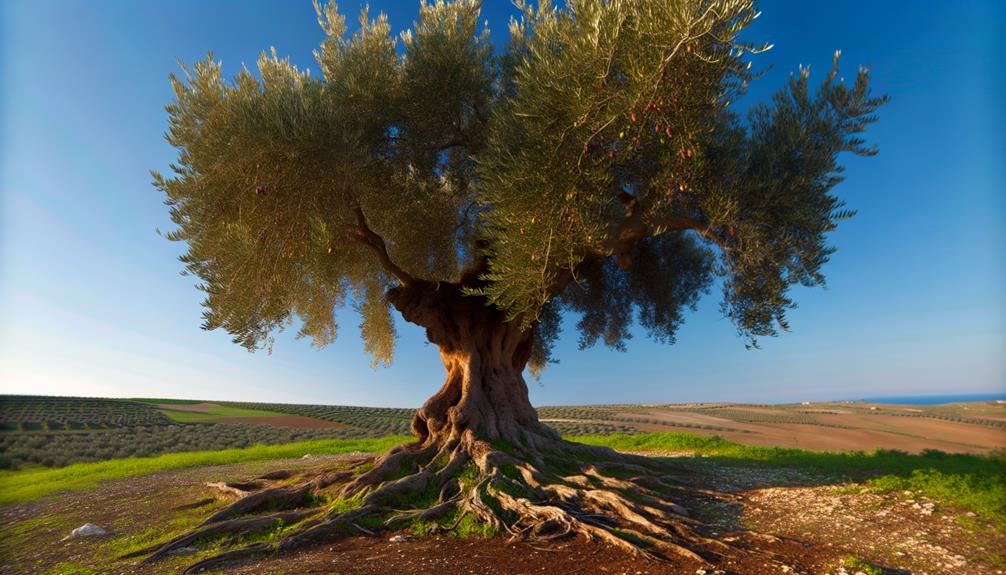
Spiritual Meaning of Olive Tree: Symbolism of Peace, Wisdom, and Longevity
| Aspect | Spiritual Meaning |
|---|---|
| Peace & Harmony | Represents peace, harmony, and reconciliation, often symbolizing the resolution of conflicts. |
| Longevity & Endurance | Symbolizes longevity, endurance, and resilience, reflecting the tree’s ability to thrive for centuries. |
| Wisdom & Knowledge | Associated with wisdom and knowledge, representing deep understanding and clarity in life’s journey. |
| Fertility & Abundance | Signifies fertility, abundance, and prosperity, often tied to growth and blessings in life. |
| Divine Protection | Seen as a symbol of divine protection, offering spiritual safety and guidance in life’s challenges. |
Symbol of Peace

Throughout history, the olive tree’s branches have symbolized peace and reconciliation, offering a timeless message of harmony and hope.
The olive branch, often depicted in art and literature, conveys a powerful message transcending cultures and epochs. It serves as a universal emblem that encourages unity and understanding among people.
When conflicts arise, extending an olive branch signifies a sincere desire to mend relationships and foster mutual respect. This symbolism is rooted in deep-seated traditions and resonates with humanity’s collective yearning for tranquility.
The olive tree stands as a perennial reminder that peace isn’t just an aspiration but a commitment. Its enduring presence inspires individuals to embrace compassion, extend forgiveness, and cultivate a world where harmony prevails.
Ancient Wisdom
The olive tree’s ancient wisdom, revered across civilizations, offers profound insights into resilience and longevity.
Rooted in history, it has been a symbol of harmony and nourishment in cultures from the Mediterranean to the Middle East.
Ancient Greeks viewed the olive tree as a gift from the gods, embodying knowledge and prosperity.
In biblical texts, it often represents divine blessings and steadfast faith.
The tree’s ability to thrive in challenging conditions teaches valuable lessons about endurance and adaptation.
By observing the olive tree, one can learn the importance of patience and the beauty of growth over time.
Its enduring presence reminds humanity that wisdom often lies in simplicity and connection to the earth.
Resilience and Strength
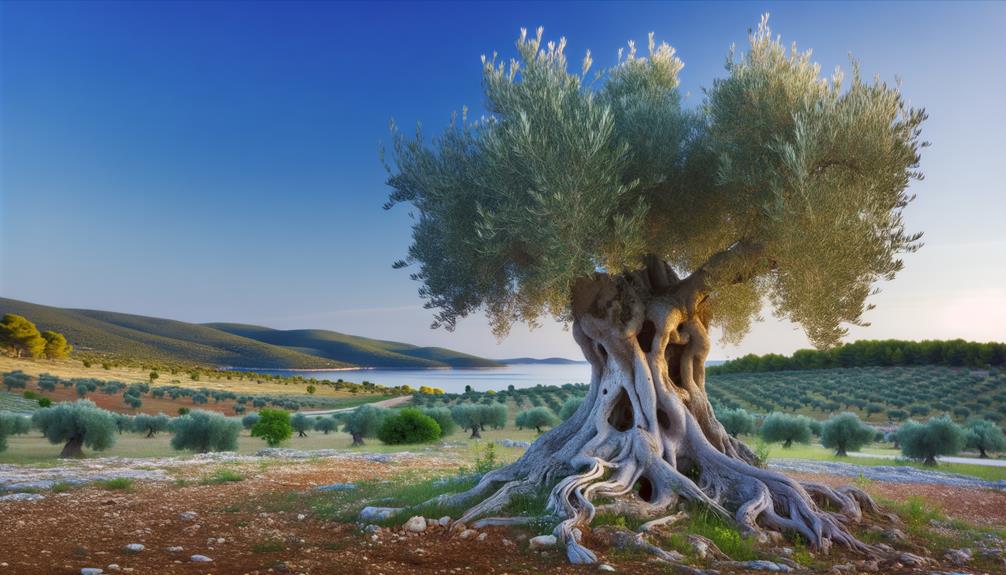
The olive tree’s deep-rooted symbolism represents an unwavering resilience and strength, thriving even in harsh conditions.
Its ability to endure through adversity inspires a compassionate understanding of perseverance.
This ancient tree reminds us that true strength lies in staying grounded and steadfast amidst life’s challenges.
Deep-rooted Symbolism
An olive tree’s deep roots symbolize resilience and strength, embodying the endurance to thrive in harsh conditions. This ancient tree stands tall, its roots intertwining with the earth, unwavering in the face of adversity.
Through storms and droughts, the olive tree remains a reflection of life’s enduring spirit. Its roots explore deep, not just for survival, but as a symbol of profound inner strength and stability.
Observing the olive tree, one sees a reflection of human potential to withstand challenges and grow stronger. Its presence encourages individuals to cultivate their own resilience, believing in their capacity to endure and flourish.
The olive tree teaches that true strength is found in deeply rooted connections to one’s self and surroundings.
Endurance Through Adversity
In the heart of adversity, the olive tree’s unwavering endurance inspires a profound appreciation for resilience and inner strength. Thriving in harsh environments, this tree symbolizes the human spirit’s ability to persevere. The olive tree stands tall, weathering storms and droughts, showing that true strength lies in endurance.
| Aspect | Olive Tree |
|---|---|
| Survival | Adapts to tough climates |
| Longevity | Lives for centuries |
| Rebirth | Regenerates after damage |
| Symbolism | Peace and resilience |
People find inspiration in the olive tree’s ability to flourish despite challenges. It reminds them that resilience isn’t about avoiding difficulties but thriving in spite of them. Through its steadfast nature, the olive tree exemplifies the beauty of enduring strength.
Healing Properties
Olive trees symbolize resilience and renewal, often associated with their profound healing properties that have been revered for centuries.
Their leaves, rich in antioxidants and anti-inflammatory compounds, have been used in traditional medicine to promote well-being and longevity.
Olive oil, often called ‘liquid gold,’ nourishes the body and soothes the spirit, aiding in the recovery of physical and emotional wounds.
The tree’s essence speaks of enduring strength, offering a reminder that healing is a journey of patience and perseverance.
As individuals seek solace and restoration, the olive tree stands as a representation of nature’s power to mend and rejuvenate.
This ancient symbol encourages a deep connection with the earth’s innate ability to heal and transform lives.
Divine Connection

Rooted deeply in spiritual lore, the olive tree serves as a profound symbol of divine connection, bridging the earthly and the sacred. Many believe its branches reach towards the heavens, seeking communion with higher dimensions. The olive tree’s enduring presence offers a reminder of the divine’s eternal nature and humanity’s quest for spiritual enlightenment.
| Olive Tree | Symbolism | Divine Connection |
|---|---|---|
| Roots | Stability | Grounding |
| Trunk | Strength | Resilience |
| Branches | Growth | Aspiration |
In sacred texts, the olive tree often represents peace, wisdom, and divine favor. Its resilience through harsh conditions mirrors the soul’s journey toward spiritual growth. Embracing the olive tree’s symbolism can inspire individuals to seek deeper spiritual connections in their own lives.
Cultural Significance
Across various cultures, the olive tree has emerged as a profound symbol of peace, unity, and resilience. Its branches have been used in peace treaties and ceremonies, embodying a desire for harmony. This ancient tree’s ability to thrive in harsh conditions showcases its resilience, inspiring countless generations.
The olive tree’s cultural significance can be seen in several key areas:
- Peace: Olive branches are universally recognized symbols of peace.
- Unity: Communities bond over olive harvests and festivals.
- Resilience: The tree’s longevity represents enduring strength.
- Prosperity: Olive oil, an essential product, signifies abundance and well-being.
These facets highlight the olive tree’s pivotal role in fostering understanding and connection among diverse cultures, underscoring its enduring spiritual significance.
Mythological Roots
The olive tree’s mythological roots trace back to the heart of Greek mythology, where it stands as a symbol of peace and prosperity.
Ancient texts celebrate its sacred connection to deities like Athena, who gifted the olive tree to humanity.
These stories remind us of the timeless bond between nature and the divine, inspiring a deeper appreciation for this enduring symbol.
Greek Mythology Origins
Ancient Greek mythology celebrates the olive tree as a sacred gift from Athena, symbolizing peace, wisdom, and prosperity. This revered tree’s legend begins with a contest between Athena and Poseidon. To win the favor of the people, Athena created the olive tree, offering nourishment, oil, and wood.
Here are four key elements of the olive tree’s significance in Greek mythology:
- Gift of Peace: The olive branch represents harmony and reconciliation.
- Symbol of Wisdom: Athena, the goddess of wisdom, chose the olive tree to embody her intellect.
- Prosperity: Olive oil became a cornerstone of the economy, fueling trade and wealth.
- Sacred Roots: The olive tree was central in religious rituals and served as a powerful spiritual symbol.
Understanding these origins enriches one’s appreciation of the olive tree’s profound legacy.
Symbolism in Ancient Texts
Moving from mythology into ancient texts, the olive tree’s symbolism extends deeply into the domains of literature and scripture, reflecting its enduring spiritual significance.
In the Bible, the olive branch represents peace and reconciliation, as seen when a dove returns to Noah with an olive leaf, signaling the end of the Flood.
The Qur’an also honors the olive tree, describing it as a blessed creation.
Ancient Greek literature often depicted olive trees as symbols of prosperity and wisdom.
These references highlight the olive tree’s role as a bridge between humanity and the divine, offering lessons of endurance, hope, and renewal.
Through these sacred texts, the olive tree continues to inspire and connect people across time and cultures.
Deities and Olive Trees
Reverence for the olive tree in mythology illuminates its sacred connection to various deities and the spiritual domain. This venerable tree has been a symbol of peace, wisdom, and prosperity, deeply intertwined with divine narratives.
Athena: In Greek mythology, Athena gifted the olive tree to Athens, symbolizing wisdom and peace.
Zeus: The olive tree was sacred to Zeus, representing his strength and authority.
Isis: In Egyptian mythology, Isis was often depicted with olive branches, signifying her nurturing and protective nature.
Jupiter: Roman mythology revered the olive tree as a symbol of Jupiter’s divine power and justice.
The olive tree’s presence in these stories elevates its spiritual significance, reminding humanity of its deep-rooted connection to the divine.
Sacred Scriptures
The olive tree holds profound significance in sacred scriptures, symbolizing peace, prosperity, and divine blessing. In the Bible, Noah’s dove returns with an olive leaf, heralding hope and renewal after the flood. The Quran mentions olives as a blessed creation, highlighting their importance in spiritual and daily life. Similarly, ancient Greek texts reference the olive tree as a divine gift, embodying wisdom and endurance.
| Scripture | Reference | Symbolism |
|---|---|---|
| Bible | Genesis 8:11 | Hope and renewal |
| Quran | Surah An-Nur | Divine blessing |
| Torah | Deuteronomy 8:8 | Prosperity |
| Greek Texts | Various | Wisdom and endurance |
| Talmud | Menachot 86a | Peace and holiness |
These teachings inspire individuals to find deeper meaning and connection through the olive tree’s enduring legacy.
Spiritual Nourishment

Drawing from its sacred symbolism, the olive tree also offers profound spiritual nourishment, providing individuals with a sense of peace, resilience, and connection to the divine. This ancient tree is more than just a plant; it’s a spiritual guide that helps people grow and thrive.
The olive tree can inspire and uplift in various ways:
- Symbol of Renewal: Just like the tree regenerates, it encourages personal growth and renewal.
- Strength in Adversity: The olive tree’s ability to thrive in harsh conditions teaches resilience and strength.
- Wisdom and Clarity: Its longevity symbolizes wisdom, offering guidance and clarity in life’s journey.
- Divine Connection: Often associated with divine blessings, it fosters a deeper spiritual connection and understanding.
Through these aspects, the olive tree spiritually nourishes and enriches lives.
Inner Peace
Many find that the olive tree, with its serene presence and enduring strength, serves as a beacon of inner peace amidst life’s chaos. Its deep roots symbolize stability, grounding individuals in moments of turmoil.
The tree’s gentle sway in the breeze mirrors the resilience of the human spirit, teaching that flexibility fosters tranquility. Its evergreen nature represents perpetual calm, reminding people that peace is an ongoing journey, not a destination.
By reflecting on the olive tree’s quiet yet powerful existence, individuals can cultivate a sense of harmony within themselves. This ancient symbol encourages letting go of anxieties and embracing a steady, centered life.
In the olive tree’s shadow, many discover the profound gift of inner peace.
Conclusion
In exploring the spiritual meaning of the olive tree, it’s clear this ancient symbol holds profound significance.
Did you know that 90% of the world’s olive trees are over 300 years old? This astounding statistic evokes awe, underscoring the tree’s resilience, strength, and deep-rooted wisdom.
As a beacon of peace, healing, and divine connection, the olive tree inspires us to seek inner tranquility and spiritual nourishment, reminding us that enduring strength often lies in our deepest roots.