Spiritual Meaning of Sea in the Bible: Mystery and Chaos
In biblical literature, the sea serves as a profound symbol encapsulating chaos, divine authority, and transformative trials. Primarily, it represents primordial disorder and existential threats, as seen in Genesis and Psalms.
Conversely, it highlights God’s sovereignty, illustrated by Jesus calming the storm in Mark 4:39. The sea also signifies the path to spiritual deliverance and transformation, as exemplified by the parting of the Red Sea.
Additionally, it symbolizes faith and trust in divine protection amidst life’s uncertainties. Through trials associated with the sea, scripture narrates a journey toward spiritual renewal and divine providence, enriching the biblical narrative profoundly.

Spiritual Meaning of the Sea in the Bible: Mystery, Chaos, and Divine Sovereignty
| Aspect | Description | Spiritual Significance |
|---|---|---|
| Symbol of Chaos | Genesis 1:2 | The sea represents disorder and the untamed forces of nature |
| God’s Sovereignty | Psalm 89:9 | God’s power to still the sea shows His control over chaos |
| Spiritual Testing | Jonah 1:4–15 | Stormy seas reflect trials that lead to surrender and transformation |
| Transition & Deliverance | Exodus 14:21–22 | The Red Sea crossing represents salvation and faith in God’s deliverance |
| Mystery & Depth | Revelation 13:1 | The sea symbolizes the depths of the unknown and the origin of spiritual conflict |
Symbol of Chaos
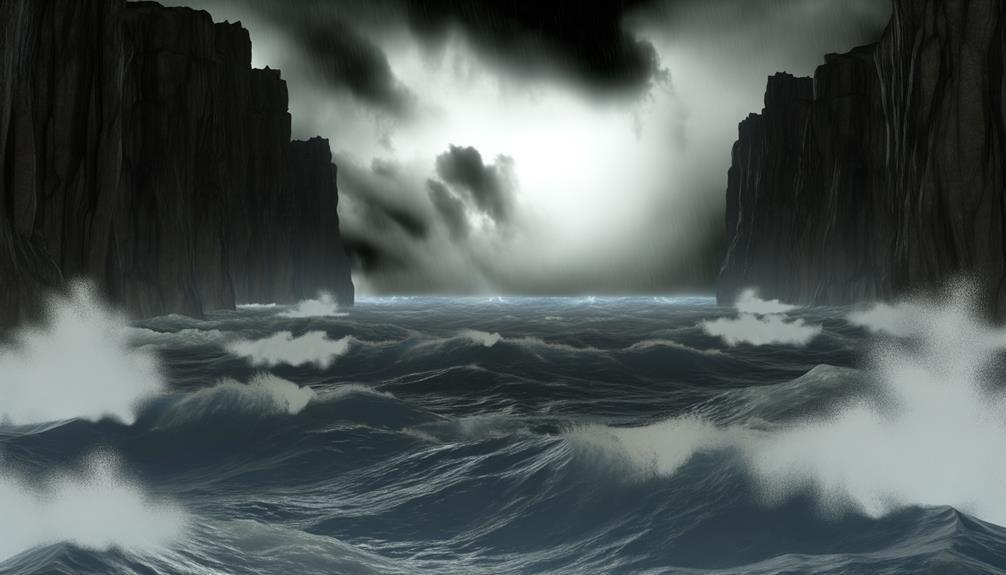
In biblical literature, the sea is frequently depicted as a symbol of chaos, embodying the primordial disorder that existed before creation. This motif finds its roots in the ancient Near Eastern cosmogonies, where the chaotic waters are a formidable force against divine order.
Genesis 1:2 describes the earth as ‘formless and void,’ with darkness over the surface of the deep, highlighting the untamed nature of the pre-creation world. Similarly, the chaotic sea in biblical texts often represents existential threats, moral disorder, and the unpredictability of life.
The sea’s turbulent and unfathomable depths serve as metaphors for forces that oppose divine intentions and human stability, emphasizing the need for divine intervention to bring order from chaos.
God’s Sovereignty
The Bible frequently portrays the sea as a powerful and uncontrollable force, symbolizing chaos and uncertainty.
Within this context, God’s sovereignty is underscored through His divine authority over nature, providing order amidst disorder.
This manifestation of divine power affirms His ultimate control, reinforcing theological themes of providence and omnipotence.
Divine Authority Over Nature
Throughout the biblical narrative, the sea frequently symbolizes God’s supreme power and authority over the natural world.
This divine authority is vividly illustrated in passages such as Psalm 89:9, where the psalmist declares, ‘You rule over the surging sea; when its waves mount up, you still them.’
Similarly, in the New Covenant, Jesus’ calming of the storm (Mark 4:39) underscores His divine command over the chaotic elements.
These instances are not merely demonstrations of power but profound affirmations of God’s sovereignty.
They serve to remind believers of His ultimate control over creation, reinforcing the theological principle that all aspects of the natural world are subject to divine will and governance.
Symbol of Chaos
Often depicted as a symbol of chaos, the sea in biblical literature represents the unpredictable and uncontrollable forces that only God’s sovereignty can master and subdue. This imagery is pervasive, from the primordial waters in Genesis to the turbulent seas encountered by Jonah.
The chaotic nature of the sea underscores human vulnerability and the limits of human control. By commanding the sea, as seen in Psalms and Jesus calming the storm in the Gospels, God demonstrates supreme authority over creation.
Such narratives are not merely historical or mythological; they convey theological truths about divine power and order. Consequently, the sea serves as a profound metaphor for the chaos that only divine intervention can transform into peace and order.
Manifestation of Power
In biblical narratives, the sea becomes a potent stage for manifesting God’s sovereignty and demonstrating His unparalleled power over creation.
Instances such as the parting of the Red Sea (Exodus 14:21-22) reveal a God who commands natural elements to fulfill divine purposes.
Similarly, in the New Testament, Jesus calming the storm (Mark 4:39) exemplifies His dominion over chaotic forces.
These accounts underscore a theological assertion: the sea, often a symbol of chaos and unpredictability, is subdued under divine command.
This theme serves to reassure believers of God’s ultimate control and protective authority over both the natural world and human affairs, emphasizing a divine order that transcends earthly tumult.
Path to Deliverance

Steering through the turbulent waters of the sea often symbolizes the journey toward spiritual deliverance in biblical narratives.
This imagery is profoundly exemplified in the story of Moses leading the Israelites through the parted Red Sea, which signifies a divine intervention guiding them from bondage to freedom. Such passages metaphorically represent the struggles and ultimate liberation of the soul.
The sea, in this framework, is not merely a physical entity but a conduit for divine providence. Additionally, Jesus’ calming of the storm on the Sea of Galilee underscores the divine authority over chaos and the assurance of salvation.
Through these stories, the sea encapsulates the transformative path from suffering to redemption, emphasizing faith and divine guidance as essential elements in achieving spiritual deliverance.
Trials and Tribulations
The sea in biblical literature frequently emerges as a powerful symbol of trials and tribulations, representing the tumultuous challenges that test one’s faith and resilience. Throughout scripture, the sea’s vast and unpredictable nature mirrors the adversities believers face.
For instance, in the story of Jonah, the tempestuous sea underscores the prophet’s struggle against divine will. Similarly, the Gospel narratives where Jesus calms the storm serve as metaphors for divine intervention amidst life’s chaos.
These instances reveal the sea as a crucible of spiritual testing, where faith is both challenged and refined. By traversing these metaphorical waters, individuals can understand and interpret their own tribulations, drawing parallels to biblical accounts that underscore endurance and divine support.
Transformation and Renewal
Amidst the biblical narrative, the sea frequently symbolizes profound transformation and renewal, serving as a crucible through which individuals emerge restored and spiritually rejuvenated. The relentless waves and vast expanse of the sea often illustrate the process of inner purification and rebirth. For example:
| Biblical Event | Symbolism | Outcome |
|---|---|---|
| Noah’s Ark | Cleansing of sin | New covenant and fresh start |
| Parting of the Red Sea | Liberation from bondage | Birth of a new nation |
| Jonah and the Whale | Repentance and obedience | Spiritual awakening |
| Jesus Calms the Storm | Authority over chaos | Reinforcement of divine power |
These events underscore the transformative power of the sea, offering a path to renewal through divine intervention and personal growth.
Faith and Trust
As the sea’s transformative power leads to renewal, it concurrently serves as a profound demonstration to the themes of faith and trust. Individuals are often called to place unwavering confidence in divine providence amidst the uncertainties of life’s vast and tumultuous waters.
Biblically, the sea exemplifies the unpredictability and challenges one faces, compelling believers to rely on an unseen but omnipotent force. The narrative of Jesus calming the storm (Mark 4:35-41) epitomizes this reliance, illustrating faith as a requisite for maneuvering life’s adversities.
Trust, consequently, becomes not merely an abstract concept but a tangible necessity. This underscores a symbiotic relationship between human vulnerability and divine assurance within the biblical context. This mutual dependency is integral to spiritual growth and endurance.
Divine Protection

In biblical literature, the sea frequently symbolizes divine protection, serving as a witness to God’s omnipotence and His ability to safeguard believers against the perils and uncertainties of life.
This symbolic representation is vividly illustrated in the narrative of the Israelites’ exodus from Egypt, where the parting of the Red Sea signifies God’s supernatural intervention to protect His chosen people (Exodus 14:21-22).
Similarly, in the New Covenant, Jesus calming the storm on the Sea of Galilee epitomizes His authority over nature and His protective presence (Mark 4:39).
These instances underscore the sea’s dual role as a potential threat and a reflection of divine guardianship, reflecting an overarching biblical theme of God’s unwavering commitment to His followers’ safety.
Conclusion
The sea in the Bible serves as a multifaceted symbol encompassing chaos, divine sovereignty, deliverance, trials, transformation, faith, and protection.
Significantly, over 50 instances of the sea are mentioned in the Bible, illustrating its profound significance.
This recurring motif underscores the complexities of human existence and divine interaction.
Analyzing these references provides a deeper understanding of the spiritual and theological dimensions within biblical texts, revealing the sea as an emblem of both peril and divine providence.