
Spiritual Meaning of Quail in the Bible: Provision and Testing
In the Bible, quail symbolizes divine provision and the complex interplay between faith and obedience. Found primarily in the accounts of Exodus 16 and Numbers 11, the quail’s miraculous appearance highlights God’s responsiveness to human need, emphasizing reliance on His omnipotence and compassion.
These narratives not only illustrate God’s ability to provide physical sustenance in times of desperation but also serve as a metaphor for spiritual nourishment. The provision of quail teaches valuable lessons about trust, dependence, and the challenges of maintaining faith.
Exploring further reveals deeper insights into divine care and human reliance during periods of uncertainty.

Spiritual Meaning of Quail in the Bible: Divine Provision and Human Desire
| Symbolic Aspect | Spiritual Meaning |
|---|---|
| God’s Provision | Represents divine response to physical needs in times of wilderness |
| Human Craving | Symbolizes unchecked desire and ingratitude toward God’s blessings |
| Temporary Satisfaction | Reflects fleeting fulfillment when desires overshadow spiritual priorities |
| Lesson in Obedience | Highlights consequences of disobedience and mistrust in God’s plan |
| Spiritual Testing | Serves as a reminder of faith and dependence on divine timing |
Quail in Biblical Context
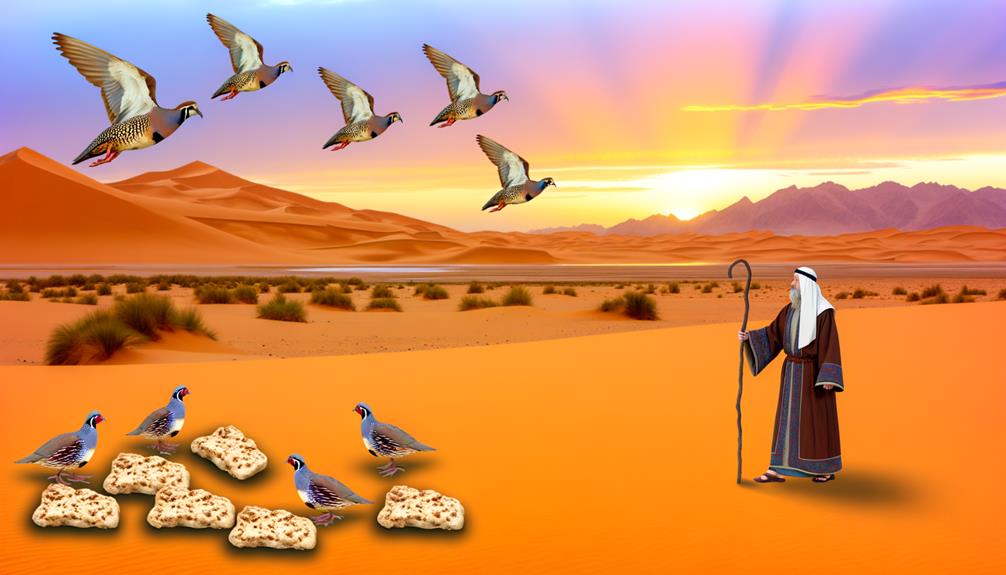
In the biblical narrative, quail hold significant symbolic value as they are prominently featured in the stories of the Israelites’ exodus and journey through the wilderness.
These birds serve as key elements within the broader theological and literary framework of the Old Covenant. The quail episodes are rich in symbolism, contrasting the Israelites’ faith and disobedience. Their appearance at pivotal moments highlights the interplay between divine intervention and human response.
Furthermore, the quail episodes underscore the transient and precarious nature of human sustenance and reliance.
By examining these narratives, one gains deeper insight into the recurring themes of trust, provision, and the intricate relationship between the divine and the human condition within biblical literature.
Quail and God’s Provision
The quail episodes in the Bible explicitly illustrate God’s provision for the Israelites during their arduous journey through the wilderness. In Exodus 16:13 and Numbers 11:31-32, quails are depicted as divine responses to the Israelites’ complaints about their sustenance.
These scriptural instances reflect more than mere physical nourishment; they underscore God’s omnipotence and compassion in addressing the needs of His people. The quails’ miraculous arrival during periods of hunger reveals a deeper theological message: trust in divine providence.
This provision, emerging in moments of desperation, symbolically reinforces the covenantal relationship between God and the Israelites. By interpreting these events, one gains insight into the broader spiritual dynamics at play—divine care, faith, and the sustenance of the chosen people.
Symbol of Sustenance

Extending beyond the immediate context of divine provision, quails in biblical narratives also emerge as potent symbols of sustenance, embodying the broader spiritual nourishment that underpins the Israelites’ faith journey.
The provision of quail, as described in Exodus 16:13 and Numbers 11:31-32, goes beyond mere physical sustenance, serving as a metaphor for God’s unwavering support in times of need.
This symbolism highlights the divine commitment to nurture not just the body, but also the spirit.
The quail, consequently, becomes an emblem of God’s holistic care, reinforcing the notion that spiritual well-being is intrinsically linked to physical provision.
Such interpretations underscore the multifaceted ways in which quail represent the sustaining power of divine intervention in the lives of the faithful.
Lessons of Dependence
The provision of quail to the Israelites underscores profound lessons in dependence on divine grace, illustrating the indispensable reliance on God’s provision during moments of human insufficiency.
This narrative, found in Exodus 16, serves as a powerful metaphor for the spiritual necessity of trusting in divine sustenance.
The Israelites’ inability to secure their own food in the wilderness exemplifies human vulnerability and the limitations of self-sufficiency.
By providing quail, God not only met their physical needs but also reinforced the principle that divine aid is essential for overcoming life’s exigencies.
This episode invites believers to reflect on their own dependence on God’s grace and the importance of cultivating a trustful, reliant relationship with the divine.
Divine Timing Explained

Understanding divine timing in the biblical narrative of quail provision reveals profound insights into the synchrony between human need and divine intervention.
In the wilderness, the Israelites’ plea for sustenance was met with a timely response from God, demonstrating His awareness and responsiveness to human exigencies. This episode underscores the concept that divine intervention is not capricious but meticulously orchestrated.
The quail’s arrival at the exact moment of dire need symbolizes a pivotal moment where faith and divine providence intersect. Theologically, this illuminates the intricate balance between divine omniscience and omnipotence, suggesting that God’s timing is purposefully aligned with broader spiritual lessons.
Hence, divine timing in this scenario invites reflection on the perfect alignment of divine actions with human circumstances.
Quail in Exodus
In the Book of Exodus, the quail serves as a profound emblem of divine provision, illustrating God’s response to the Israelites’ needs in the wilderness.
This event not only underscores the symbol of abundance but also intertwines with the miraculous appearance of manna, highlighting a dual manifestation of sustenance from the divine.
Analyzing these elements reveals deeper theological implications about reliance on divine grace and the nature of divine generosity.
Divine Provision Significance
Examining the narrative in Exodus, the provision of quail to the Israelites serves as a profound demonstration of divine sustenance and faithfulness amidst their wilderness journey.
This miraculous event, occurring in Exodus 16, underscores the responsiveness of God to the cries of His people. The quail, arriving in the evening, signifies God’s immediate and tangible response to their need for nourishment.
This act not only meets a physical requirement but also reinforces theological themes of trust and dependence on divine provision. By supplying quail, God reaffirms His covenantal relationship, ensuring the Israelites that their survival and well-being are under His sovereign care.
Consequently, this episode highlights the integral role of faith in traversing periods of scarcity and uncertainty.
Symbol of Abundance
The provision of quail in Exodus not only addresses immediate physical hunger but also serves as a potent symbol of divine abundance and generosity.
This act of divine intervention is depicted in Exodus 16:13, where God responds to the Israelites’ complaints by miraculously delivering quail to the camp.
This episode underscores God’s willingness to provide beyond mere necessity, illustrating His boundless benevolence.
The quail symbolize a surplus that transcends basic sustenance, embodying a deeper spiritual truth about God’s capacity to cater to human needs abundantly.
This narrative invites an interpretation that perceives divine generosity as limitless, fostering an understanding of God’s nature as fundamentally nurturing and infinitely giving, reinforcing the covenantal relationship between God and His people.
Quail and Manna
Alongside the miraculous provision of quail, the simultaneous appearance of manna further amplifies the narrative of divine sustenance and care in the Exodus account.
This dual provision symbolizes God’s commitment to meeting both the immediate and enduring needs of the Israelites.
The quail, arriving in the evening, and manna, appearing in the morning, create a rhythm of divine generosity that emphasizes reliance on divine timing and providence.
| Aspect | Quail | Manna |
|---|---|---|
| Timing | Evening | Morning |
| Symbolism | Immediate, tangible sustenance | Daily, spiritual nourishment |
| Provision | Meat, symbolizing physical satisfaction | Bread-like substance, symbolizing heavenly care |
| Scriptural Reference | Exodus 16:13-14 | Exodus 16:4-5 |
This dual provision underscores a holistic approach to divine care, addressing both physical and spiritual sustenance.
Spiritual Nourishment

In biblical narratives, the provision of quail symbolizes God’s tangible sustenance and spiritual nourishment to the Israelites during their wilderness journey.
This act of divine intervention underscores not merely the quelling of physical hunger but also a deeper, spiritual sustenance.
Quail, arriving miraculously, served as a reminder of God’s omnipresence and His unwavering care.
The nourishment provided signifies more than just food; it represents divine provision, fostering faith and spiritual resilience amidst adversity.
This spiritual nourishment is emblematic of the sustenance God provides to believers, nurturing their souls and fortifying their faith.
Consequently, quail becomes a potent symbol of God’s ability to sustain His people both physically and spiritually, reinforcing the holistic care inherent in divine provision.
Quail and Trust
The narrative of quail in the Bible serves as a profound illustration of divine provision, where God’s miraculous supply of quail to the Israelites underscores His reliability in times of need.
Moreover, this provision simultaneously acted as a test of faith, challenging the Israelites to trust in God’s timing and sufficiency.
This dual aspect of provision and testing illuminates the intricate relationship between divine care and human trust within the spiritual journey.
Divine Provision Example
Illustrating divine provision, the biblical account of quail emphasizes the importance of trust in God’s sustenance and timing.
This narrative, found in Exodus 16, reveals how God provided quail to the Israelites in the desert, showcasing His ability to meet needs miraculously. It underscores the theological construct that trust in divine timing is paramount.
| Passage | Key Insight |
|---|---|
| Exodus 16:13 | Quail provided at twilight |
| Exodus 16:4 | God’s promise of daily sustenance |
| Exodus 16:12 | Assurance of God’s listening |
The quail episode serves as a compelling example of divine provision, encouraging believers to rely on God’s faithfulness. This account challenges individuals to embrace a trust that transcends immediate circumstances, fostering a deeper spiritual reliance.
Faith Testing Moments
Moments where the Israelites’ faith was tested, such as the provision of quail, offer profound insights into the dynamics between divine intervention and human trust.
In Exodus 16, the Israelites grumbled about their lack of food, prompting God to provide quail and manna. This event was not merely about sustenance but served as a divine litmus test for their faith and obedience.
The quail can be seen as a tangible manifestation of God’s responsiveness, designed to foster deeper reliance on divine providence. However, the Israelites’ initial mistrust and subsequent hoarding of quail demonstrated their struggle to fully embrace divine timing and sufficiency.
Consequently, the provision of quail underscores the delicate interplay between faith and divine provision.
Symbolic Interpretations

Quail, within biblical narratives, often embody divine provision and the sustenance of faith, symbolizing reliance on God’s providence during times of need.
This symbolism is mainly illustrated in the story of the Israelites in the wilderness, where quail were sent by God to alleviate their hunger.
This miraculous event underscores the theme of divine generosity and the importance of trusting in God’s timing and methods. The table below elucidates various symbolic interpretations:
| Symbolism | Biblical Reference | Interpretation |
|---|---|---|
| Divine Provision | Exodus 16:13 | God’s care in physical sustenance |
| Faith Sustenance | Numbers 11:31-32 | Reliance on divine intervention |
| Trust in God | Psalms 78:27-28 | Dependence on God’s continuous support |
| Spiritual Nourishment | Wisdom of Solomon 16:2 | Divine provision of spiritual and physical needs |
This multi-faceted symbolism highlights the intricate relationship between divine intervention and human faith.
Quail in Christian Teachings
In Christian teachings, the narrative of quail serves as a profound witness to the themes of divine provision and the cultivation of faith in God’s promises.
The biblical account, particularly in Exodus 16, emphasizes God’s responsiveness to the Israelites’ needs in the wilderness, providing quail as sustenance. This act is not merely a demonstration of divine generosity but also a test of faith and obedience.
- Divine Provision: Illustrates God’s readiness to meet physical needs.
- Faith Testing: Challenges believers to trust in God’s timing and methods.
- Obedience: Highlights the importance of following divine instructions.
- Miraculous Sustenance: Reinforces the belief in God’s ability to provide miraculously.
Modern Reflections on Quail

In contemporary contexts, the quail continues to embody significant symbolic and spiritual relevance, resonating with themes of providence and sustenance.
This bird’s appearance in modern literature and art often reflects its biblical connotations, bridging ancient scriptural insights with current cultural interpretations.
Such reflections prompt an examination of how scriptural symbols persist and evolve in today’s spiritual and societal narratives.
Symbolism in Today’s Life
Drawing from biblical symbolism, the quail in today’s life can be interpreted through the lens of spiritual sustenance and divine provision. This reflection invites an analytical understanding of how ancient narratives can offer modern insights into our spiritual journeys.
The quail, as a symbol, encapsulates several profound meanings:
- Divine Providence: Represents God’s care and provision in times of need.
- Contentment: Encourages finding satisfaction in what is provided.
- Faith: Urges trust in divine timing and sustenance.
- Gratitude: Inspires appreciation for even the smallest blessings.
Cultural and Spiritual Relevance
While the biblical symbolism of quail provides a foundation for understanding its significance, its cultural and spiritual relevance in contemporary society offers a rich tapestry of interpretations.
In modern reflections, quail often symbolizes abundance, provision, and divine sustenance, echoing its biblical connotations. Additionally, quail is seen as a symbol of humility and communal harmony, reflecting its natural behavior of living in flocks.
In spiritual practices, the quail may represent a call to mindfulness and appreciation of life’s simple blessings. Furthermore, its migratory nature is sometimes interpreted as an emblem of spiritual journey and transformation.
Consequently, the quail continues to be a potent symbol, bridging ancient scriptural insights with contemporary spiritual aspirations.
Conclusion
The quail, appearing serendipitously in biblical narratives, signifies divine provision and sustenance, encapsulating lessons of dependence and trust.
Its timely arrival underscores the importance of divine timing, teaching adherents to rely on providence.
Symbolically rich, the quail’s presence in Christian teachings extends beyond mere sustenance to embody faith and divine care.
Modern reflections continue to draw from these ancient narratives, reinforcing the enduring relevance of trust and divine provision in the spiritual journey.