
Spiritual Meaning of Fire in the Bible: Purification
In the Bible, fire serves as a multifaceted symbol, representing God’s presence (Exodus 3:2-4) and divine guidance (Exodus 13:21). It figures prominently in revelations, as seen in the burning bush and on Mount Carmel (1 Kings 18:38), and signifies purification (Malachi 3:2-3) and judgment (Genesis 19:24).
Fire also embodies fervent zeal, urging believers toward spiritual passion (Jeremiah 20:9). Additionally, fire in Pentecost (Acts 2:3) underscores the transformative role of the Holy Spirit.
These scriptural facets collectively highlight fire’s profound spiritual significance, inviting deeper exploration of its biblical meanings.
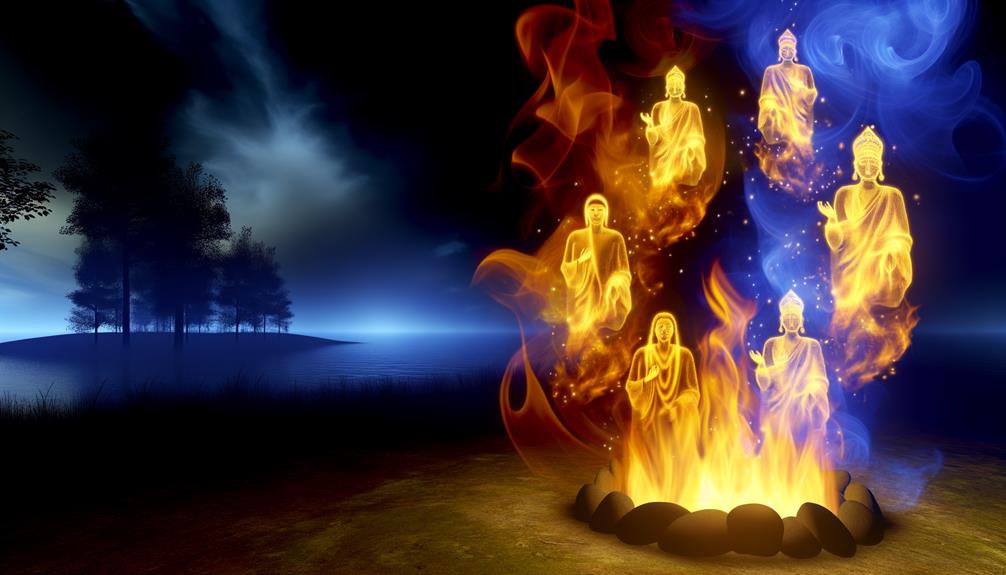
Spiritual Meaning of Fire in the Bible: God’s Presence, Purification, and Power
| Aspect | Description | Spiritual Significance |
|---|---|---|
| God’s Presence | Exodus 3:2 (Burning Bush) | Fire represents divine encounter and holy ground |
| Purification | Malachi 3:2–3 | Fire refines like a purifier of gold—cleansing the soul |
| Divine Judgment | Hebrews 12:29 | God is described as a consuming fire, symbolizing justice and holiness |
| Empowerment | Acts 2:3 (Pentecost) | Tongues of fire represent the Holy Spirit’s power and presence |
| Covenant & Sacrifice | Leviticus 9:24 | Fire consumes offerings, showing God’s acceptance and favor |
God’s Presence

Manifesting as a pillar of fire to guide the Israelites at night, fire in the Bible often symbolizes God’s presence and divine guidance. This emblematic use of fire can be traced back to Exodus 13:21, where the Lord led the Israelites by a pillar of fire to illuminate their path in the darkness.
Fire’s recurring association with God’s presence extends further in biblical narratives, such as Moses’ encounter with the burning bush (Exodus 3:2-4), where the fire signifies holy ground and divine interaction.
Furthermore, in Leviticus 9:24, divine fire consumes the burnt offering, demonstrating God’s acceptance and presence.
These instances underscore fire as a profound biblical metaphor for God’s immanence and active engagement with His people.
Divine Revelation
Fire in the Bible frequently serves as a medium through which divine revelation is imparted, exemplifying moments of profound spiritual and prophetic insight.
This symbolic usage underscores the gravity and sanctity of God’s messages to humanity. For instance, Moses encountered the burning bush (Exodus 3:2), where God revealed His divine name and mission.
Similarly, Elijah experienced God’s revelation through fire from heaven (1 Kings 18:38), affirming His supremacy. The association of fire with divine revelation illustrates the transformative and enlightening nature of God’s word.
| Biblical Event | Scripture Reference | Significance |
|---|---|---|
| Burning Bush | Exodus 3:2 | Divine name and mission revealed |
| Elijah’s Sacrifice | 1 Kings 18:38 | Affirmation of God’s supremacy |
| Pentecost Fire | Acts 2:3 | Holy Spirit’s arrival |
| Pillar of Fire | Exodus 13:21 | Guidance through the wilderness |
| Fiery Furnace | Daniel 3:25 | Divine protection |
Guidance and Direction

In the biblical context, fire often symbolizes God’s divine presence, offering guidance and direction to His followers.
This is exemplified in instances such as the burning bush in Exodus, where fire signifies a holy encounter and directs Moses towards his divine mission.
Additionally, fire serves as a metaphor for the pathway to righteousness and a symbol of purification, illustrating the transformative journey of spiritual growth and moral alignment.
Divine Presence Manifestation
Throughout the Bible, fire often signifies the divine presence, serving as both a guide and a source of direction for the faithful.
This symbolism is evident in numerous scriptural narratives where fire manifests God’s presence and offers guidance. For instance, the burning bush (Exodus 3:2) signaled Moses’ calling, while the pillar of fire (Exodus 13:21) directed the Israelites through the desert.
Here are key instances:
| Scripture Reference | Divine Manifestation |
|---|---|
| Exodus 3:2 | Burning Bush |
| Exodus 13:21 | Pillar of Fire |
| 1 Kings 18:38 | Fire on Mount Carmel |
| Acts 2:3 | Tongues of Fire at Pentecost |
| Revelation 1:14 | Eyes like a Flame of Fire |
These examples underscore fire’s role as a symbol of divine presence and guidance.
Pathway to Righteousness
While fire in the Bible frequently signifies divine presence, it also serves as a powerful metaphor for the pathway to righteousness, offering guidance and direction to the faithful.
Scriptural instances, such as the pillar of fire that led the Israelites by night (Exodus 13:21), illustrate how fire provides not only illumination but also divine guidance.
The Psalmist’s declaration, “Your word is a lamp to my feet and a light to my path” (Psalm 119:105), further underscores the symbolic role of fire in steering moral and spiritual journeys.
Fire, therefore, becomes an emblem of divine wisdom, illuminating the route to righteousness and ensuring that the faithful remain aligned with God’s will, acting as a beacon in the pursuit of holiness.
Symbol of Purification
The symbolism of fire as a means of purification in the Bible emerges vividly through numerous scriptural narratives, highlighting its role in refining and sanctifying the faithful.
In Malachi 3:2-3, fire is depicted as a refiner’s fire, purging impurities and refining believers like silver and gold. This metaphor underscores the transformative process of achieving spiritual purity and righteousness.
Similarly, Isaiah 6:6-7 recounts a seraph using a live coal to cleanse Isaiah’s lips, signifying the purifying power of divine fire.
Additionally, 1 Peter 1:7 likens faith tested by fire to gold, emphasizing the value and strength gained through spiritual trials.
These passages collectively illustrate fire’s divine function as an agent of purification and guidance in the believer’s spiritual journey.
Purification and Cleansing
In biblical scripture, fire frequently symbolizes the process of purification and cleansing, representing God’s method of refining and sanctifying His people.
This analogy is vividly portrayed in passages such as Malachi 3:2-3, where God is likened to a refiner’s fire purifying silver, removing impurities to reach a state of purity.
Similarly, Isaiah 6:6-7 depicts a seraph touching Isaiah’s lips with a live coal, symbolizing the cleansing of his sins.
Fire’s purgative qualities underscore its role in transforming believers, aligning their character with divine holiness.
These scriptural references elucidate the spiritual journey towards sanctification, where fire serves as a divine instrument to prepare and perfect the faithful for righteous living.
Judgment and Punishment
In biblical exegesis, fire frequently represents God’s divine wrath, serving as both a means of judgment and a mechanism for purification.
Scriptural references, such as the destruction of Sodom and Gomorrah, underscore fire’s role in executing divine punishment.
Additionally, eschatological passages evoke fire as a symbol of eternal damnation, emphasizing the severity of divine retribution.
Divine Wrath Symbolism
Scriptural depictions of fire frequently serve as a powerful metaphor for divine wrath, illustrating God’s judgment and punishment upon the wicked. This symbolism is pervasive throughout the Bible, serving to underscore the severity and righteousness of divine justice.
Key instances include:
- Sodom and Gomorrah: In Genesis 19:24, God rained down fire and brimstone upon these cities as punishment for their egregious sins.
- The Burning Bush: In Exodus 3:2, while the fire here symbolizes God’s presence, it also underscores His power to judge and redeem.
- Lake of Fire: Revelation 20:14-15 depicts this as the ultimate destination for the wicked, symbolizing eternal punishment.
- Nadab and Abihu: Leviticus 10:1-2 recounts how divine fire consumed Aaron’s sons for offering unauthorized incense, illustrating immediate divine retribution.
Purification Through Fire
Beyond serving as a symbol of divine wrath, fire in the Bible also functions as a powerful agent of purification, through which judgment and punishment are rendered to cleanse and refine.
Scriptural references such as Malachi 3:2-3 depict God as a refiner’s fire, purging impurities from His people to achieve righteousness.
Similarly, 1 Corinthians 3:13-15 illustrates how fire tests the quality of each person’s work, burning away what is worthless and revealing what endures.
The purifying fire underscores the biblical theme of transformation and sanctification, emphasizing that judgment is not merely punitive but also redemptive.
This duality highlights the divine intention to restore purity and integrity, aligning believers more closely with God’s holy nature.
Eternal Damnation Imagery
Frequently depicted throughout biblical texts, fire serves as a potent symbol of eternal damnation, illustrating the severity of divine judgment and punishment. This imagery underscores the irrevocable consequences of moral and spiritual failure.
- Gehenna: Mentioned frequently in the New Covenant, Gehenna is depicted as a place of unquenchable fire, reserved for the wicked (Mark 9:43).
- Lake of Fire: Revelation 20:15 describes the Lake of Fire as the ultimate destination for those not found in the Book of Life, symbolizing eternal punishment.
- Sodom and Gomorrah: The fiery destruction of these cities (Genesis 19:24) epitomizes divine retribution against sin.
- Eternal Fire: Jude 1:7 references eternal fire as a consequence for immorality, reinforcing the severity of divine justice.
This imagery highlights the profound implications of spiritual disobedience.
Passion and Zeal
In the context of biblical symbolism, fire often represents the intense passion and fervent zeal that believers are called to exhibit in their faith.
Scriptural references such as Romans 12:11, which urges believers to be ‘fervent in spirit,’ underscore this metaphorical use of fire. The imagery of fire conveys a sense of urgency and wholehearted commitment to God’s will.
Jeremiah 20:9 vividly illustrates this, where the prophet describes God’s word as ‘a burning fire shut up in my bones.’ This ardent devotion is crucial for spiritual vigor, serving as a catalyst for righteous actions and unwavering faith.
Therefore, fire as passion and zeal is an integral theme in understanding the dynamics of spiritual fervor within biblical teachings.
Symbol of the Holy Spirit

The manifestation of fire in biblical texts frequently serves as a profound symbol of the Holy Spirit, illustrating divine presence, guidance, and purification. This motif is integral to understanding the multifaceted role of the Holy Spirit within scripture.
Key instances include:
- Pentecost (Acts 2:3-4): Tongues of fire appearing above the apostles signify the Holy Spirit’s indwelling.
- Burning Bush (Exodus 3:2-5): God’s presence through fire in the bush reveals His sanctity and guidance for Moses.
- Pillar of Fire (Exodus 13:21-22): The Israelites are led by a pillar of fire, representing divine guidance.
- Refiner’s Fire (Malachi 3:2-3): The Holy Spirit purifies believers, akin to a refiner’s fire purifying metal.
These instances collectively symbolize the Holy Spirit’s transformative and guiding power.
Conclusion
The spiritual significance of fire in the Bible is multifaceted, encompassing God’s presence, divine revelation, guidance, purification, judgment, passion, and the Holy Spirit.
For instance, the burning bush in Exodus serves as a vivid metaphor for divine revelation and guidance, illustrating how fire signifies God’s active engagement with humanity.
This narrative underscores the profound, transformative power of fire, which is used throughout scripture to represent both divine interaction and spiritual purification.